New York Streets Submerged by Heavy Rainfall
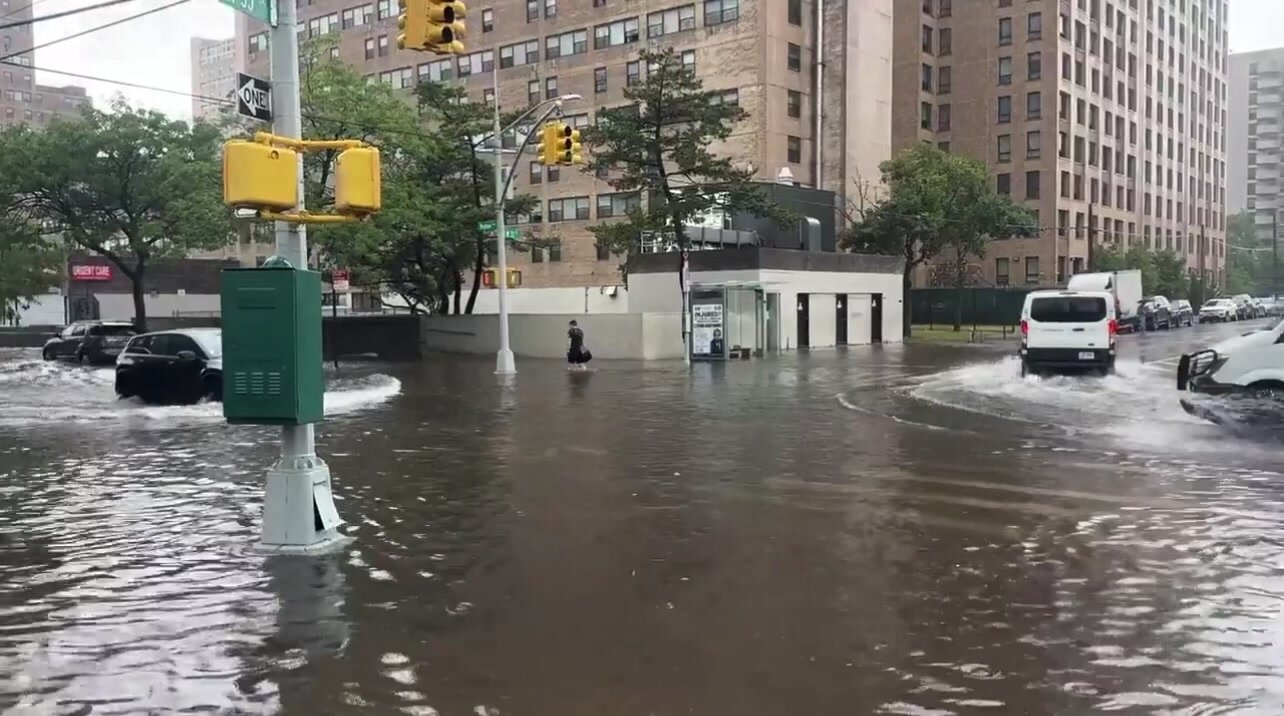
Significant portions of New York City experienced widespread flooding on Friday, September 29, 2023, as torrential rains overwhelmed storm drains and infrastructure. Major roadways, including parts of the FDR Drive and Brooklyn-Queens Expressway, became impassable, leading to severe traffic disruptions and widespread delays. Subway services also faced considerable interruptions, with several lines suspended or experiencing significant delays due to water accumulation on tracks. Governor Kathy Hochul declared a state of emergency for New York City and Long Island, urging residents to avoid unnecessary travel. The National Weather Service reported that Central Park received over 1.5 inches of rain in a single hour, setting a new record for the date. The heavy rainfall caused basement flooding in numerous homes and businesses across the five boroughs. Emergency services were deployed to assist stranded motorists and residents affected by the flooding. The city's infrastructure, particularly its aging sewer systems, struggled to cope with the extreme volume of water. The event highlighted the vulnerability of urban environments to increasingly intense weather patterns.
The severe flooding in New York City underscores the growing challenge of urban resilience in the face of climate change-induced extreme weather events. The incident reveals potential systemic vulnerabilities in the city's aging infrastructure, particularly its stormwater management systems, which appear to be struggling to cope with the intensity and frequency of modern rainfall patterns. This event highlights a critical need for substantial investment in upgrading and modernizing these systems to prevent future disruptions. The economic and social costs of such events, including transportation shutdowns and property damage, necessitate a proactive approach to infrastructure adaptation, considering future climate projections and population growth. Evaluating the capacity of current systems against projected future precipitation levels is crucial for long-term urban planning and public safety.
AI-generated to prompt reflection — not editorial opinion, not advice, not a statement of fact. How this works.