Newborn Humpback Whale Calf Found Dead on Bahia Beach
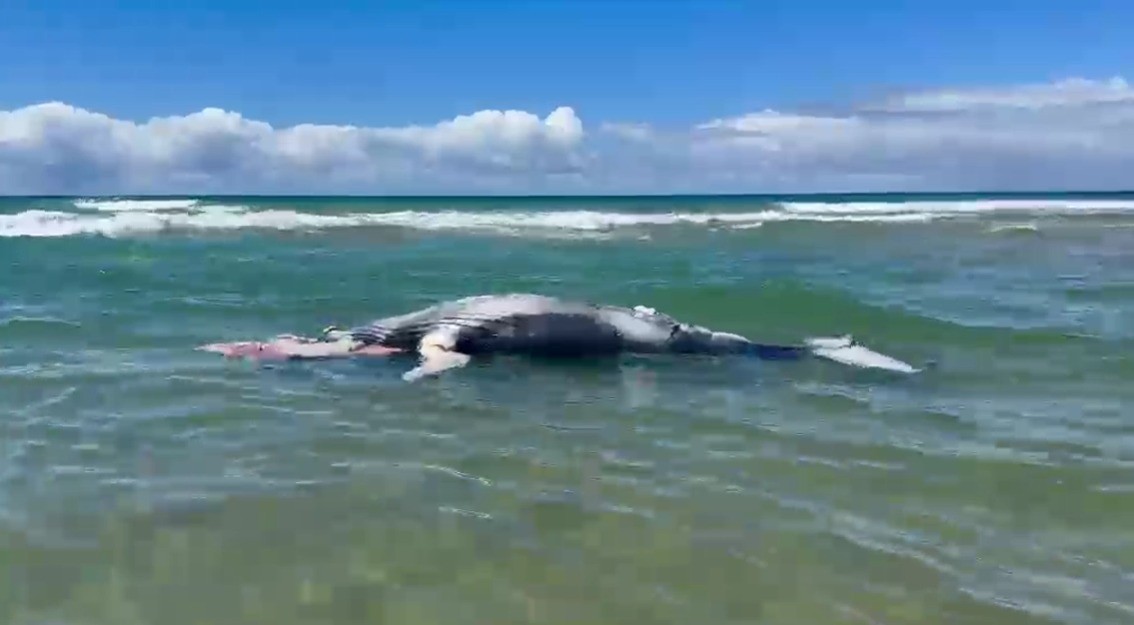
A newborn male humpback whale calf was found dead on Saquaíra Beach in the Península de Maraú, southern Bahia, on Wednesday, July 29th. This marks the first humpback whale stranding recorded in the area for the current season. Researchers from the Instituto Mamíferos Aquáticos and Projeto Baleia Jubarte were alerted and responded to the scene to collect biometric data and information. However, the rising tide caused the carcass to be washed back into the sea before these procedures could be fully completed. Evidence of a healing umbilical cord suggests the calf was only a few days old at the time of its death. The exact cause of death remains undetermined, according to Projeto Baleia Jubarte. Experts note that natural causes, such as umbilical infections or other factors, can lead to calf mortality. A definitive cause can only be established if the carcass washes ashore again for a more detailed examination. The stranding location's coordinates have been logged for monitoring purposes. If the carcass returns to the coast, teams will be able to conduct further tests and measurements. This incident represents the fifth humpback whale stranding reported in Bahia this year. Nationally, Brazil has recorded 36 such cases in 2026, with Santa Catarina leading with 10, followed by São Paulo (8), Rio de Janeiro (6), Bahia (5), Espírito Santo (5), Rio Grande do Sul (1), and Paraná (1). Stranding occurrences across Brazil have been distributed throughout the year, with the majority happening between May and July.
The discovery of a deceased humpback whale calf on a Bahia beach highlights the ongoing challenges in marine mammal conservation and data collection. While natural mortality is a factor for young animals, the inability to conduct a full necropsy due to tidal conditions limits understanding of potential environmental or anthropogenic stressors. The frequency of strandings across Brazil, particularly during specific months, suggests seasonal patterns that warrant continued scientific investigation into breeding grounds, migratory routes, and potential threats. Future efforts should focus on developing rapid response protocols that can overcome environmental obstacles, ensuring vital data is not lost and can inform long-term conservation strategies in the face of evolving marine ecosystems.
AI-generated to prompt reflection — not editorial opinion, not advice, not a statement of fact. How this works.