Newer Fusion's Hydrogen-Boron Fusion Seminar Highlights Company's Over $1.5 Billion Valuation
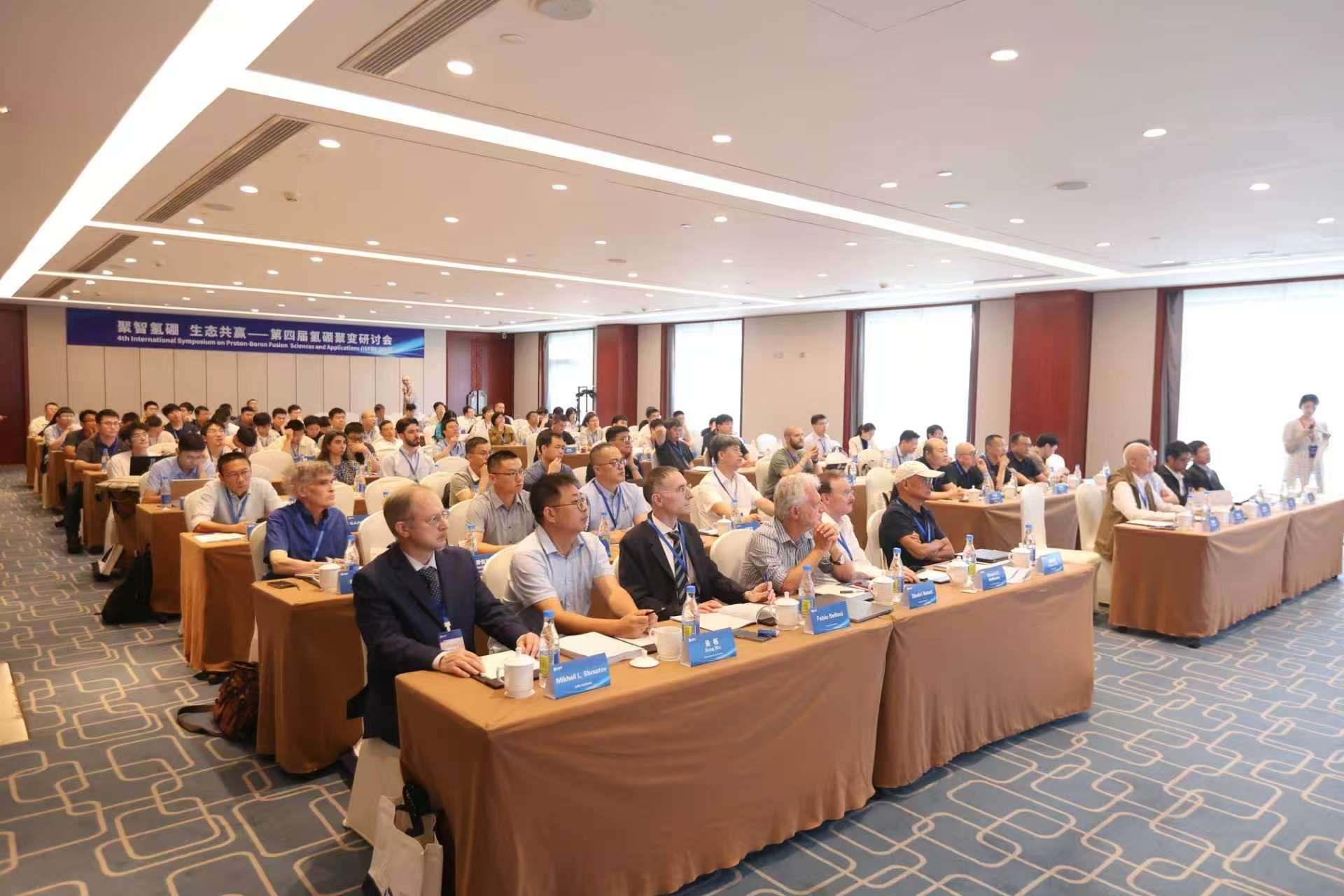
Newer Fusion Energy Technology Co., Ltd. (Newer Fusion) hosted the 4th Hydrogen-Boron Fusion Seminar in Langfang, Hebei, from July 21st to 24th. As China's earliest private enterprise in commercial fusion energy development, Newer Group initiated its compact fusion research in 2017, focusing on a neutron-free, low-cost, and commercializable spherical tokamak hydrogen-boron fusion technology. This approach offers advantages like clean safety, readily available fuel, and low costs, indicating significant commercial potential.
In 2023, Newer Group joined the National Controlled Nuclear Fusion Innovation Consortium and will participate in the International Tokamak Physics and Engineering Activity (ITPEA) starting in 2026, making it the first private Chinese and second global private entity to join. The company has invested over 4 billion yuan and developed two spherical tokamak devices, "Xuanlong-50" and "Xuanlong-50U." The "Xuanlong-50U" is the world's only fusion device to fully meet its engineering design targets. Since 2025, it has achieved major breakthroughs, including mega-ampere level hydrogen-boron plasma discharge, a 1.2 Tesla strong magnetic field sustained for seconds, high-confinement mode discharge, and electron temperatures exceeding 100 million degrees Celsius, reaching global leading parameters and filling a domestic technology gap.
Earlier in July, Newer Fusion completed its Pre-A funding round, achieving a post-investment valuation of 10.6 billion yuan, making it the highest-valued private enterprise in China's fusion sector. The funds will support the construction and commissioning of "Helong-2," core technology iteration, and talent acquisition. "Helong-2" is crucial for commercializing hydrogen-boron fusion, aiming to solve energy gain and engineering challenges. It is slated for completion by the end of 2027. Newer Fusion's commercialization strategy involves achieving hydrogen-boron fusion reactions by 2026, verifying thermonuclear reactions by 2030, and entering commercial demonstration for low-cost power generation by 2035. The seminar, themed "Gathering Wisdom for Hydrogen-Boron, Co-winning the Ecosystem," included over a hundred experts from more than 50 research institutions across 11 countries, discussing various research aspects of hydrogen-boron fusion.
The development of hydrogen-boron fusion technology by Newer Fusion represents a significant private sector initiative within a field traditionally dominated by state-led, large-scale projects. The company's substantial investment and stated technological achievements, particularly with the "Xuanlong-50U" device, position it as a key player in exploring alternative fusion pathways. The hydrogen-boron fuel cycle, distinct from the more common deuterium-tritium approach, promises inherent safety and fuel abundance advantages, which could lower the barriers to commercialization. However, achieving net energy gain and sustaining the reaction at commercially viable scales remain formidable scientific and engineering challenges. The company's ambitious timeline for commercialization by 2035, while potentially achievable, will depend on overcoming these complex technical hurdles and securing sustained funding in a competitive global landscape. The strategic importance of fusion energy, as highlighted by international R&D efforts, suggests that while private ventures like Newer Fusion can drive innovation, their long-term success may also be influenced by broader national and international policy frameworks and collaborations.
AI-generated to prompt reflection — not editorial opinion, not advice, not a statement of fact. How this works.