Nhô João de Camargo: A Legacy of Faith and Solidarity in São Paulo
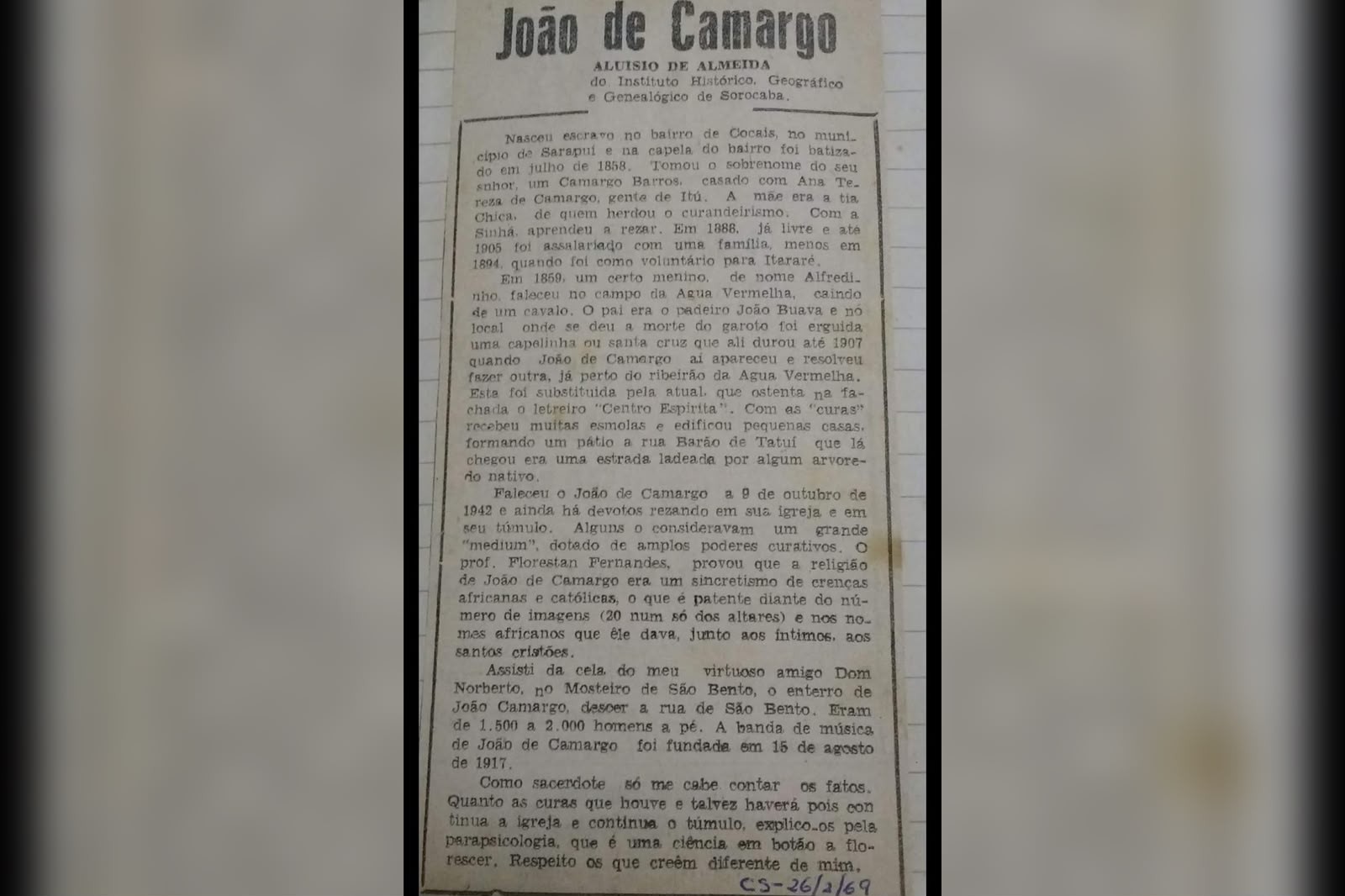
João de Camargo, known as Nhô João, was a significant religious leader of African matriz and a prominent figure in the Black community of the Sorocaba region in São Paulo, Brazil. Born on May 16, 1858, in Sarapuí, he was baptized on July 5, 1858, a date still celebrated for his legacy. He was born into slavery on a farm owned by Luiz de Camargo Barros and Ana Tereza Barros, and later received the farmer's surname. Nhô João developed knowledge of medicinal herbs and ancestral healing practices alongside his mother. After gaining freedom, he traveled the region before settling in Sorocaba in 1907, a period marked by a yellow fever epidemic. He became a spiritual leader, with his life inspiring the 2005 film "Cafundó." His chapel, built in Sorocaba and now a historical landmark, became a place of refuge, faith, and ancestry. He was known for walking the city, often stopping at the Cruz de Alfredinho, a site connected to African traditions of ancestor veneration. Nhô João reportedly had a vision at this cross, which led him to found the "Igreja Misteriosa da Água Vermelha." During the First Republic, a period of modernization and attempted cultural "whitening" in Sorocaba, Camargo emerged as a key figure. His chapel, constructed the year after his vision, served as a center for healing with herbs and became a vital point of reference and welcome for the Black community and others in need. His popularity, earning him the nickname "black pope," led to opposition and his arrest in 1913 on charges of witchcraft. To protect his chapel from closure, he aligned with Spiritism, a more accepted religion at the time. In 1921, he established the Associação Espírita e Beneficente Capela Nosso Senhor do Bonfim, a strategy to shield his community from religious racism and violence, solidifying a Black territory where cultural practices could thrive. Beyond religion, Nhô João demonstrated community leadership by founding a school for children in the 1920s and 1930s and a music band, Banda São Luiz, which generated income for the Black population. He died on September 28, 1942, at the age of 84, leaving a national legacy recognized by various African matriz religions as a powerful healer and community leader.
The life of João de Camargo, particularly his establishment of a spiritual and community center during Brazil's First Republic, highlights the complex interplay between religious syncretism, cultural preservation, and social resistance. His strategic adaptation to dominant religious frameworks, such as Spiritism, in the face of persecution for his healing practices and African-rooted traditions, demonstrates a pragmatic approach to navigating systemic discrimination. This period saw efforts to impose a singular national identity, often at the expense of Afro-Brazilian heritage, making Camargo's resilience and the enduring legacy of his chapel a significant testament to community self-determination. His multifaceted leadership, extending to education and economic initiatives, underscores how spiritual figures can serve as crucial anchors for marginalized populations seeking both spiritual solace and tangible social advancement in the face of societal pressures and racial prejudice.
AI-generated to prompt reflection — not editorial opinion, not advice, not a statement of fact. How this works.