NIAC Selects Projects for 2026 Phase I Funding
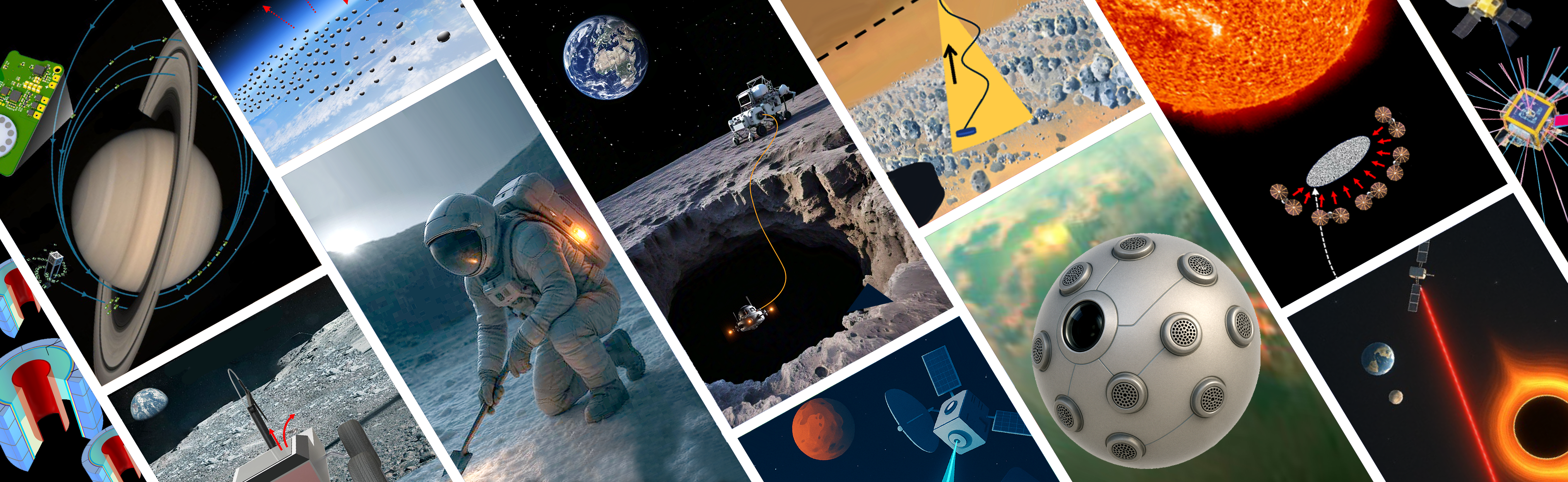
The National Aeronautics and Space Administration (NASA) Innovative Advanced Concepts (NIAC) program has announced its selections for the 2026 Phase I funding. This initiative supports early-stage research into groundbreaking space technologies. Among the selected projects is "Dimming the Sun (DimSun)," proposed by Saptarshi Bandyopadhyay of NASA's Jet Propulsion Laboratory in Pasadena, California. This concept explores the use of controllable dust clouds to reduce solar insolation. Another selected project is "Combinatory Architecture offering Neomobility, on-Venus Adaptability, and Survivability (CANVAS)," also from NASA's Jet Propulsion Laboratory, developed by David Bugby. This project focuses on creating adaptable and survivable architectural designs for potential use in challenging environments like Venus. Anish Damodaran from the University of Central Florida in Orlando, Florida, received funding for "PS21: Transforming Submillimeter Space Interferometry with Photonic Technologies." This research aims to advance space interferometry techniques using photonic technologies.
The NIAC program's selection of these Phase I projects highlights NASA's strategic investment in high-risk, high-reward concepts that could redefine future space exploration and infrastructure. The "DimSun" proposal, while appearing ambitious, touches upon geoengineering concepts that warrant careful consideration of potential unintended consequences and ethical implications. The "CANVAS" project addresses the critical need for robust and adaptable habitats in extreme extraterrestrial environments, a key challenge for long-term human presence beyond Earth. The advancement in space interferometry through photonics signals a push towards more sensitive and efficient astronomical observation capabilities, crucial for scientific discovery in the coming decade. These investments reflect a forward-looking approach, balancing immediate technological needs with speculative, yet potentially transformative, future capabilities.
AI-generated to prompt reflection — not editorial opinion, not advice, not a statement of fact. How this works.