Nigel Farage Resigns as Lawmaker to Contest Local Election Amid 'Establishment' Smears
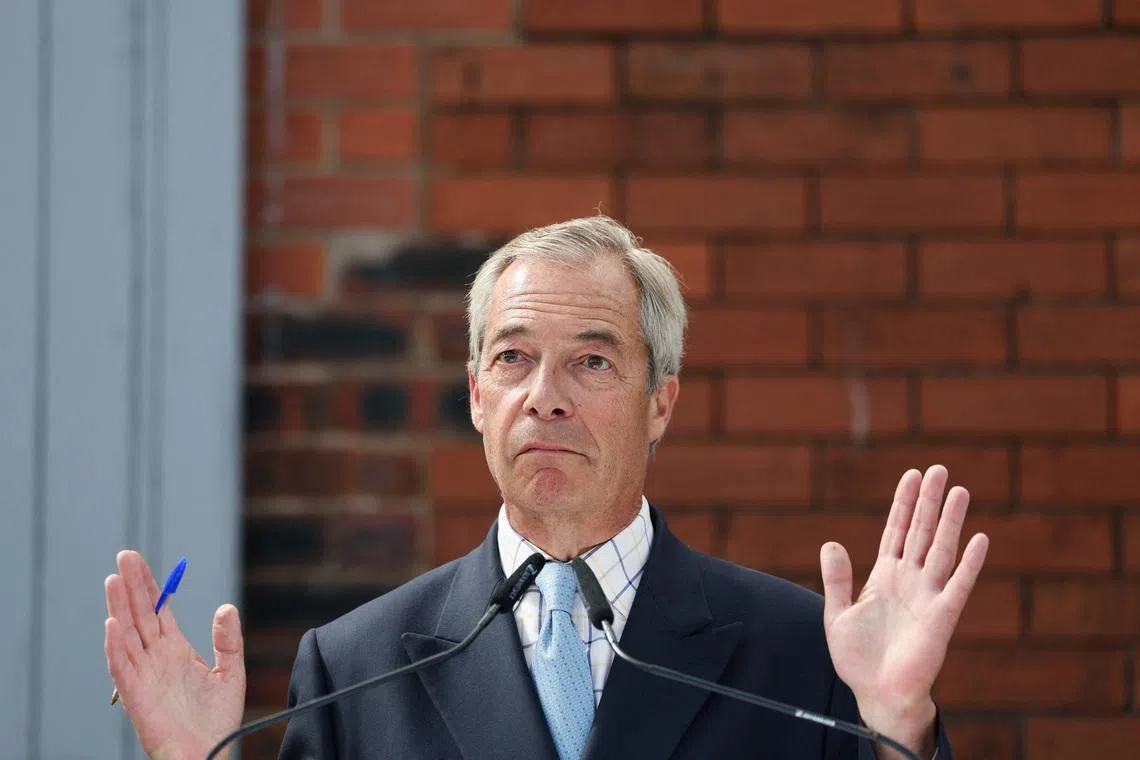
Nigel Farage, the leader of the Reform UK party, announced on Tuesday that he is stepping down as a lawmaker. He intends to contest a new local election, stating his goal is to challenge what he describes as "the establishment." Farage claims this establishment has initiated a campaign against him, specifically targeting his finances with accusations. This move signals a direct confrontation with perceived opposition forces. The Reform UK leader's decision to resign from his current legislative role underscores the intensity of his commitment to this new electoral battle. He believes this local election will serve as a platform to directly counter the alleged smear campaign. Farage's public statements indicate a strong personal and political motivation behind his decision. The specific nature of the financial accusations has not been detailed, but Farage frames them as part of a broader attack.
Nigel Farage's resignation and decision to contest a local election, framed as a fight against "the establishment" and "smears," highlight a common political strategy of leveraging perceived victimhood to galvanize support. By stepping down from his current lawmaker role, Farage aims to create a narrative of an outsider challenging entrenched powers, potentially increasing his party's visibility and influence. This approach, while effective in mobilizing a base, also risks alienating moderate voters who may view such tactics as divisive or lacking substantive policy proposals. The focus on "establishment" attacks, particularly concerning finances, could be interpreted as a tactic to deflect from policy scrutiny and instead rally supporters around a common perceived enemy. Looking ahead, this move could shape the discourse around populism and anti-establishment sentiment in the UK, potentially influencing future electoral strategies and party alignments in the evolving political landscape.
AI-generated to prompt reflection — not editorial opinion, not advice, not a statement of fact. How this works.