Nine of Ten Municipalities in Vale do Ivinhema Achieve Universal Sanitation Coverage
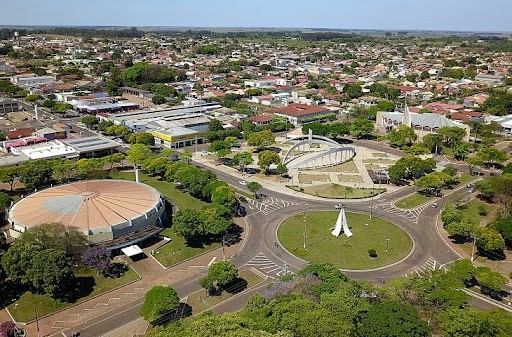
Nova Andradina has joined the ranks of municipalities with universalized sewage treatment in the interior of Mato Grosso do Sul, Brazil. As of June 2026, the service coverage reached 93.08%, surpassing the national benchmark of 90% for universalization. This significant progress is attributed to the Public-Private Partnership for Sanitation, a collaboration between Ambiental MS Pantanal, Sanesul, and the State Government. With this achievement, nine out of ten municipalities in the Vale do Ivinhema region now boast over 90% sewage coverage. These include Nova Andradina, Anaurilândia, Angélica, Bataguassu, Batayporã, Brasilândia, Ivinhema, Novo Horizonte do Sul, and Santa Rita do Pardo. The region, located in eastern Mato Grosso do Sul, is home to over 140,000 inhabitants and features a diverse economy encompassing family agriculture, livestock, agro-industry, grain cultivation, commerce, and services. Municipalities like Angélica saw a dramatic increase, rising from 58% coverage in 2021 to 94% currently, while Brasilândia, Bataguassu, and Santa Rita do Pardo are at 99% coverage. Clayton Bezerra, Executive Director of Ambiental MS Pantanal, highlighted the success as a testament to integrated planning and investment execution in the state, emphasizing that improved sanitation prepares cities for growth with enhanced health, sustainability, and quality of life. This expansion brings Mato Grosso do Sul's total to 32 municipalities with over 90% sewage coverage, contributing to public health, water resource protection, environmental preservation, and sustainable development. The broader Aegea group, operating in 15 Brazilian states, provides treated water and sewage services to over 39 million people, focusing on innovation, operational efficiency, and community well-being to foster healthier, more resilient cities.
The expansion of universal sanitation coverage in Brazil's Vale do Ivinhema region, driven by a public-private partnership, illustrates a systemic approach to addressing critical public health and environmental infrastructure deficits. This model, involving state government, a public utility, and a private concessionaire, leverages private capital and operational expertise to accelerate infrastructure development beyond what public funding alone might achieve. The focus on achieving and exceeding national benchmarks suggests a strategic alignment of incentives, where private entities are motivated by long-term contracts and performance metrics. From a future-oriented perspective, such initiatives are crucial for building resilient urban environments capable of supporting population growth and mitigating the impacts of climate change on water resources. The challenge moving forward lies in ensuring equitable access across all socio-economic strata within these municipalities and maintaining operational efficiency and environmental compliance over the long term, thereby realizing the full spectrum of public health and economic benefits.
AI-generated to prompt reflection — not editorial opinion, not advice, not a statement of fact. How this works.