Nirmal Purja's team missing after avalanche on Pakistan's Broad Peak
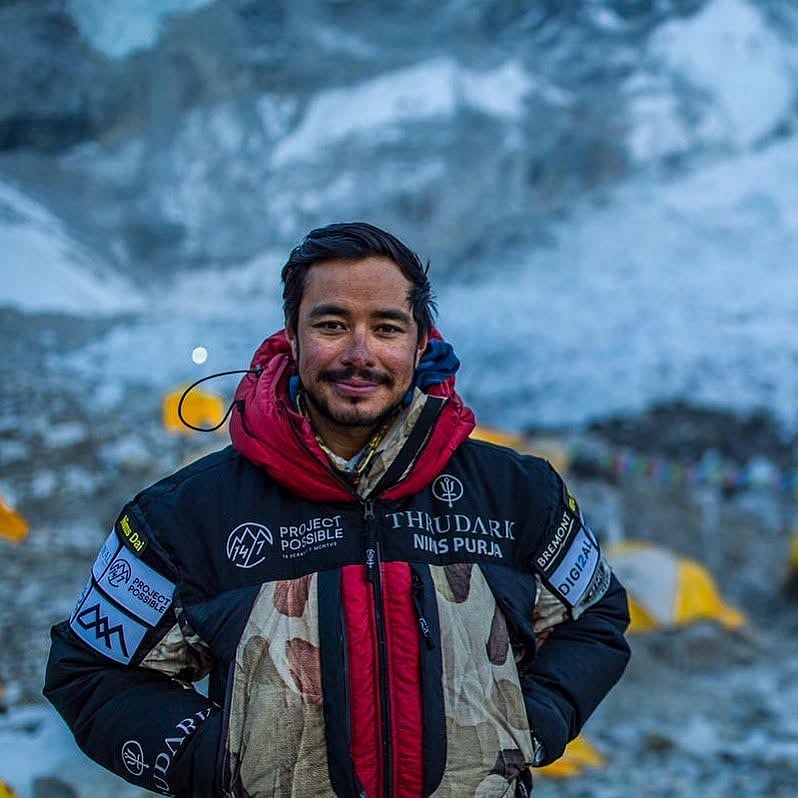
Ten members of an expedition led by renowned mountaineer Nirmal Purja are missing following an avalanche on Broad Peak in Pakistan's Karakoram mountain range. The peak stands at an elevation of 8,047 meters. Those involved in the rescue efforts believe none of the climbers are likely to have survived, though Pakistani authorities have not yet officially confirmed this. The news has cast a shadow of deep sorrow over the global mountaineering community.
Nirmal Purja, a British-Nepali climber also known as 'Nims' or 'Nimsdai', is one of the world's most recognized mountaineers. He gained widespread fame in 2019 with his 'Project Possible' expedition, setting a then-world record by summiting all 14 mountains over 8,000 meters in just six months and six days. This incredible feat was chronicled in the Netflix documentary '14 Peaks: Nothing Is Impossible', further boosting his global popularity.
Born in a small village in Nepal's Myagdi district, Purja comes from a Gurkha family and was instilled with discipline, courage, and hard work from a young age. He joined the Gurkha army at 18 and later served in the UK's Special Forces. His mountaineering journey began in 2012 after a visit to Everest Base Camp, with his first major success being the ascent of Lobuche East peak at 6,000 meters. Purja was also the first person to ascend three eight-thousanders—Everest, Lhotse, and Makalu—in just 48 hours. In 2021, he led a team of nine Nepali climbers in the first successful winter ascent of K2, the world's second-highest mountain, a significant achievement in modern mountaineering history. Beyond his personal achievements, Purja has been an advocate for greater recognition of Nepali Sherpas and mountain guides. His ambitious goal was to re-summit all 14 eight-thousanders without oxygen by 2026, a dream he was pursuing when he set out for Broad Peak after conquering Gasherbrum-II.
The incident highlights the inherent risks in high-altitude mountaineering, particularly in challenging environments like the Karakoram range. While the focus is on the immediate tragedy, it also underscores the systemic reliance on Sherpa and guide expertise for such expeditions. The pursuit of extreme records and ambitious goals, as exemplified by Nirmal Purja's career, involves significant financial investment and organizational complexity, often attracting media attention that can amplify both success and risk. Future considerations for this field may involve enhanced risk assessment protocols, improved communication technologies for remote rescues, and a continued dialogue on the ethical balance between pushing human limits and ensuring climber safety, especially in the context of commercialized expeditions.
AI-generated to prompt reflection — not editorial opinion, not advice, not a statement of fact. How this works.