Niterói City Hall Cancels 'Aura Farming' Championship Event
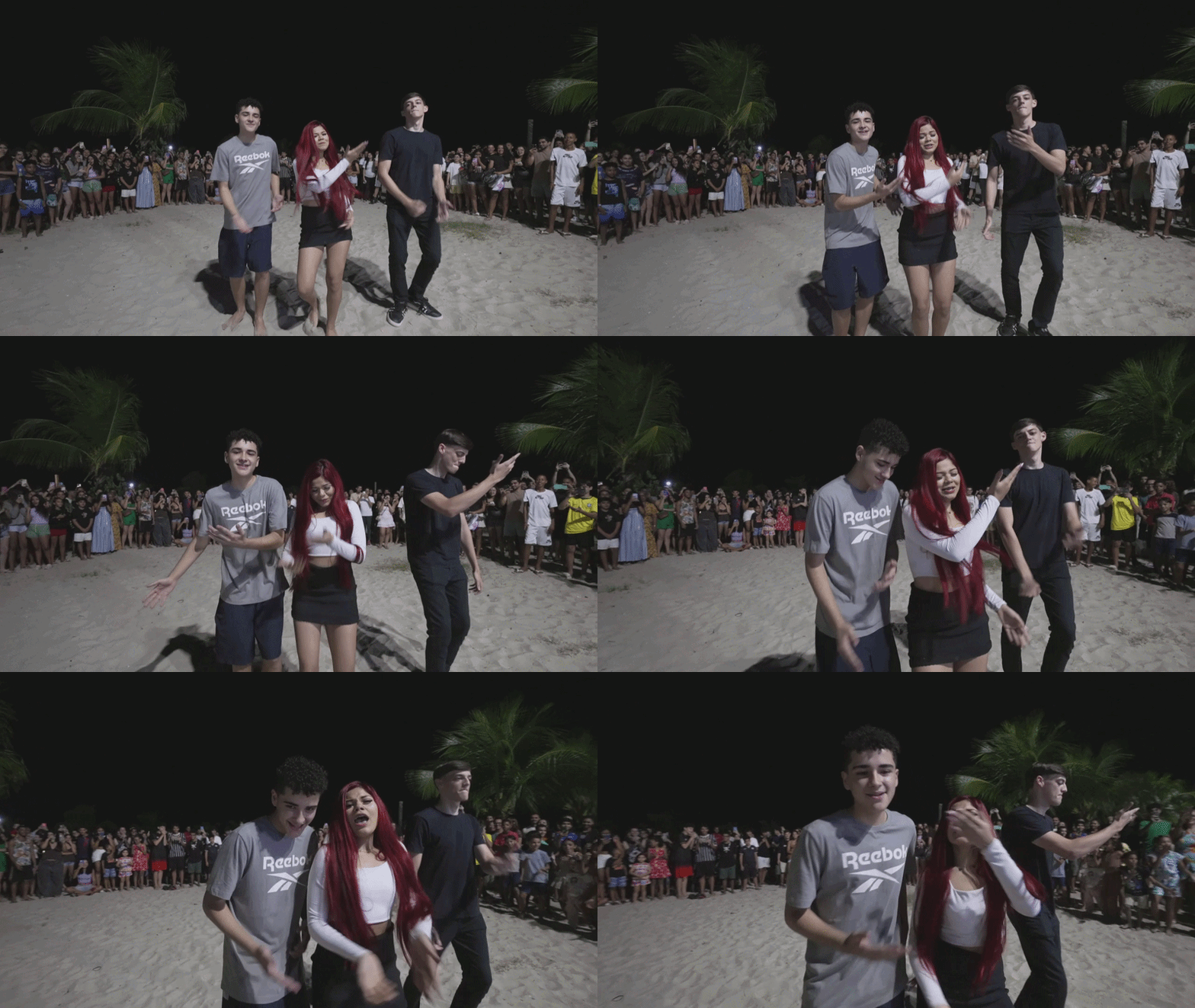
A planned 'aura farming' championship in Niterói, a city in the Rio de Janeiro Metropolitan Region, has been canceled by the local prefecture. The event, which aimed to increase participants' prestige and admiration, was scheduled for August 15th at Caminho Niemeyer in the city center and had been promoted on social media. However, the prefecture stated that the organizers did not officially request authorization for the event. Instead, they only publicized it online without contacting the municipality's General Coordination of Events. The administration of Caminho Niemeyer also informed the organizers that the chosen date was unavailable due to preparations for another event on August 16th. The prefecture emphasized that any public event requires prior approval from the competent municipal authorities. The term 'aura farming' originates from video games, where 'farming' means accumulating resources. In youth slang, 'aura' signifies charisma, style, confidence, and presence. Therefore, 'farming aura' means enhancing one's prestige through notable gestures, stylish actions, or creative presentations. These championships, which evaluate participants on creativity, originality, stage presence, audience interaction, and demonstrated 'aura,' have moved from social media to real-world events in various Brazilian cities. While the terminology is new to Generation Z, the underlying desire to appear charismatic and gain attention is a long-standing human aspiration.
The cancellation of the 'aura farming' championship highlights the evolving intersection of digital culture and public space management. While the event's premise, rooted in youth slang and online trends, may seem novel, it reflects a persistent social dynamic of seeking peer recognition and status. Municipal authorities' decision, based on procedural non-compliance rather than the event's content, underscores the challenge of regulating emergent cultural phenomena. Future urban planning may need to incorporate flexible frameworks that accommodate youth-driven activities while ensuring public safety and order, potentially by establishing clear guidelines for digital-native event organizers. This situation presents an opportunity to explore how civic engagement can be fostered among younger demographics through participatory processes, rather than solely through reactive enforcement.
AI-generated to prompt reflection — not editorial opinion, not advice, not a statement of fact. How this works.
