No Fire on the Stove: A Question of Cooking
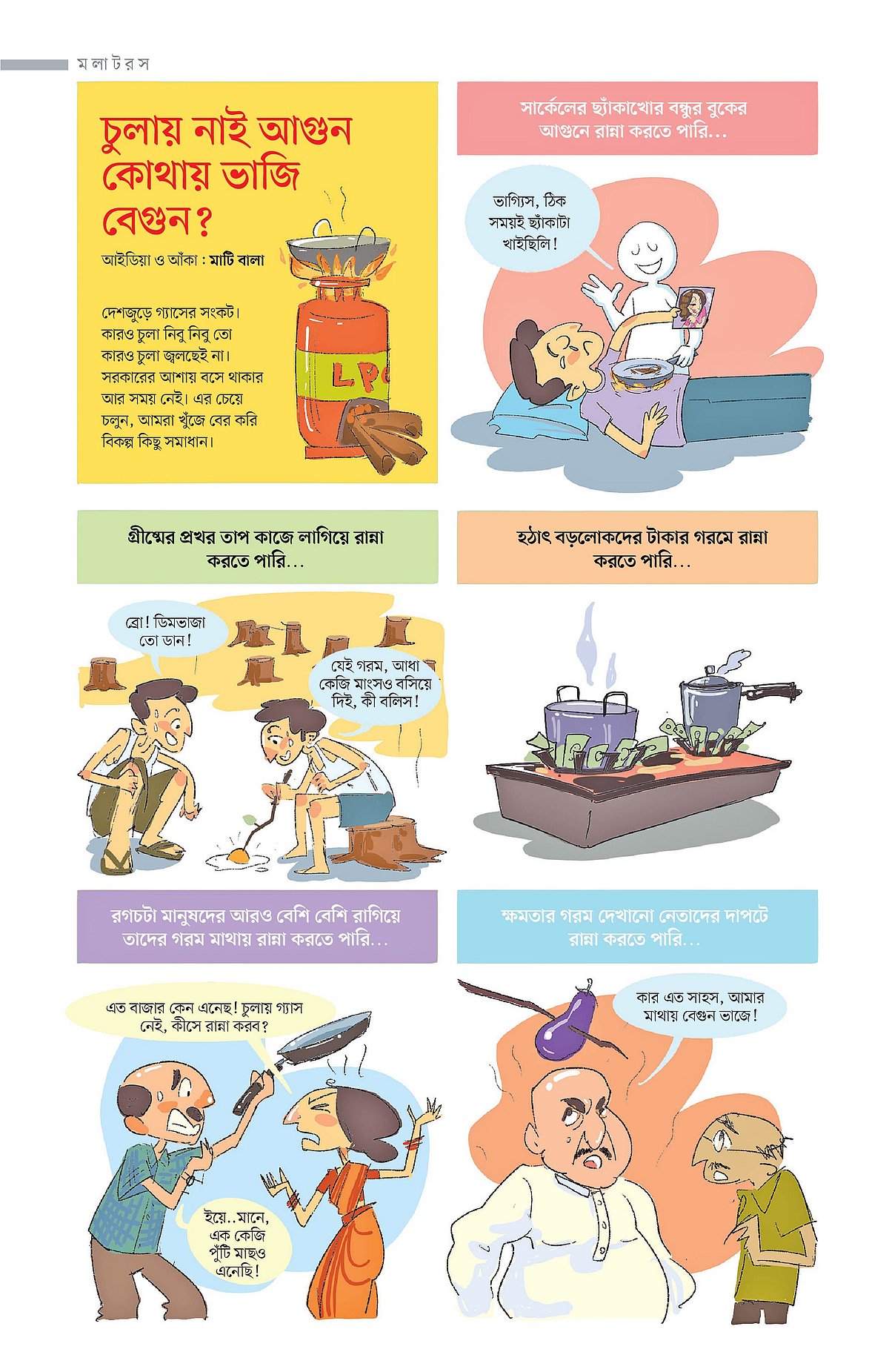
The Bengali phrase "চুলায় নাই আগুন কোথায় ভাজি বেগুন?" translates to "There is no fire on the stove, where can I fry the eggplant?" This is a common idiom in Bengali culture, often used to express a situation where a necessary resource or condition is missing, preventing a desired action or outcome. It highlights a sense of helplessness or being stuck due to a fundamental lack. The phrase is not about a literal cooking dilemma but rather a metaphorical expression of frustration or an inability to proceed. It implies that without the basic element of fire (the stove's heat), the intended task (frying eggplant) cannot be accomplished. This can be applied to various contexts, from personal challenges to broader societal issues where essential components are absent, leading to a standstill. The question posed is rhetorical, emphasizing the impossibility of the situation.
This idiom encapsulates a fundamental principle of problem-solving: the absence of a core requirement renders a task impossible. It serves as a cultural shorthand for identifying critical resource gaps. In a broader sense, it prompts reflection on systemic dependencies and the foundational elements necessary for progress in any endeavor, whether personal, economic, or social. Understanding such expressions can offer insights into societal priorities and the perceived barriers to achieving desired outcomes, highlighting the importance of ensuring essential preconditions are met before expecting results.
AI-generated to prompt reflection — not editorial opinion, not advice, not a statement of fact. How this works.
