No more popular uprisings in Bangladesh for 100 years: Rumin Farhana
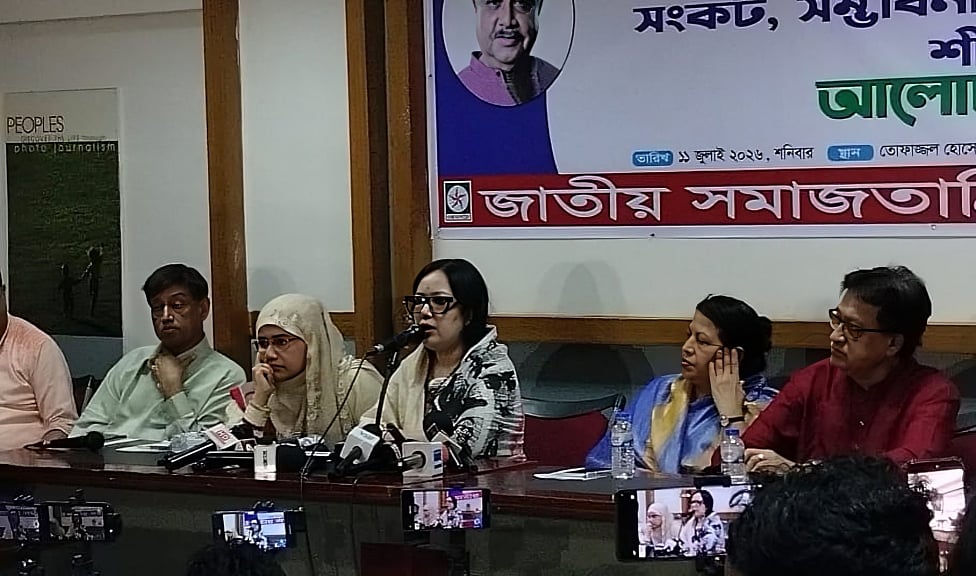
Rumin Farhana, a Member of Parliament from the Jatiyo Mohila Party and a central executive committee member of the Bangladesh Nationalist Party (BNP), stated that Bangladesh will not experience any popular uprisings for the next 100 years. She made this assertion during a discussion meeting held at the Tofazzal Hossain Manik Mian Hall of the National Press Club on Saturday. Farhana, who is also known for her legal background, believes that the current political climate and societal structures make such large-scale public revolts highly improbable in the foreseeable future. Her comments suggest a perspective on the long-term stability or lack of potential for mass mobilization within the country. The event was attended by various political figures and observers, though specific details of other attendees were not provided. The context of her statement within the broader political discourse of Bangladesh remains a key point of consideration.
Rumin Farhana's assertion regarding the absence of popular uprisings for a century in Bangladesh warrants a systemic perspective. Such pronouncements often reflect a specific political viewpoint, potentially aiming to shape public perception of stability or the efficacy of current governance structures. From a long-term viewpoint, societal dynamics are complex and influenced by numerous factors including economic development, political freedoms, demographic shifts, and technological advancements. Predicting such a long-term absence of popular unrest requires careful consideration of these evolving variables. Analyzing the underlying incentive structures for both citizens and political actors is crucial to understanding the potential for future social movements. The statement may also highlight a perceived consolidation of power or a reduction in avenues for public expression, which could, paradoxically, contribute to latent societal pressures over extended periods.
AI-generated to prompt reflection — not editorial opinion, not advice, not a statement of fact. How this works.