No National Drought Measures Despite Record Low Rhine River Levels
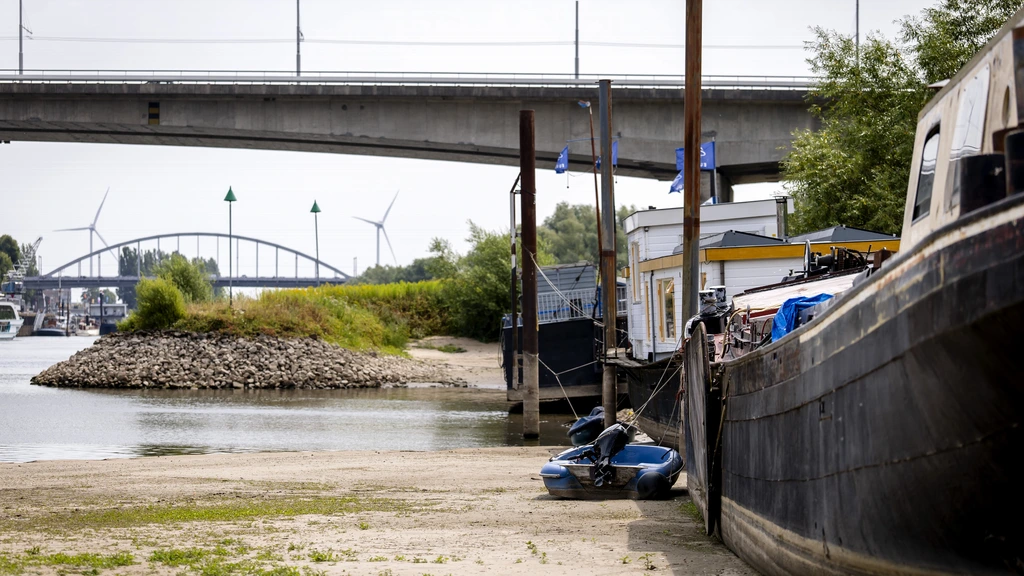
Despite intensifying drought conditions in the Netherlands, no national or supra-regional measures will be implemented for the time being. There is currently no shortage of drinking water. These conclusions emerged from a meeting involving several ministries, water boards, Rijkswaterstaat, drinking water companies, and provinces. Notably, the Rhine River has reached its lowest point ever recorded at the Lobith gauging station. This weekly meeting has been convened since July 16, the day phase 2 of water scarcity was declared, signifying an actual water shortage rather than a 'threatening' one. The Netherlands has been experiencing significant drought for several weeks due to warm temperatures, low river levels, and increased water demand. Regional disparities in freshwater scarcity mean that new measures will be introduced on a local level. Efforts are focused on the "most efficient possible" distribution of water and retaining as much water as possible, with emergency pumps being deployed. For instance, barge traffic faces longer waits at some locks to prevent water from flowing directly to the sea. The Eefde lock complex in Gelderland has been entirely closed, blocking passage from the IJssel River to the Twentekanalen.
The Dutch government's decision to forgo national drought measures, despite historically low river levels, suggests a reliance on regional adaptation and existing infrastructure. This approach prioritizes localized solutions, potentially reflecting a strategy to manage resources efficiently without triggering widespread economic disruption. However, it raises questions about the long-term resilience of such a decentralized response in the face of increasingly severe and unpredictable climate events. The emphasis on "efficient distribution" and water retention, while practical, may not fully address the systemic challenges posed by persistent drought. Future policy may need to consider more integrated, proactive strategies that anticipate escalating water stress across the entire nation, balancing immediate needs with the imperative of sustainable water management for the coming decade.
AI-generated to prompt reflection — not editorial opinion, not advice, not a statement of fact. How this works.