Nobel laureate Esther Duflo and rapper Emicida co-author children's books on poverty
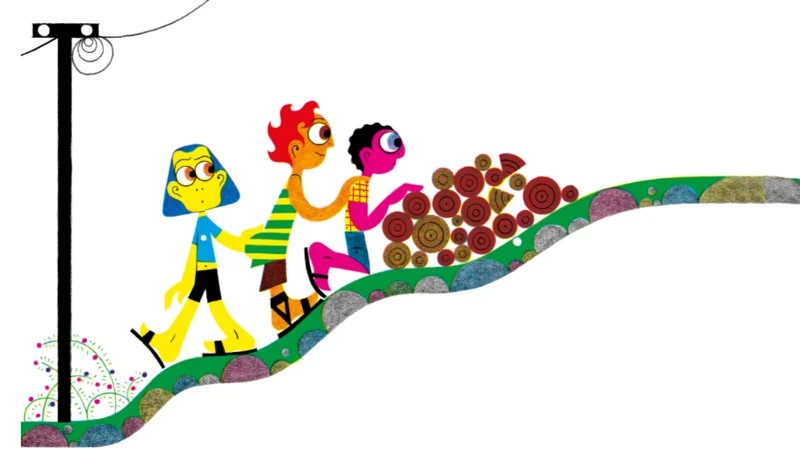
Nobel laureate economist Esther Duflo and Brazilian rapper Emicida have collaborated on two new children's books, "Volta por cima" and "Conta Comigo," published by Companhia das Letrinhas. These books aim to introduce young readers, starting from age 9, to complex themes of poverty and social inequality. The narratives follow fictional characters like Imeuni, Tsongai, and Bibir, whose lives, set in diverse global locations, prompt reflection on poverty's challenges and potential solutions. "Volta por cima" centers on a young woman's journey to find employment, exploring entrepreneurship, local economies, innovation, and microcredit. Duflo describes this story as illustrating the struggle and possibility of forging one's path, highlighting the character's resilience through repeated attempts. "Conta Comigo" delves into solidarity, community, and entrepreneurship, while also addressing issues such as domestic violence, ageism, and prejudice. Duflo emphasizes that impoverished individuals are not inherently dangerous or lazy, and that poverty, while creating problems, can be addressed through human ingenuity and collective solutions. The books feature colorful illustrations by French artist Cheyenne Olivier, inspired by economic graphs to engage young minds. Emicida acts as a guide throughout the books, offering reflective commentary and connecting the stories to personal experiences, drawing on his previous children's literature work. Duflo, who won the Nobel Prize in Economics in 2019 for her innovative approach to combating global poverty, aims to dispel myths about the poor, stressing that not everyone aspires to be a billionaire entrepreneur and that stable employment can be a more realistic and fulfilling goal for many. She hopes these books will foster empathy and optimism in future generations, encouraging them to contribute to a better world.
This initiative leverages the credibility of a Nobel laureate economist and the cultural influence of a popular artist to address sensitive societal issues with young audiences. By framing poverty and inequality through relatable narratives and emphasizing practical solutions and human resilience, the books aim to cultivate empathy and critical thinking from an early age. The approach challenges common stereotypes and promotes a nuanced understanding of economic challenges, suggesting that diverse pathways, including stable employment alongside entrepreneurship, can lead to well-being. This educational strategy aligns with a long-term vision of fostering more informed and compassionate global citizens, capable of addressing complex societal problems with a balanced perspective, moving beyond simplistic narratives or blame.
AI-generated to prompt reflection — not editorial opinion, not advice, not a statement of fact. How this works.