Nobel Laureate Mario Vargas Llosa on Football, Maracanã, and Pelé
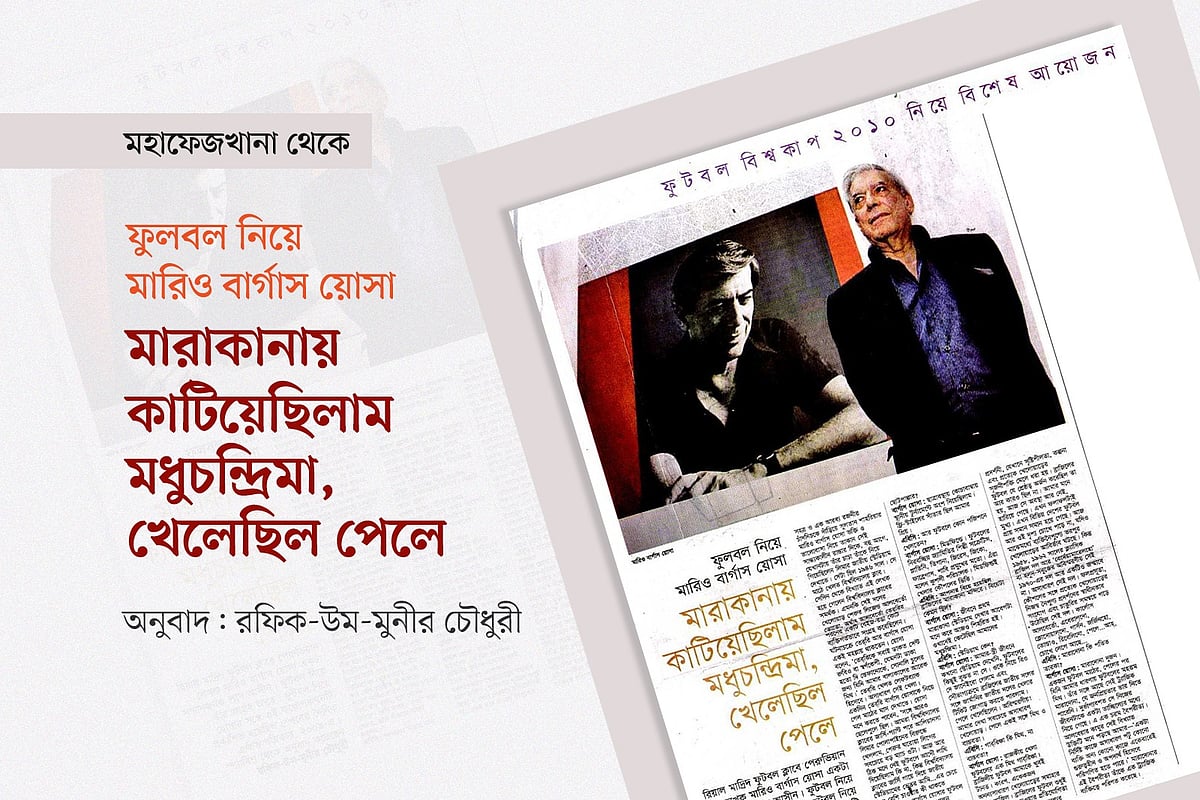
Peruvian writer and Nobel laureate Mario Vargas Llosa shares his lifelong passion for football in an interview originally published in Spain's ABC newspaper in 2009. Llosa recounts how his uncle took him to Lima's national stadium in 1946, sparking his lifelong support for the University Club. He even collected a jersey from Alberto Terry, a legendary Peruvian player who lived in his neighborhood and was nicknamed 'Golden Hair,' similar to Alfredo Di Stéfano. Llosa briefly played football himself, favoring the midfield position, which he likens to the strategic artistry of players like Socrates, Platini, and Xavi. He also excelled at swimming during his student years. A particularly cherished memory for Llosa is his honeymoon with his wife at the Maracanã Stadium in Rio de Janeiro, Brazil. He arranged this visit specifically because his wife, who knew nothing about football, had never been to a stadium before. During their visit, they were fortunate to obtain tickets to a match between the Brazilian and German national teams, where Pelé played. Llosa describes Pelé as the most extraordinary player he has ever seen, a figure who is both myth and reality. He also reflects on Garrincha as another mythical Brazilian player, noting that Brazilian football was once a showcase of creativity and individual brilliance, a quality he feels has diminished in the modern game where results are paramount. Llosa distinguishes between two figures of Diego Maradona: the legendary footballer, whom he considers the greatest myth after Pelé, and the tragic figure who succumbed to the pressures of fame, embodying a profound contrast between extraordinary talent and personal downfall.
This interview offers a glimpse into the personal reflections of a renowned literary figure on the cultural significance of football. Llosa's narrative highlights how sports can transcend mere competition, becoming deeply intertwined with personal memories, national identity, and even romantic experiences. The discussion on Brazilian football's evolution from a display of creative artistry to a results-driven pursuit reflects a broader trend in professional sports, where commercial pressures and tactical homogenization can sometimes overshadow individual flair. Furthermore, Llosa's poignant distinction between Maradona the player and Maradona the man serves as a powerful illustration of the immense psychological toll that extreme public scrutiny and fame can exact, particularly on individuals whose talents are extraordinary but whose personal lives become subject to intense public judgment. This duality underscores the complex relationship between exceptional ability and personal well-being in the modern era of globalized celebrity.
AI-generated to prompt reflection — not editorial opinion, not advice, not a statement of fact. How this works.