Nobel laureate Steven Weinberg on unifying forces and making physics accessible
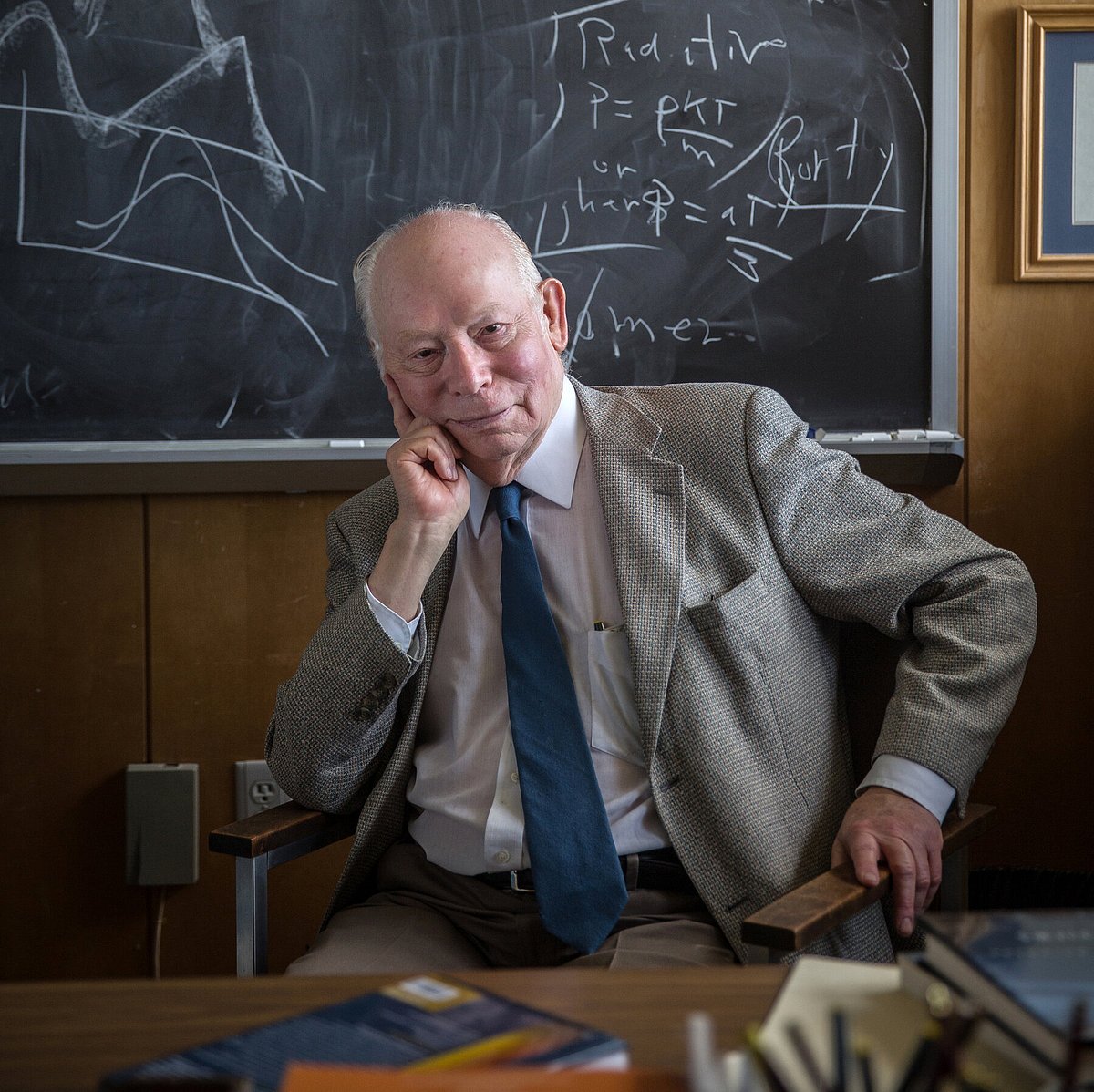
Nobel laureate physicist Steven Weinberg (1933-2021), a key architect of 20th-century theoretical physics, is celebrated for his work on electroweak unification, which earned him the Nobel Prize in Physics in 1979. He also authored 'The First Three Minutes' in 1993, a popular science book explaining complex physics concepts. In a 2009 interview with German physicist Stefan Klein, published in Die Zeit, Weinberg recounted a pivotal moment in 1967 where, while driving a Chevrolet Camaro, he realized the massless particle he was struggling to understand in the context of the strong nuclear force was actually the photon. This insight, though initially misapplied to the strong force, ultimately led to a theory explaining light and the weak nuclear force, a crucial step towards the Standard Model. Weinberg emphasized that the drive to unify seemingly disparate phenomena stems from a desire to understand nature more simply, citing Newton's unification of celestial and terrestrial mechanics as a prime example.
Steven Weinberg's reflections highlight the inherent human drive for simplicity and unification in understanding complex systems, a principle deeply embedded in scientific progress. The challenge he notes—that increased unification can paradoxically lead to greater inaccessibility for the public—points to a critical tension in modern science communication. As fundamental theories become more abstract and mathematically intricate, the gap between expert knowledge and public comprehension widens. This necessitates innovative pedagogical approaches, moving beyond rote memorization of formulas to storytelling that conveys the conceptual breakthroughs and historical context of scientific discovery. The delay in experimental validation, as seen with the LHC, underscores the long-term, iterative nature of scientific advancement, where theoretical insights require substantial empirical confirmation, often spanning years or even decades.
AI-generated to prompt reflection — not editorial opinion, not advice, not a statement of fact. How this works.