Nokia and Nvidia Launch First Commercial AI-RAN Platform for Mobile Networks
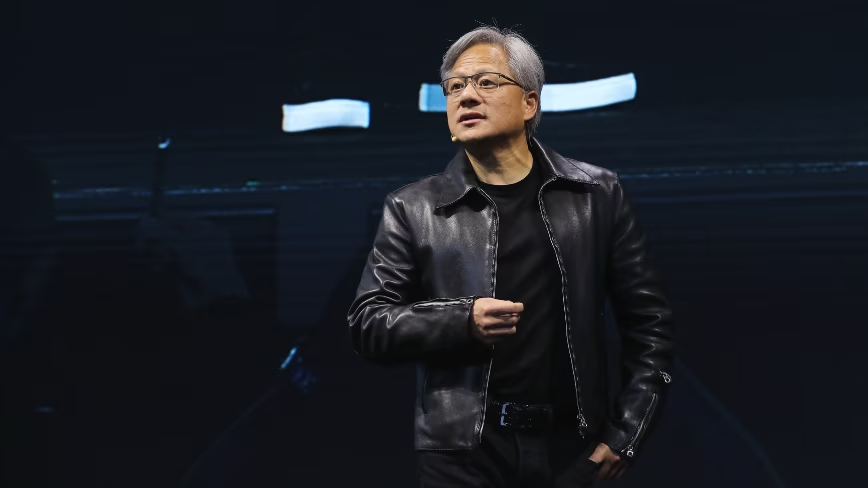
Nokia and Nvidia have jointly developed and launched what they claim is the industry's first commercial AI-RAN platform. This innovation is described by Nokia as the most significant advancement in radio technology in decades. RAN, which stands for radio access network, refers to the equipment that connects mobile devices to the broader telecommunications network. The new AI-RAN platform is designed to integrate artificial intelligence directly into the radio access network infrastructure. The companies believe this integration will significantly enhance mobile network capabilities. Specifically, Nokia has stated that this new platform aims to double the capacity of current mobile networks. This development signifies a strategic move by Nokia and Nvidia, key players in the current AI boom, to expand their influence and offerings within the mobile telecommunications sector. The deployment of AI within the RAN is expected to revolutionize how mobile networks operate and perform.
The introduction of AI-RAN platforms by major technology firms like Nokia and Nvidia represents a strategic pivot towards integrating advanced computational capabilities into the foundational infrastructure of mobile telecommunications. This move is driven by the escalating demand for data and network performance, fueled by the proliferation of AI-driven applications and services. By embedding AI into the radio access network, these companies aim to unlock efficiencies and capacity enhancements that traditional network architectures struggle to provide. This development could lead to more dynamic spectrum management, improved signal processing, and predictive maintenance, ultimately optimizing network resources. However, the successful widespread adoption of AI-RAN will depend on addressing challenges related to standardization, interoperability, security, and the significant energy requirements of AI processing. The long-term implications may involve a fundamental redefinition of network architecture, moving towards more intelligent, self-optimizing systems that can adapt to evolving user demands and technological landscapes.
AI-generated to prompt reflection — not editorial opinion, not advice, not a statement of fact. How this works.