North Korea's Economic Shift: Kim Jong Un's Strategy Amid Shifting Global Dynamics
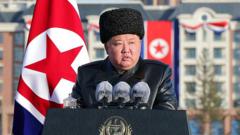
North Korea's economic situation has reportedly seen a significant improvement, attributed to a strategic alliance with Russia and changes in the international landscape. This shift has eased the economic pressure previously exerted on the Pyongyang regime. The article questions the sustainability of this newfound economic stability. It suggests that Kim Jong Un's leadership has navigated international pressures by leveraging geopolitical realignments. The improved economic conditions are presented as a notable development for the isolated nation. However, the long-term viability of these economic gains remains a key concern. The report implies that external factors have played a crucial role in altering the economic trajectory of North Korea. The effectiveness of these strategies in the face of ongoing global uncertainties is yet to be determined.
North Korea's reported economic improvement, linked to its alliance with Russia and evolving international relations, highlights the significant impact of geopolitical shifts on national economies. This situation underscores how a state's economic resilience can be bolstered or undermined by its foreign policy choices and global power dynamics. The sustainability of such improvements will likely depend on the longevity of these international partnerships and North Korea's ability to adapt to future global economic and political realignments. Examining this case offers insights into the complex interplay between statecraft, international sanctions, and economic survival in the 21st century, particularly in the context of an increasingly multipolar world.
AI-generated to prompt reflection — not editorial opinion, not advice, not a statement of fact. How this works.