North Macedonia's 'Good Governance' Sector Lacks Leadership Amidst Political Uncertainty
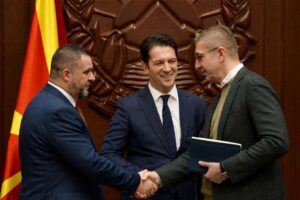
Despite ongoing discussions, North Macedonia's government has yet to appoint a leader for its 'good governance' sector. Prime Minister Hristijan Mickoski recently denied that Dimitar Dimovski, a close associate who faced trials stemming from cases initiated by the former Special Public Prosecutor's Office, would be appointed to oversee this area. This statement appears to contradict earlier understandings or discussions, leaving the sector without a designated head. The government has been engaged in talks with its coalition partners for months to finalize ministerial appointments. The absence of a clear leader for the 'good governance' portfolio raises questions about the sector's operational capacity and the government's commitment to its objectives. The situation highlights a potential gap in governmental structure and decision-making processes as the administration seeks to establish its full operational capacity. The delay in appointing a key official suggests challenges in coalition consensus or internal government priorities.
The prolonged delay in appointing a leader for the 'good governance' sector in North Macedonia, coupled with apparent contradictions in public statements from the Prime Minister regarding a potential candidate, suggests underlying complexities in coalition dynamics and governmental prioritization. The focus on a candidate with a past legal history, even if denied, may reflect a tension between political expediency and the perceived need for uncompromised leadership in an area crucial for public trust and institutional reform. This situation could indicate a need for clearer internal processes for candidate vetting and a more transparent approach to public appointments to ensure that critical governance functions are led by individuals whose backgrounds align with the stated objectives of good governance, thereby strengthening institutional credibility and public confidence in the long term.
AI-generated to prompt reflection — not editorial opinion, not advice, not a statement of fact. How this works.