Northwestern University Engineers Develop "Invisible" Drone Using High-Speed Rotation
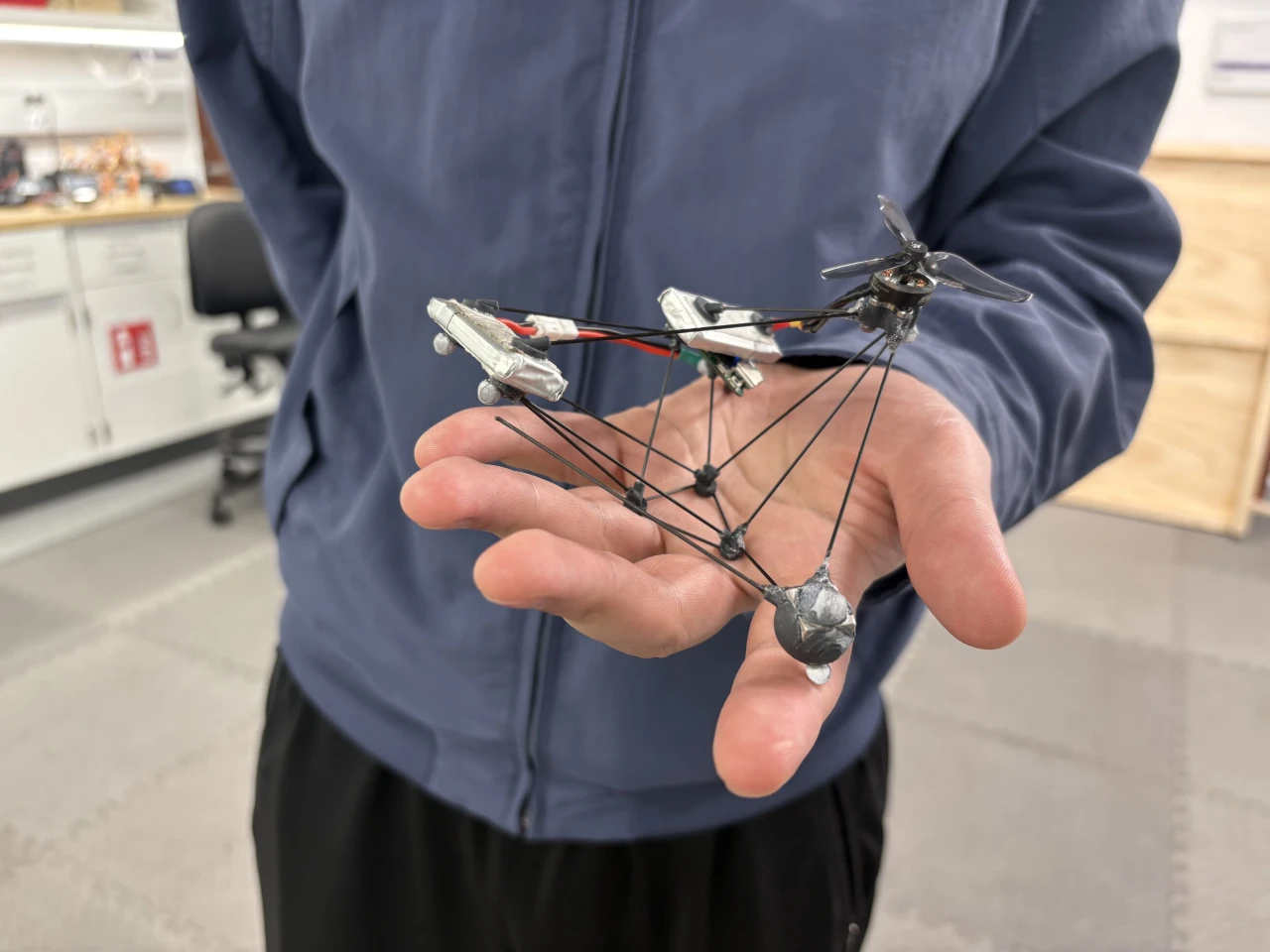
Researchers at Northwestern University have engineered a novel drone capable of achieving a form of invisibility through extremely rapid rotation. Unlike traditional stealth methods that rely on camouflage or transparent materials, this drone spins at a speed so high that the human eye cannot track its movement, effectively making it disappear from view. This technological advancement could have significant implications for surveillance applications, rendering them nearly undetectable. The development highlights innovative approaches to stealth technology beyond conventional means. The project involves expertise in engineering and artificial intelligence, with potential applications in various technological fields. The university's involvement underscores its commitment to cutting-edge research in advanced robotics and aerospace.
This development in drone technology, leveraging high-speed rotation for apparent invisibility, presents an interesting case study in applied physics and human perception. From an engineering standpoint, the challenge lies in balancing rotational speed with aerodynamic stability and payload capacity. The potential for enhanced surveillance capabilities raises questions about regulatory frameworks and ethical considerations surrounding undetectable aerial monitoring. As AI continues to integrate with robotics, such advancements could redefine operational parameters for both civilian and military applications, prompting a need for corresponding advancements in detection and counter-surveillance technologies. The long-term impact will depend on the scalability, cost-effectiveness, and the societal acceptance of such 'invisible' systems.
AI-generated to prompt reflection — not editorial opinion, not advice, not a statement of fact. How this works.