Norway Upsets Brazil 2-0 in World Cup Knockout Stage, Reaching Quarter-Finals
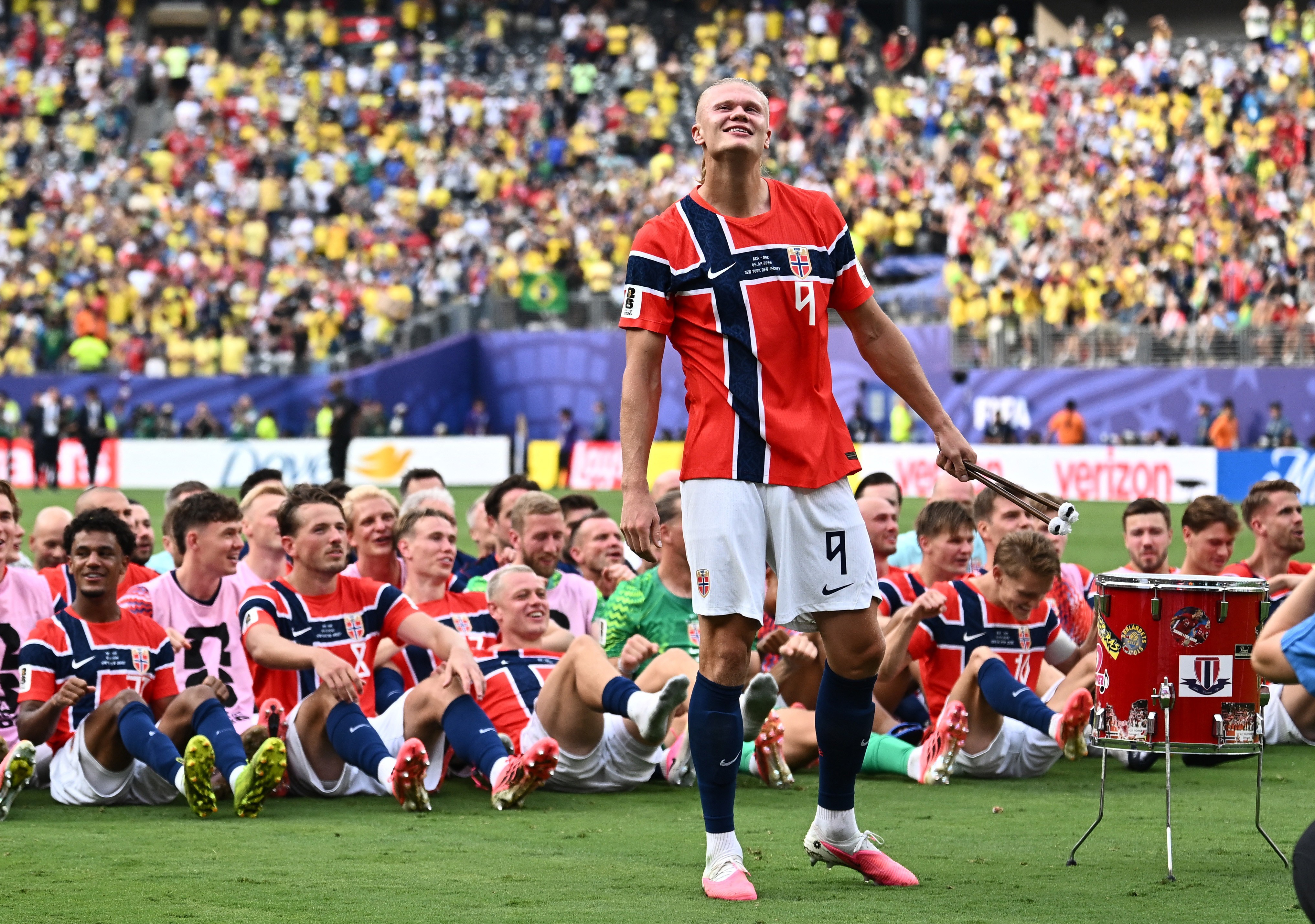
Norway has advanced to the quarter-finals of the World Cup for the first time in their history, following a decisive 2-0 victory over Brazil in the Round of 16. The match concluded with Norway securing their win, while Brazil's lone goal came from Neymar via a penalty in second-half stoppage time. Erling Haaland was a key player for Norway, scoring two goals in the second half, at the 34th and 44th minutes. Norway's men's national team has never won a World Cup title, with this tournament marking their fourth appearance. Previously, their best performance was reaching the Round of 16 in 1998, where they notably defeated Brazil 2-1 in the group stage. Brazil's last World Cup victory was in 2002, achieving their fifth title under coach Luiz Felipe Scolari, with a perfect record of seven wins in that tournament. In the match against Norway, Bruno Guimarães missed a penalty for Brazil in the 13th minute of the first half after Matheus Cunha was fouled. The 2030 World Cup is scheduled to be held across Morocco, Portugal, and Spain, with centenary celebration matches in Uruguay, Argentina, and Paraguay in early June 2030, before the official opening.
This World Cup match represents a significant upset, highlighting the evolving competitive landscape in international football. Norway's advancement to the quarter-finals, a historic achievement for the nation, demonstrates the potential for emerging footballing powers to challenge established giants. Brazil's elimination underscores the increasing parity and unpredictability in modern tournaments, where tactical discipline and individual brilliance can overcome historical pedigree. The outcome prompts reflection on player development pathways and scouting strategies, as teams like Norway demonstrate effective talent identification and tactical preparation. Looking ahead, such results suggest a future where traditional hierarchies may be further disrupted, emphasizing the need for all national federations to continuously adapt and innovate to remain competitive on the global stage.
AI-generated to prompt reflection — not editorial opinion, not advice, not a statement of fact. How this works.