Norwegian Rider Claims Fastest Tour de France Stage in Chaotic Sprint
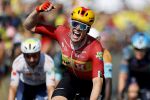
Norwegian cyclist Søren Wærenskjold secured a surprising victory on the 11th stage of the Tour de France, marking it as the fastest stage in the race's history. Wærenskjold capitalized on a chaotic final sprint, managing to break away from a hesitant field of competitors. His daring move allowed him to outmaneuver the elite sprinters who were vying for the win. The stage's unprecedented speed highlights the unpredictable nature of professional cycling. Wærenskjold's win is a significant personal achievement, demonstrating tactical acumen and opportunism in a high-stakes environment. The event underscores how strategic timing and seizing opportunities can overcome raw sprinting power.
The outcome of this Tour de France stage illustrates how tactical execution and adaptability can disrupt established power dynamics in elite sports. Wærenskjold's victory, achieved by exploiting a moment of hesitation among favored sprinters, highlights the importance of dynamic strategy over predictable performance metrics. In competitive environments, moments of disorganization or strategic indecision by dominant groups can create openings for less conventional approaches. This event serves as a reminder that future sporting success may increasingly depend on real-time strategic adjustment and the ability to innovate within evolving competitive landscapes, rather than solely relying on pre-established strengths.
AI-generated to prompt reflection — not editorial opinion, not advice, not a statement of fact. How this works.