Nossa Senhora Aparecida Sculpture Inaugurated on Rock Formation in Southern Piauí
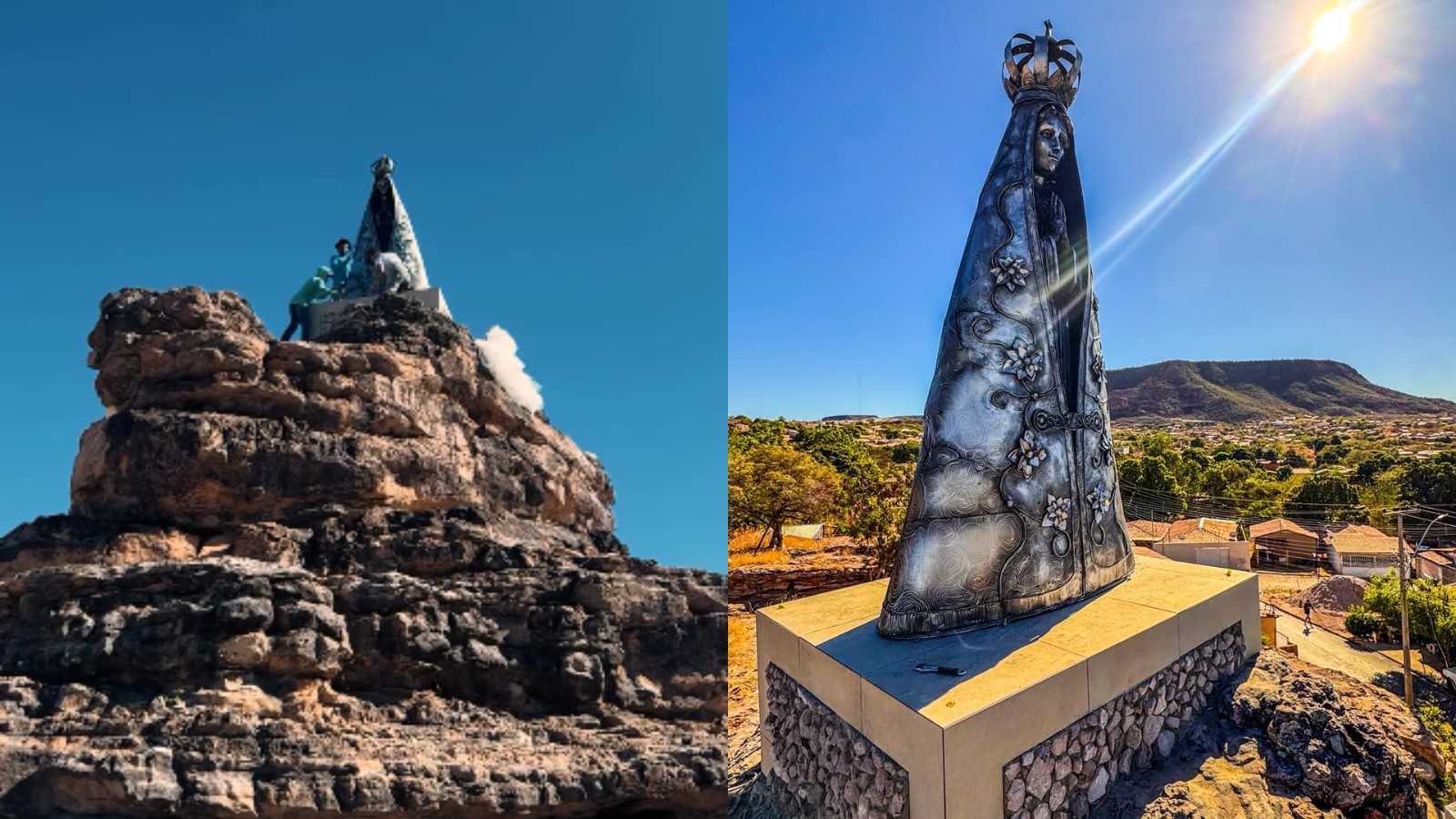
A three-meter-tall sculpture of Nossa Senhora Aparecida was inaugurated on Monday, October 3rd, atop the Morro do Frei in Bom Jesus, located in the southern region of Piauí, Brazil. This prominent rock formation has long been utilized by the local community for annual novenas honoring Brazil's patroness. The site has recently been enhanced with the addition of a chapel and a public square. Architect Havell Amarante, who led the project, stated that residents had been requesting a permanent structure for religious celebrations since October 2024. Previously, these novenas were held in an improvised setting, with only a simple cross at the location; attendees would bring their own chairs, lighting, and Eucharistic table each night. The newly constructed chapel is designed not only for the annual novenas but also to serve as a support point for the Church, a tourist attraction, and a venue for Mass. During the construction, the idea emerged to place a sculpture of Nossa Senhora Aparecida on the summit of the rock, which stands between 15 and 20 meters high. Local artist Braga Tepi was commissioned to create the sculpture, which is made of stainless steel chosen for its lightness and durability against weather conditions. The artist's work is noted for its colors that align with the symbolism of Nossa Senhora Aparecida, and the stainless steel ensures a resilient and well-crafted final piece. The inauguration marks the completion of the project's first phase, with the next stage focusing on urbanizing the area behind the chapel by building a plaza to improve public access and create a new space for community gathering and reflection.
The inauguration of the Nossa Senhora Aparecida sculpture represents a community's initiative to solidify a site of religious and social significance. The project's evolution from improvised novenas to a permanent structure with a chapel, plaza, and prominent artwork highlights a growing need for dedicated communal spaces. This development reflects broader trends in religious tourism and the utilization of natural landmarks for cultural and spiritual purposes. The choice of stainless steel for the sculpture indicates a pragmatic approach to durability and maintenance, aligning with long-term community investment. Future phases of urban development suggest an aim to enhance accessibility and public engagement, potentially transforming the site into a multi-functional destination.
AI-generated to prompt reflection — not editorial opinion, not advice, not a statement of fact. How this works.
