Nossa Senhora do Carmo Celebration at Forte Coimbra Blends Faith, History, and Military Tradition
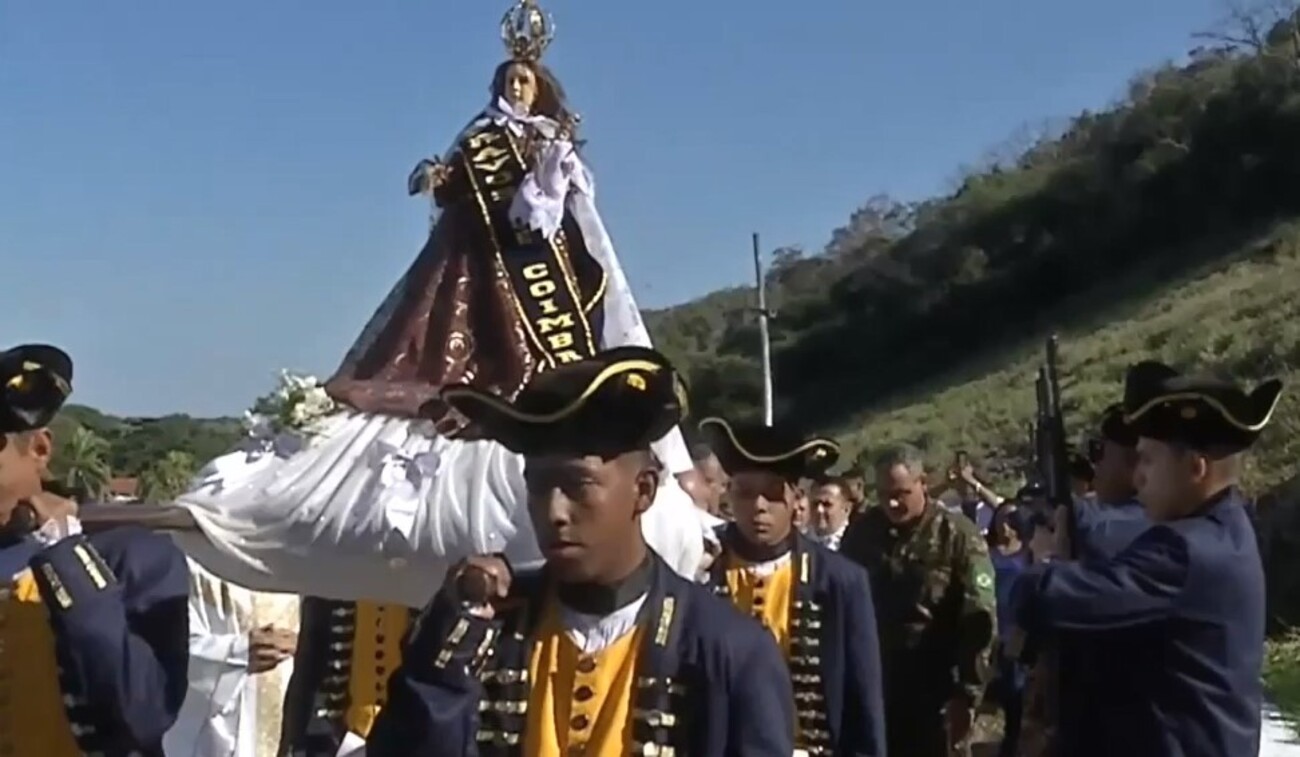
Forte Coimbra, a historic Brazilian fortification on the border with Bolivia, recently celebrated Nossa Senhora do Carmo, its patron saint, with a festival blending religious devotion, military tradition, and local culture. The event, held on Thursday, July 16th, included a dawn celebration, communal breakfast, masses, a procession, the ceremonial changing of the saint's mantle, and a traditional Pantanal barbecue. The image of Nossa Senhora do Carmo venerated at the chapel is central to local lore, believed to have intervened in military conflicts centuries ago. Historical accounts and community tradition suggest the saint's image appeared during a siege in 1801, prompting the withdrawal of superior Spanish forces and marking the beginning of local devotion. Decades later, during the Paraguayan War in December 1864, the saint was again invoked when Paraguayan troops surrounded the fort. Tradition holds that displaying the saint's image halted the attack, allowing surviving defenders to leave the fortification. The fort itself, established in 1775 by the Portuguese Crown, is a significant symbol of Brazilian occupation and defense in the Pantanal region, recognized by Iphan in 1975. Its history is deeply intertwined with military battles and the continuous presence of the Brazilian Army. The annual celebration, supported by the Corumbá Municipality's Culture Foundation, attracts residents, military personnel, and tourists, reinforcing a sense of belonging and preserving the unique fusion of faith, memory, and history that defines Forte Coimbra.
The annual celebration at Forte Coimbra highlights the enduring symbiosis between religious faith, historical memory, and military identity in Brazilian border regions. The narrative surrounding Nossa Senhora do Carmo's protective interventions serves as a powerful cultural anchor, reinforcing collective identity and a sense of historical continuity for both the local community and the military stationed there. This fusion of spiritual belief with martial history offers a unique model of cultural preservation, where the veneration of a saint becomes inseparable from the defense of national territory. In the context of evolving geopolitical landscapes and technological advancements, such traditions may offer insights into the psychological resilience and social cohesion fostered by shared narratives, particularly in strategically sensitive areas. The event underscores how historical sites can serve as living repositories of cultural heritage, bridging past and present through ritual and communal participation.
AI-generated to prompt reflection — not editorial opinion, not advice, not a statement of fact. How this works.