SP Resident Discovers 5kg Sweet Potato in Backyard Garden
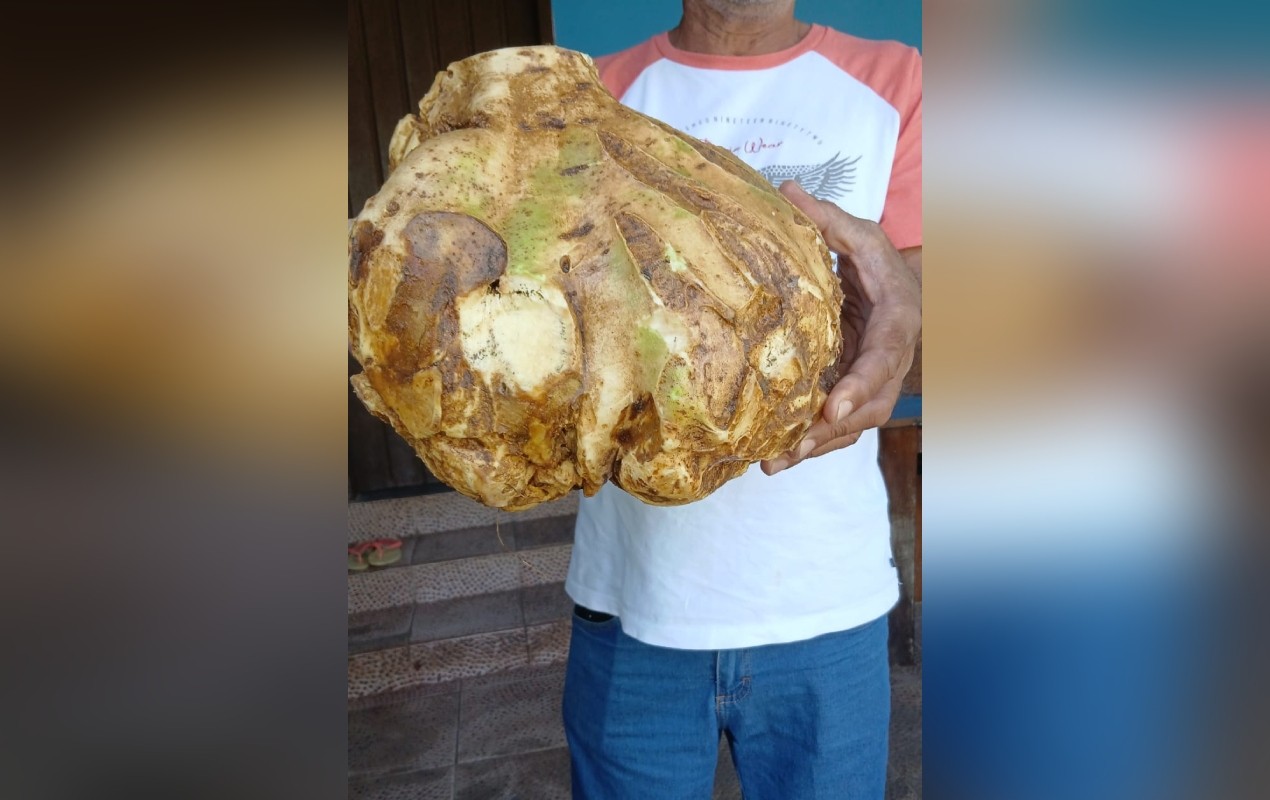
A 61-year-old teacher, Ângela Maria Gabriela, living in the rural Praia Grande neighborhood of Tietê, São Paulo, was astonished to unearth a giant sweet potato weighing approximately five kilograms from her home garden on July 25th. Gabriela, who cultivates the garden for fresh produce to supplement her family's diet, initially mistook the large tuber for a tree trunk due to its immense size. She described the discovery as unexpected, noticing a prominent bulge in the soil while searching for smaller sweet potatoes. The sheer size of the vegetable made it difficult to extract, requiring her to use a hoe and then pull it out with both hands. Her family was equally amazed upon seeing the colossal sweet potato, with plans to make a dessert from it after an initial period of admiration. Gabriela believes the exceptional growth was due to the well-fertilized soil and the fact that the sweet potato remained in the ground longer than usual, allowing it to absorb nutrients and energy from the plant's single branch. This gardening practice is a long-standing family tradition for Gabriela, who has been cultivating food at home for nearly 40 years, inspired by her parents. Her garden also yields other produce like cucumbers, mangoes, pumpkins, okra, lettuce, and avocados, with excess food often given to animals or sold. An agricultural engineer, Edegar Mascari Petisco, confirmed that such a large sweet potato is unusual, attributing its size to an extended growth period beyond the typical 100-120 days and the concentration of the plant's energy into a single tuber rather than multiple smaller ones. He noted that such large sweet potatoes might have a higher fiber content and require longer cooking times.
The discovery of an unusually large sweet potato highlights the potential for significant yield variations in agriculture, influenced by factors such as soil quality, nutrient availability, and plant genetics. While this specific instance is a personal anecdote, it underscores the importance of understanding and optimizing growing conditions for staple crops. Future agricultural advancements may focus on genetic selection and controlled environments to predictably enhance crop size and yield, potentially impacting food security and resource allocation. The event also serves as a reminder of the inherent variability in natural systems and the unexpected outcomes that can arise from biological processes.
AI-generated to prompt reflection — not editorial opinion, not advice, not a statement of fact. How this works.