Nova Friburgo Wildfire Destroys 42 Football Fields Worth of Vegetation
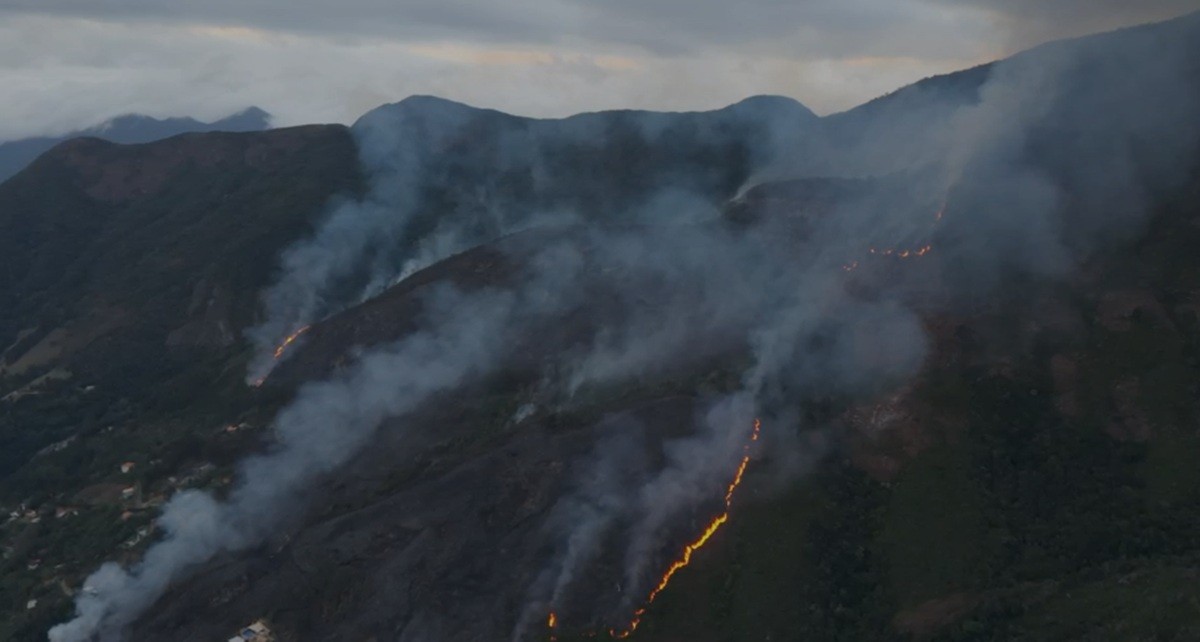
A large wildfire has been burning at Pico da Caledônia in Nova Friburgo, Rio de Janeiro, since Friday, August 31st. The fire has already consumed approximately 30 hectares of vegetation within the Três Picos State Park, an area equivalent to about 42 football fields. The State Environmental Institute (Inea) stated that the blaze, which began around 11:15 AM, poses a significant threat to the park's biodiversity, regional tourism, and public health due to smoke. There are indications that the fire was intentionally started by human activity. On the first day of firefighting efforts, 33 firefighters from three military units and 15 park rangers from Inea were deployed. This number was increased on Saturday, September 1st, with 16 firefighters and 23 park rangers working in four teams. Currently, three fire hotspots remain active, with two in inaccessible areas requiring aerial support. The most intense fire is in an accessible location where teams are focusing their containment efforts. Operations are ongoing, and as of the latest report, there have been no injuries. Visitation to Pico da Caledônia has been temporarily suspended due to the fire.
The wildfire at Pico da Caledônia highlights the ongoing environmental vulnerability of protected areas, particularly in regions prone to human-induced ignitions. The scale of destruction, measured against familiar benchmarks like football fields, underscores the significant ecological impact. The response, involving multiple agencies and escalating resources, points to the challenges of managing fires in difficult terrain and the critical need for effective prevention strategies. The suspected human cause raises questions about land management practices and public awareness campaigns in ecologically sensitive zones. Looking ahead, the increasing frequency and intensity of such events, potentially exacerbated by climate change, necessitate a robust, integrated approach to fire management, combining rapid response with long-term ecological restoration and community engagement to safeguard biodiversity and natural resources.
AI-generated to prompt reflection — not editorial opinion, not advice, not a statement of fact. How this works.