NTT DATA AIVista Addresses Enterprise AI's 'Last Mile' Challenge
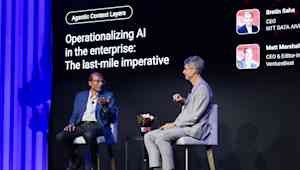
Bratin Saha, CEO of NTT DATA AIVista, discussed the critical 'last mile' challenge in operationalizing advanced AI models for enterprise use at VB Transform 2026. He explained that converting significant AI investments into tangible business value hinges on building robust systems around foundation models, rather than solely focusing on the models themselves. This 'last mile' involves integrating frontier models with an enterprise's proprietary data, existing workflows, and essential guardrails to ensure reliability, security, and compliance in regulated environments.
Saha highlighted that many enterprise AI projects falter during implementation due to poor integration, gaps in domain specialization, lack of governance, and unclear ownership. He emphasized that true enterprise value is unlocked by specializing the entire AI system, incorporating domain-specific knowledge, institutional memory, and risk appetite. This specialization transforms a general model into a tailored enterprise agent capable of handling complex, regulated workflows, such as multinational insurance claims, which often involve intricate forms and handwritten elements that out-of-the-box models struggle with.
The process requires capturing enterprise context, using ensembles of models to manage costs, and implementing specialized guardrails to correct errors. Saha clarified that this does not involve model fine-tuning, which ranks low in enterprise priorities. Instead, it focuses on leveraging proprietary data and undocumented workflows to guide AI effectively. NTT DATA's approach combines AI experts with domain specialists who understand how human workers perform tasks, encoding this expertise into agents. Success in regulated industries like insurance and manufacturing requires a tripartite approach: technology, domain expertise, and change management, with technology often being the least significant bottleneck.
The discussion underscores a common bottleneck in enterprise AI adoption: the gap between a model's general capabilities and its practical application within specific, often regulated, business contexts. The emphasis on the 'last mile' highlights that the primary value creation lies not in the AI model's inherent intelligence, but in its integration with proprietary data, bespoke workflows, and robust governance frameworks. This suggests that organizations heavily investing in AI may be underestimating the complexity and cost associated with system integration, domain specialization, and change management. As AI systems become more sophisticated, the challenge will increasingly be about aligning these powerful tools with established institutional knowledge and risk appetites, rather than simply deploying the latest frontier model. The future of enterprise AI success will likely depend on mastering this intricate system-building process, ensuring that AI serves as an enabler of existing or reimagined workflows, rather than an isolated technological component.
AI-generated to prompt reflection — not editorial opinion, not advice, not a statement of fact. How this works.
