Nurse Uses Jiu-Jitsu to Restrain Aggressive Patient in Australian Hospital
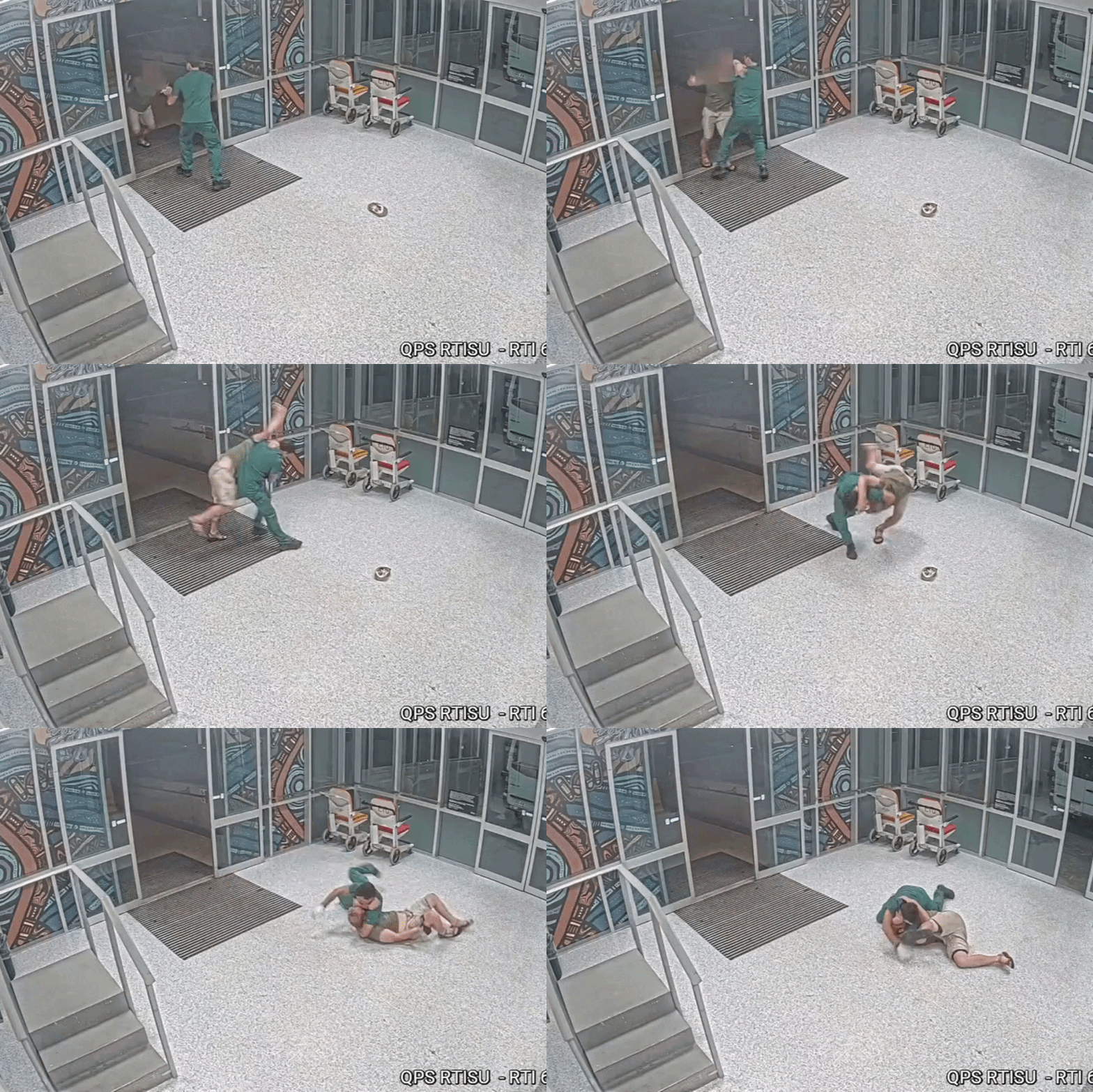
A viral video posted by nurse Daniel Nelson from the Royal Brisbane and Women's Hospital in Brisbane, Australia, shows him using jiu-jitsu to restrain an aggressive patient. Nelson, who works in the emergency department, shared the footage from October 2024 to raise awareness about violence against healthcare professionals. He recounted that the patient, who was intoxicated, was verbally abusing staff and acting erratically before attempting to physically assault him. Nelson, a decade-long practitioner of jiu-jitsu, was able to immobilize the patient using his martial arts skills. He emphasized that violence against healthcare workers is unacceptable and not merely part of the job. The incident gained significant media attention in Australia, prompting a response from Queensland's Health Secretary. The secretary stated that the state government is actively implementing measures to enhance the safety of healthcare professionals, asserting that the government is committed to addressing workplace violence. The patient involved in the incident pleaded guilty to simple assault and was fined $450. A 2026 survey by the Australian Workers' Union indicated that 69% of over 1,200 Queensland health system employees have experienced or witnessed workplace assaults.
This incident highlights the persistent challenge of workplace violence within healthcare settings, particularly in emergency departments. The nurse's use of jiu-jitsu, while effective in de-escalation, underscores the need for comprehensive safety protocols and de-escalation training for staff facing increasingly aggressive patient behavior, potentially exacerbated by substance abuse. The government's stated commitment to implementing protective measures is a necessary step, but the systemic issue requires sustained investment in security, mental health support for patients, and robust reporting mechanisms. Future strategies should consider the long-term impact of such incidents on staff well-being and retention, as well as the potential for technological solutions to improve situational awareness and response times in high-risk environments.
AI-generated to prompt reflection — not editorial opinion, not advice, not a statement of fact. How this works.
