Nvidia CEO and Jim Cramer Present Contrasting AI Future Outlooks
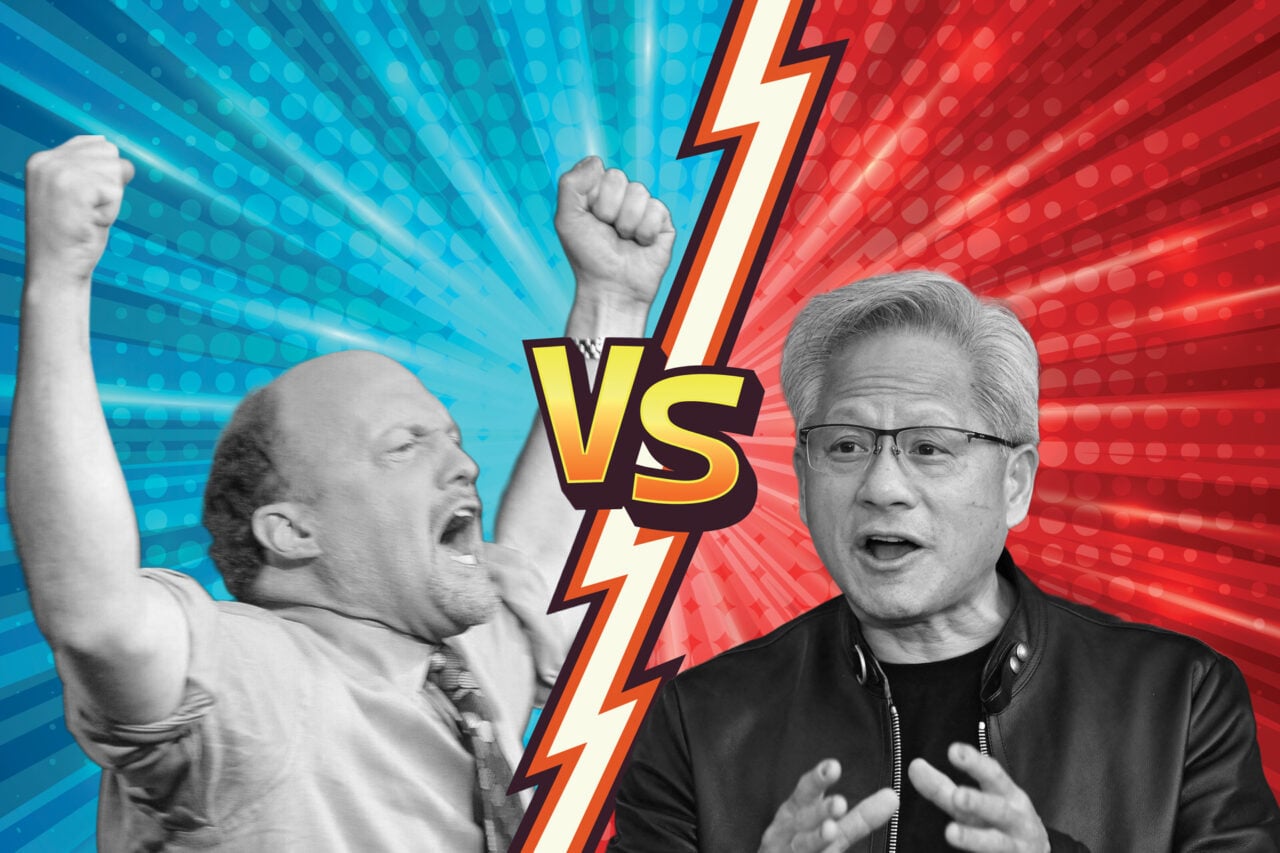
Nvidia CEO Jensen Huang and financial commentator Jim Cramer have presented divergent views on the future trajectory of artificial intelligence. Huang, speaking at the Computex trade show in Taipei, Taiwan, on June 4, 2024, articulated an optimistic vision for AI's continued expansion and integration across industries. His perspective emphasizes the transformative potential of AI technologies and the ongoing innovation driving their development. In contrast, Jim Cramer, known for his role on CNBC's "Mad Money," has offered a more cautious or perhaps critical outlook, which some interpret as a potential "curse" on the stocks or sectors he discusses. While the specifics of Cramer's latest AI predictions are not detailed, the juxtaposition of his views with Huang's suggests a broader debate within the financial and technology communities regarding the sustainability and ultimate impact of the current AI boom. The differing perspectives highlight the uncertainty and varied expectations surrounding the long-term economic and societal implications of artificial intelligence.
The contrasting perspectives of industry leaders like Nvidia's CEO and prominent financial commentators reflect the inherent uncertainties in forecasting the long-term impact of rapidly evolving technologies. Jensen Huang's vision likely stems from deep involvement in the foundational hardware and software enabling AI, emphasizing continued exponential growth and widespread adoption. Jim Cramer's commentary, often geared towards short-to-medium term market performance, may highlight potential market corrections, regulatory hurdles, or the cyclical nature of technological hype. The divergence underscores the challenge for investors and policymakers in distinguishing between genuine technological breakthroughs and speculative bubbles. Navigating the AI era requires a nuanced understanding of both the transformative potential and the economic realities, considering factors like infrastructure costs, ethical considerations, and the potential for disruptive competition over the next decade.
AI-generated to prompt reflection — not editorial opinion, not advice, not a statement of fact. How this works.