NYT Reaffirms Report on Alleged Israeli Plot to Assassinate Iranian Officials
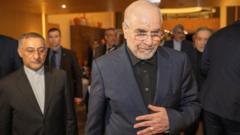
The New York Times has reiterated the accuracy of its report concerning an alleged Israeli plan to assassinate two prominent Iranian officials. The report identified the targets as Mohammad Bagher Ghalibaf, the Speaker of the Iranian Parliament, and Abbas Araghchi, a senior diplomat. The Prime Minister's Office in Israel has vehemently denied the report, labeling it as "fake news and completely fabricated." This assertion from the Times comes despite the strong denial from the Israeli government. The original report by The New York Times detailed the alleged plot, which was reportedly planned in response to an attack on an Israeli-owned ship in the Gulf of Oman. The Times stated that the Israeli military intelligence had approved the assassination plan. However, the plan was reportedly halted due to concerns about potential repercussions and civilian casualties. The specific details of the alleged plot and the timeline of its approval and subsequent halting remain central to the ongoing dispute between the two entities.
This situation highlights the critical role of investigative journalism in international affairs and the challenges of verifying information amidst geopolitical tensions. The New York Times' reaffirmation of its report, contrasted with the Israeli Prime Minister's Office's outright denial, underscores the complex information environment. Such discrepancies often stem from differing intelligence assessments, strategic communication objectives, or the inherent difficulty in definitively proving or disproving covert operations. In the coming decade, the interplay between state actors, intelligence agencies, and global media outlets will become even more intricate, potentially amplified by AI-driven disinformation campaigns. Understanding the incentive structures for both reporting and denial is crucial for discerning objective reality from strategic narratives.
AI-generated to prompt reflection — not editorial opinion, not advice, not a statement of fact. How this works.