NYT Report on Mossad's Alleged Ahmadinejad Plot Lacks Credibility, Analysts Argue
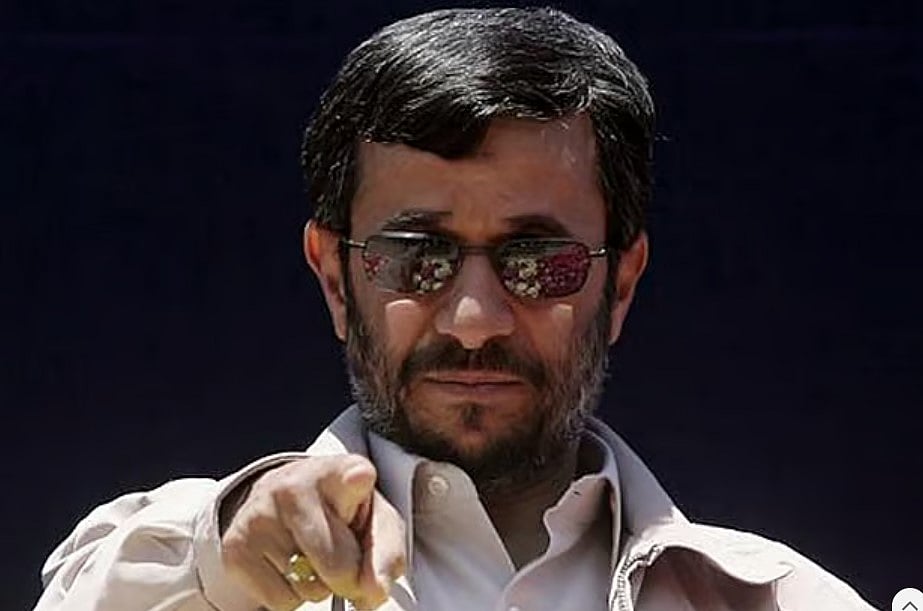
A recent New York Times investigation claims Israel's Mossad spent years cultivating former Iranian President Mahmoud Ahmadinejad as an intelligence asset to potentially lead Iran post-Islamic Republic. The report details alleged secret meetings in Budapest, encounters with former Mossad chief David Barnai, clandestine transactions, and a dramatic rescue of Ahmadinejad from his bombed Tehran residence on February 28. However, the narrative suggests Ahmadinejad quickly lost trust in his Israeli handlers and left their safe house, though the circumstances remain unclear. Analysts, including former Israeli intelligence professionals, have heavily criticized the report's plausibility, citing numerous inconsistencies and deviations from standard intelligence practices. They argue that real espionage operations are far more complex and less theatrical than depicted, with details emerging only partially years later. The report's timeline, compressing recruitment, dramatic events, and outcomes within months, raises significant doubts. Furthermore, the notion of recruiting Ahmadinejad, a highly controversial figure known for Holocaust denial and calls for Israel's destruction, to unite Iran and normalize relations with Israel is deemed illogical by experts familiar with Iran's power structure. They point out that ultimate authority in Iran rests with the Supreme Leader and the IRGC, suggesting any high-level recruitment efforts would target individuals closer to these centers of power. The report's reliance on anonymous U.S. and Iranian officials, without documentary or verifiable evidence, makes its claims weak and speculative.
The New York Times report on Mossad's alleged long-term operation to cultivate Mahmoud Ahmadinejad as a potential future leader of Iran presents a narrative that, while dramatic, faces significant analytical challenges regarding its strategic coherence and operational plausibility. From a geopolitical incentive perspective, the purported goal of installing a figure like Ahmadinejad, known for his anti-Israel rhetoric, to achieve normalization with Israel is inherently contradictory. Such a strategy would likely fail to secure international legitimacy or domestic Iranian unity, potentially exacerbating regional instability rather than resolving it. The report's depiction of intelligence operations also diverges from established operational security principles, raising questions about the alleged methods and the involvement of high-level intelligence officials in direct, risky encounters. In the context of evolving global power dynamics and the increasing influence of non-state actors and complex information warfare, the credibility of such a narrative, particularly when based on anonymous sources and lacking concrete evidence, warrants careful scrutiny. The underlying assumptions about recruitment targets and leadership transitions in Iran's intricate political system may overlook the resilience of established power structures, such as the IRGC, and the unpredictable nature of post-regime change scenarios.
AI-generated to prompt reflection — not editorial opinion, not advice, not a statement of fact. How this works.
