Ocean current driving global climate may be more complex than previously thought
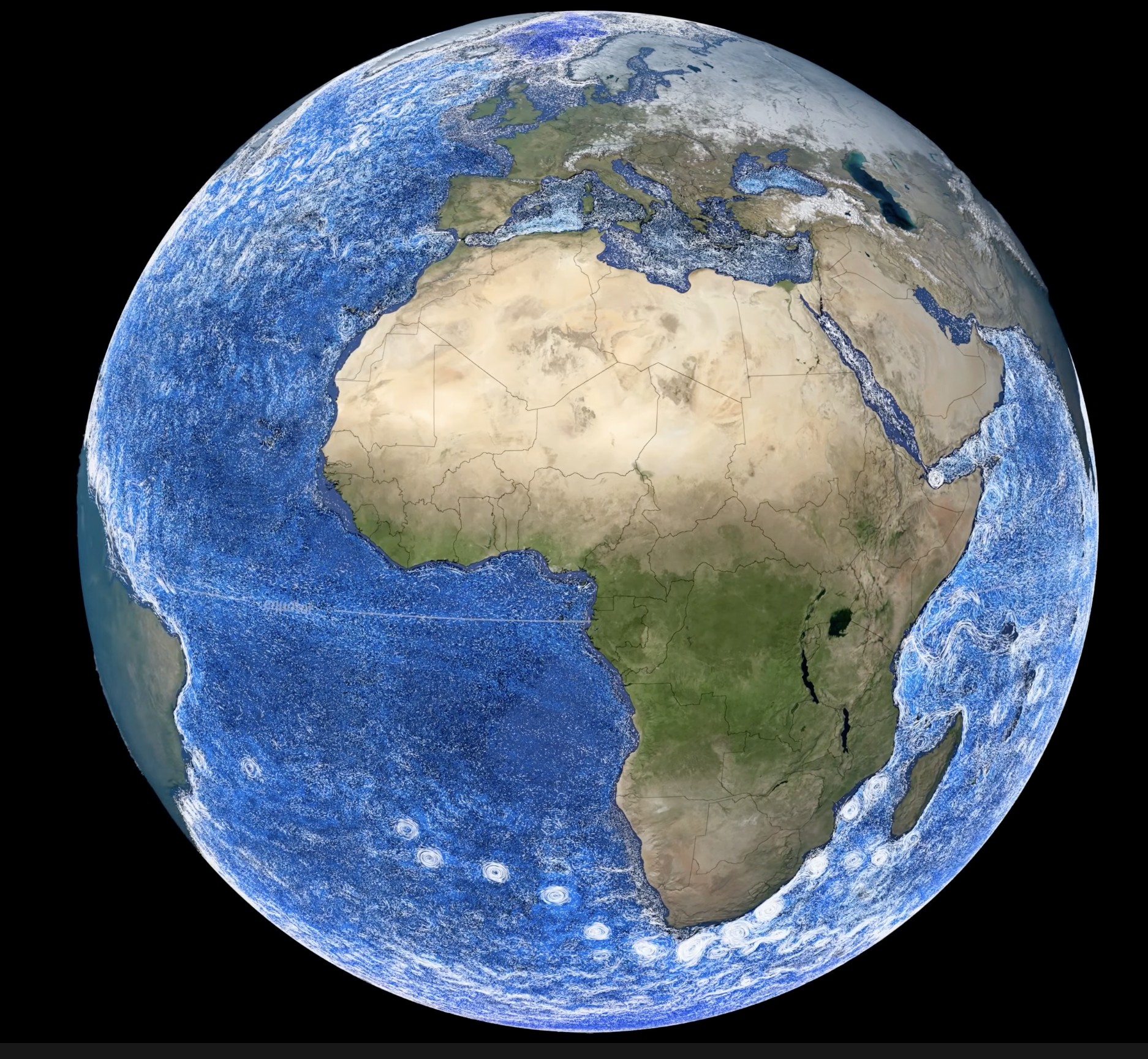
A new study published in "Nature Geoscience" challenges decades of scientific understanding regarding the Atlantic Meridional Overturning Circulation (AMOC), a critical system for distributing heat globally. Researchers from the Netherlands, the United States, China, and the United Kingdom analyzed the AMOC, which acts like a conveyor belt, transporting warm surface waters northward and colder, denser waters southward at depth. This circulation significantly influences climate patterns in the North Atlantic, Europe, and beyond. Traditionally, scientists believed that the Agulhas leakage, a flow of warm, salty water from the Indian Ocean into the Atlantic south of Africa, played a crucial role in maintaining the AMOC by increasing the density of North Atlantic water, causing it to sink and fuel the deep-water return flow. However, the new research, which examined ocean conditions between 3.6 and 2.6 million years ago during the late Pliocene, suggests a different dynamic. The study analyzed sediment cores from the Agulhas Plateau, using microfossils and organic compounds to reconstruct past ocean temperatures and water mass movements. Findings indicated that even when the Agulhas leakage drastically decreased, deep-water formation in the North Atlantic and parts of the ocean circulation intensified. This suggests the AMOC can remain strong even with a weakened Agulhas current. The researchers confirmed these findings by comparing data from the South African coast with records from the Gulf of Mexico, Caribbean, and other Atlantic regions, supported by climate simulations. While these results do not directly predict the AMOC's response to current global warming, they highlight that the linkages between major ocean currents are not static throughout Earth's history and can be influenced by various factors, including processes within the North Atlantic itself.
This study offers a valuable recalibration of our understanding of ocean circulation dynamics, moving beyond a singular dependency on the Agulhas current for AMOC stability. By analyzing paleoclimate data, researchers demonstrate that complex internal mechanisms within the North Atlantic likely play a more significant role in maintaining circulation strength than previously emphasized. This perspective prompts a re-evaluation of climate models, suggesting that future predictions should incorporate a broader range of oceanic feedback loops and regional influences, rather than relying on simplified causal chains. The findings underscore the inherent complexity and adaptability of Earth's climate systems, implying that interventions or changes in one oceanic region may not have predictable, linear impacts on global circulation, especially as multiple factors like Arctic meltwater and changing wind patterns interact.
AI-generated to prompt reflection — not editorial opinion, not advice, not a statement of fact. How this works.
