Ocelot Rescued After Highway Collision Released Back Into Wild
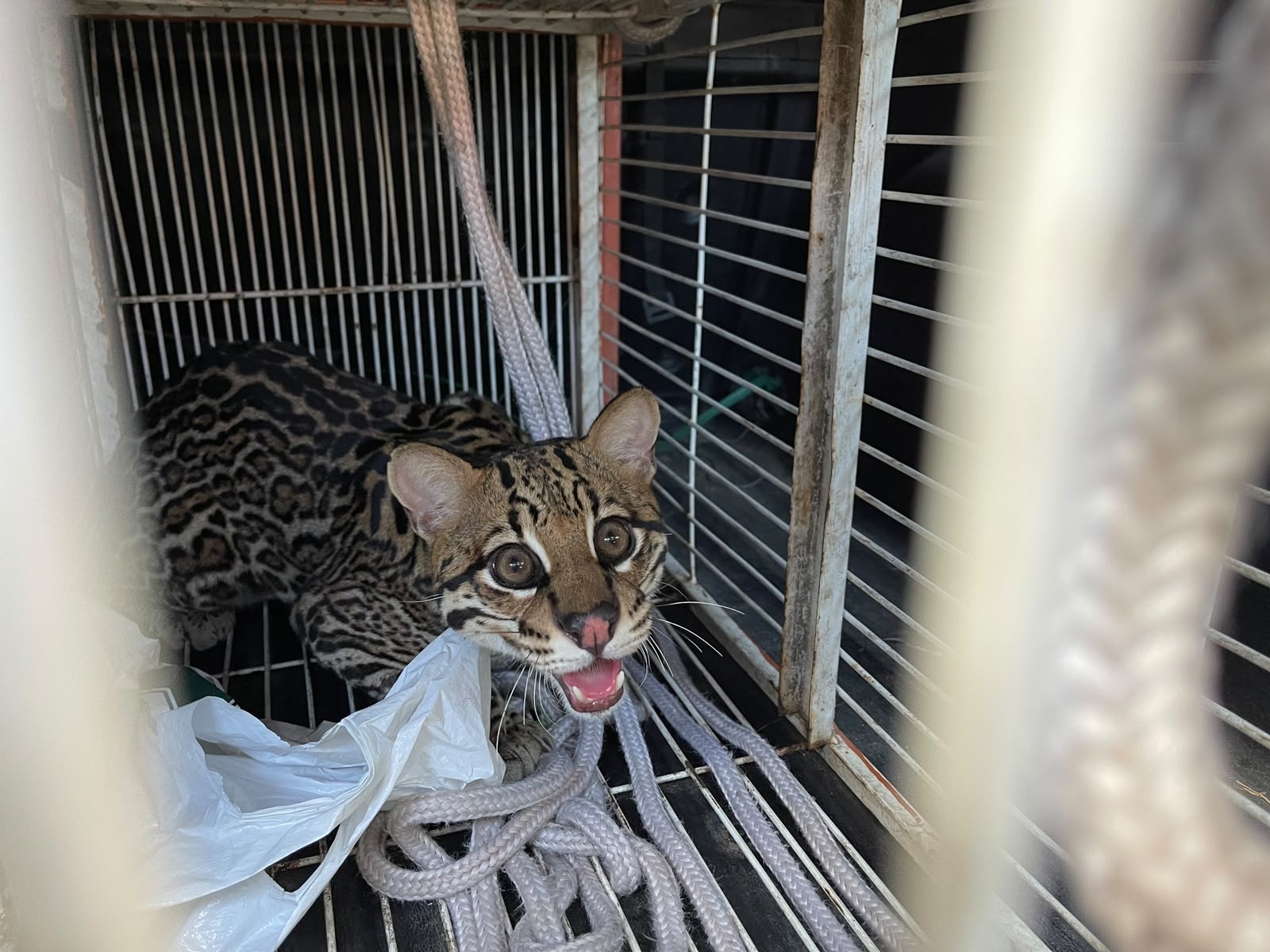
An ocelot that was struck by a vehicle on the RJ-116 highway in Cordeiro, Rio de Janeiro, has been returned to its natural habitat after nearly three months of rehabilitation. The animal was found on April 14th by SOS Vida Silvestre, in collaboration with the Rota 116 concessionaire, with severe head injuries sustained from the collision. Following its rescue, the ocelot received veterinary care from Dr. Jeferson Pires and was transferred to the Estácio University's Center for the Rehabilitation of Wild Animals (CRAS) for recovery. After thorough physical and behavioral assessments confirmed its readiness, the ocelot was released into a protected forest area in Cordeiro. This location was chosen for its proximity to the accident site and its connection to other Atlantic Forest fragments, facilitating the animal's reintegration. A microchip was implanted before release to enable ongoing monitoring of its movements and adaptation. The rapid rescue was crucial for the ocelot's survival, according to biologist Francis Leandro, president of SOS Vida Silvestre. He highlighted the eight-year-long collaborative effort between the NGO, the concessionaire, and local residents, which ensures swift specialized care for wild animals involved in accidents. Beyond rescue and rehabilitation, SOS Vida Silvestre conducts research and monitoring along the RJ-116 to identify high-incidence areas for animal collisions and inform mitigation strategies like fencing, signage, and wildlife crossings. The organization also engages in environmental education initiatives to promote Atlantic Forest conservation. Cordeiro records the highest number of ocelot sightings in Rio de Janeiro state, according to the Felinos da Serra Project, underscoring the species' vulnerability and ecological importance.
This event highlights the critical intersection of infrastructure development and wildlife conservation. The successful rehabilitation and release of the ocelot underscore the positive outcomes achievable through public-private partnerships focused on mitigating human-wildlife conflict. The implementation of monitoring via microchip and data-driven identification of collision hotspots represent proactive, systems-level approaches to reducing future incidents. Looking ahead, such initiatives will become increasingly vital as human encroachment on natural habitats intensifies, driven by economic development and population growth. The long-term challenge lies in scaling these conservation efforts and integrating them more deeply into transportation planning and land-use policies to foster coexistence between expanding human activities and biodiversity.
AI-generated to prompt reflection — not editorial opinion, not advice, not a statement of fact. How this works.