Oil Prices Surge Over 3% Amid Escalating US-Iran Conflict and Hormuz Strait Closure
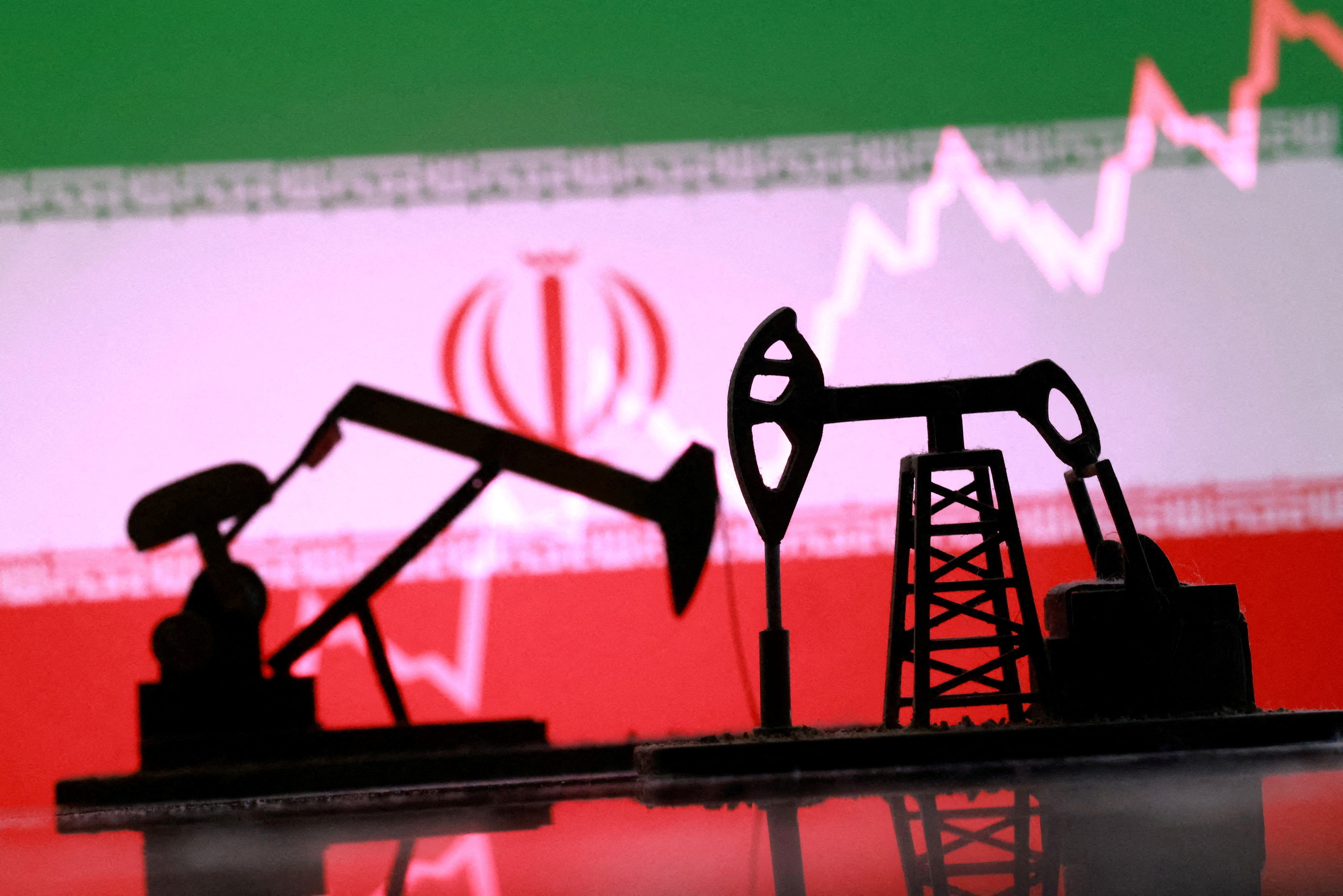
Global oil prices experienced a significant rise of over 3% on Monday, driven by the escalating conflict between the United States and Iran. The surge was further fueled by Iran's decision to re-close the Strait of Hormuz, a critical global oil shipping route. Brent crude advanced 3.1% to $78.44 per barrel, while US WTI crude rose 3.2% to $73.71. The Strait of Hormuz accounts for approximately one-fifth of the world's traded oil, and any disruption to shipping in the area poses a substantial risk to global supply, typically leading to increased commodity prices.
The heightened tensions also triggered a risk-off sentiment in financial markets, prompting investors to reduce exposure to riskier assets and seek refuge in safer havens like the US dollar. Asian stock markets showed mixed performance, with Shanghai's index falling 2.06% and Hong Kong's Hang Seng gaining 0.16%. The Japanese Nikkei dropped 1.92%, and South Korea's Kospi retreated 0.95%.
This market reaction followed a new exchange of attacks, with Iran's Revolutionary Guard claiming strikes on US military bases in Bahrain and Kuwait, as well as targets in Jordan and Oman. The US military stated it retaliated by targeting Iranian air defense systems, radars, missiles, drones, and vessels. The conflict, which began on February 28th, has already resulted in thousands of casualties, primarily in Iran and Lebanon. The Revolutionary Guard announced that normal traffic through the Strait of Hormuz would only resume once US military operations in the region cease, warning of further impacts on the global oil and gas market if confrontations continue. Iran is reportedly in discussions with Oman to manage passage through the strait, but these talks are reportedly hampered by US pressure. The rise in oil prices raises concerns about potential increases in fuel costs and inflation worldwide if the conflict persists and affects global supply.
The escalating military actions between the US and Iran, coupled with the closure of the Strait of Hormuz, represent a significant geopolitical risk event impacting global energy markets. The immediate price surge in oil reflects the market's sensitivity to supply chain disruptions in critical chokepoints. This situation highlights the inherent volatility of energy prices when subjected to geopolitical instability, underscoring the systemic risk associated with concentrated supply routes. As the world navigates the energy transition and increasing demand, such events serve as stark reminders of the need for diversified energy sources and robust diplomatic frameworks to ensure global economic stability. The interplay between military posturing, international trade, and commodity prices will continue to be a defining feature of the global economic landscape in the coming decade.
AI-generated to prompt reflection — not editorial opinion, not advice, not a statement of fact. How this works.