Oil Tanker Fire Halts Major Brazilian Highway, Causing Miles of Traffic
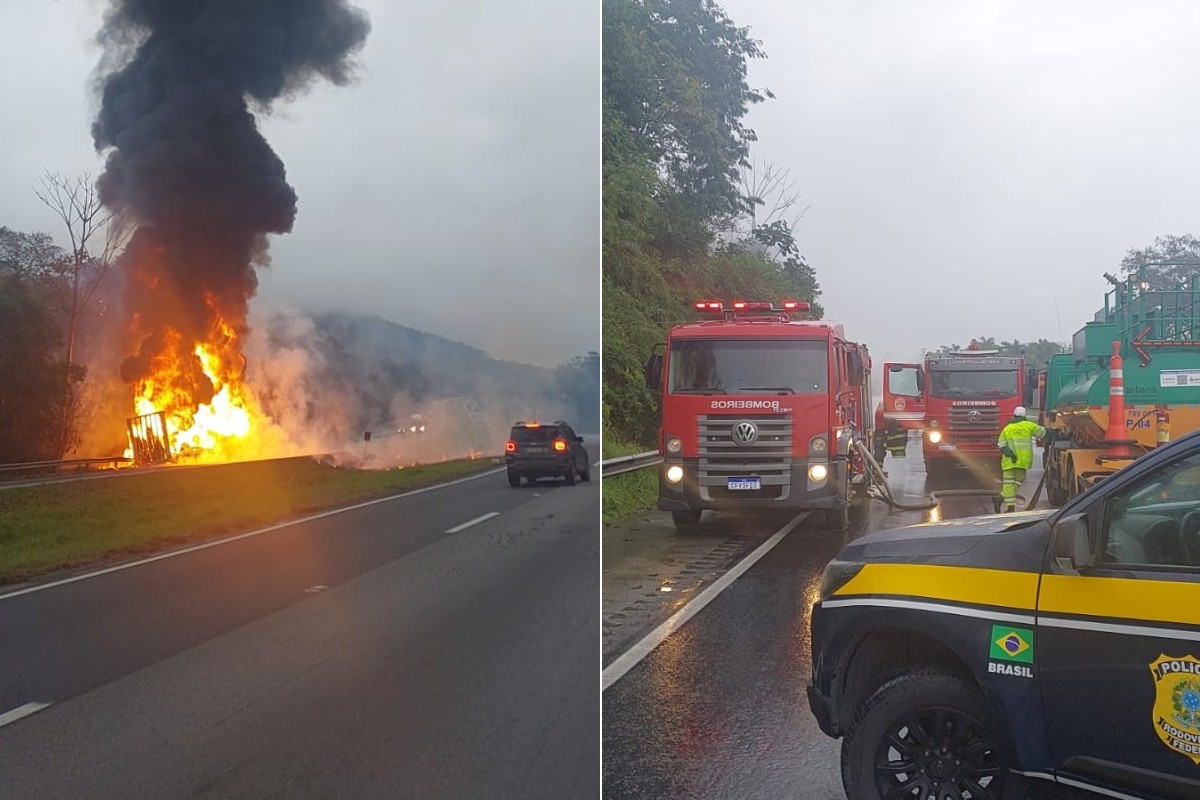
A tanker truck carrying approximately 25,000 liters of lubricating oil caught fire on Friday, September 24th, on the Régis Bittencourt Highway in Miracatu, São Paulo, Brazil. The incident, which occurred around kilometer 391 on the lane heading towards São Paulo, completely blocked the highway. Fortunately, no injuries were reported. According to the Federal Highway Police (PRF), the driver reported a mechanical failure in the trailer's wheels. After stopping to inspect, two tires burst, triggering the fire. The flames were contained to the semi-trailer, which was completely destroyed. The driver managed to detach the truck's cab from the burning trailer shortly after the fire began, around 7:30 AM. Firefighters brought the blaze under control by approximately 9:00 AM, initiating cooling and cleanup operations. Due to the nature of the cargo and potential environmental contamination risks, the highway concessionaire and the São Paulo State Environmental Company (Cetesb) were also involved. Both lanes were initially closed for safety, but one lane was reopened by 9:30 AM, leading to a 12-kilometer traffic jam. Investigations into environmental impacts are ongoing.
This incident highlights the critical need for robust safety protocols in the transportation of hazardous materials. The rapid spread of fire from a mechanical failure underscores the importance of proactive vehicle maintenance and inspection regimes, particularly for tankers carrying flammable or combustible liquids. The response involved multiple agencies, including highway police, fire departments, and environmental authorities, indicating the complex interdependencies in managing such emergencies. Future considerations should include enhanced real-time monitoring systems for vehicle health and immediate containment strategies to mitigate environmental damage and traffic disruption. The event also points to the systemic challenge of balancing efficient logistics with public safety and environmental stewardship in critical transportation corridors.
AI-generated to prompt reflection — not editorial opinion, not advice, not a statement of fact. How this works.