Oirschotse Heide Shows Green Shoots Two Months After Devastating Wildfire
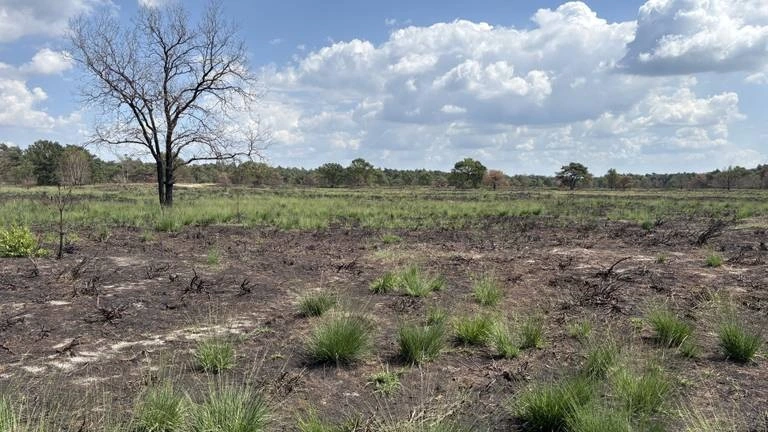
The Oirschotse Heide nature reserve is showing signs of recovery two months after a significant wildfire in late April. Patches of green are now visible across the landscape, which was left blackened by the blaze. Albert Jan Betten, a nature manager, observed that the vegetation is beginning to sprout again, indicating nature's resilience. The fire originated on the Oirschotse Heide during military exercises involving large Chinook transport helicopters near Eindhoven. Although firefighters brought the fire under control quickly, approximately 65 hectares of heathland and forest were destroyed. The fire had a severe impact on local wildlife, including amphibians and birds, and damaged many trees. Betten expressed hope for the heathland's recovery, noting the emergence of purple moor grass (pijpenstrootje). However, he cautioned that this grass is highly flammable and can outcompete native heather species. To mitigate future risks, Betten advocates for the use of sheep to graze on the purple moor grass, thereby reducing the amount of flammable material and giving native heather a better chance to thrive. In response to the incident, the Ministry of Defence announced immediate changes to its training protocols. When there is a high risk of wildfires, training exercises can now be postponed or halted by site supervisors. Additionally, fire-fighting resources must be available within 25 meters when specific types of ammunition are used, a distance not previously mandated. The Ministry emphasized that training remains necessary and will always carry inherent risks.
The Oirschotse Heide wildfire highlights the complex interplay between military training activities and ecological preservation. While nature demonstrates a capacity for regeneration, the rapid spread of flammable invasive species like purple moor grass presents a recurring challenge. The Ministry of Defence's revised protocols, including enhanced fire-fighting readiness and greater discretion for site supervisors, represent a procedural adjustment to mitigate immediate risks. However, a long-term strategy may need to consider the broader environmental impact of training grounds, exploring alternative training methods or land management practices that prioritize ecosystem resilience. The incident underscores the ongoing need for robust environmental impact assessments and adaptive management frameworks, particularly in areas where human activities intersect with sensitive natural habitats, to ensure sustainable coexistence in the face of evolving environmental pressures and operational demands.
AI-generated to prompt reflection — not editorial opinion, not advice, not a statement of fact. How this works.