Oldebroek Protest Against Reversal of LGBTQ+ Policies
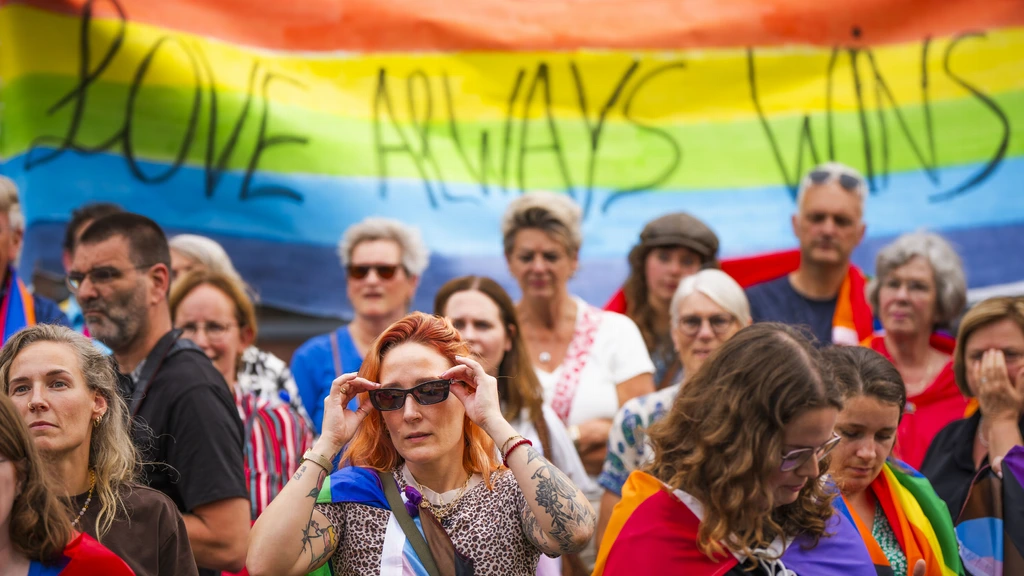
Approximately one hundred individuals gathered at the Oldebroek town hall to protest the new coalition's decision to eliminate local LGBTQ+ policies. The demonstration occurred as new aldermen were being installed in the Gelderland municipality. The coalition agreement, formed by the Christelijk Verbond Oldebroek (CVO), Staatkundig Gereformeerde Partij (SGP), and Actieprogramma Binnenstad Oldebroek (ABO), states that the "un-Christian" rainbow flag will no longer be flown on International Coming-Out Day. This marks a significant departure from policies established five years ago, which aimed to promote social acceptance and safety for the LGBTQ+ community. The new coalition also intends to revoke other existing LGBTQ+ initiatives. Kjeld Mooi, the protest's organizer, expressed his shock at the coalition's accord, despite not being part of the LGBTQ+ community himself, he felt compelled to advocate for their rights. Mooi, with donations from 250 individuals, funded a full-page advertisement in the local newspaper to call for a peaceful demonstration. The protest featured speakers and dancing, with Mooi emphasizing the need for the municipality to support those who feel unsafe. A counter-demonstration was also present, with an estimated 70 individuals from right-wing groups voicing their opposition. Prayer healer Jelthe Kloens, who has a large social media following, had called for a peaceful dialogue rather than a confrontational counter-protest. Tom de Nooijer, the CVO party leader and winner of the recent municipal elections, argued that investments in police and serious handling of reports are more effective in addressing insecurity than symbolic gestures like flying the rainbow flag. Over one hundred farmers were also present at the town hall for a separate protest concerning wolves. Oldebroek's decision to actively reverse existing LGBTQ+ policies makes it the first municipality in the Netherlands to do so, contrasting with previous efforts in 2021 to enhance social acceptance and safety through initiatives like school discussions and flying the rainbow flag. Mayor Tanja Haseloop-Amsing acknowledged that such policy shifts are part of democratic processes, even if not universally welcomed.
The events in Oldebroek highlight a tension between evolving social inclusivity policies and a political shift towards more conservative governance, particularly evident in the reversal of established LGBTQ+ support measures. This situation reflects broader societal debates regarding the role of local government in promoting diversity and the influence of specific political ideologies on public policy. The CVO party's electoral success suggests a segment of the electorate prioritizes different policy directions, emphasizing traditional values and alternative approaches to community safety over symbolic inclusivity. Future governance in Oldebroek will likely navigate the challenge of balancing the mandates of newly elected officials with the rights and well-being of all residents, potentially leading to ongoing discussions about municipal identity and the scope of public services.
AI-generated to prompt reflection — not editorial opinion, not advice, not a statement of fact. How this works.