Olin Bio's Hong Kong IPO Faces Headwinds After Vaccine Data Rumors Spark Stock Plunge
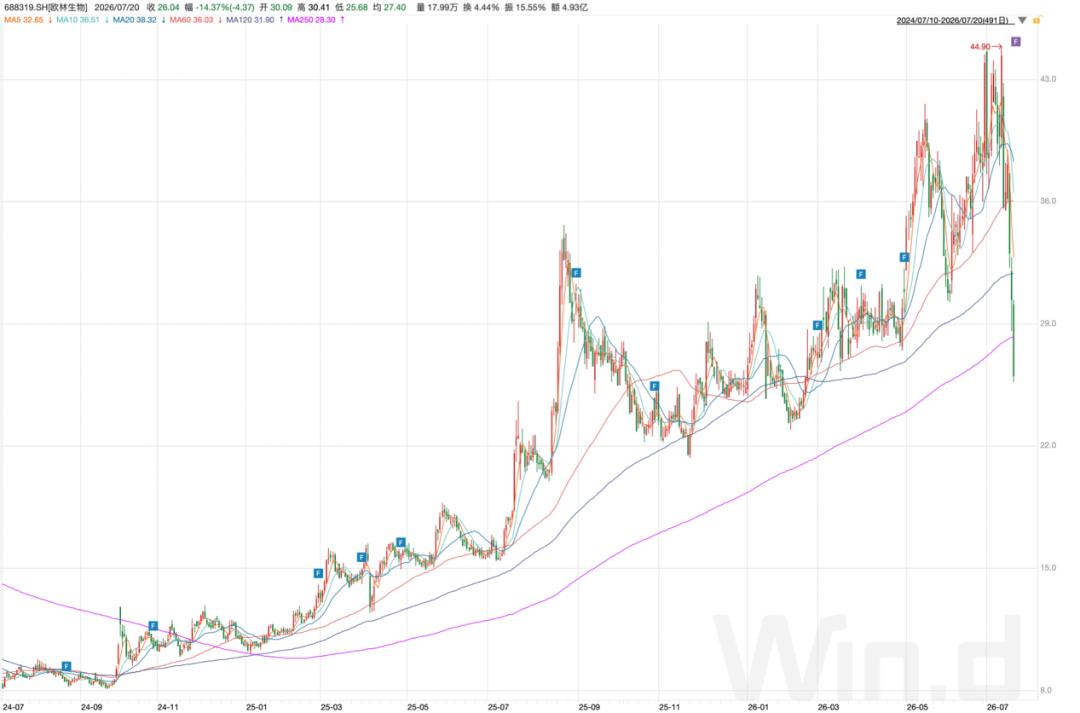
Olin Bio, a leading Chinese vaccine company, has refiled its IPO application with the Hong Kong Stock Exchange. The company seeks a higher valuation based on its innovative "superbug" vaccine pipeline and its established tetanus vaccine business. To clear regulatory hurdles for its Hong Kong listing, Olin Bio recently paid approximately 87.41 million yuan in back taxes and late fees, a sum equivalent to four times its projected net profit for 2025. The company's core product, a Staphylococcus aureus vaccine, recently showed promising Phase III clinical trial data, with protection rates significantly exceeding design standards and demonstrating good safety. This data suggests the vaccine is nearing commercialization. However, shortly after this positive announcement, rumors of data fabrication emerged, causing Olin Bio's A-share stock price to plummet by over 40% in just six trading days between July 13 and July 20, with a nearly 20% drop on July 13 alone. This sharp decline, occurring during a critical window for its Hong Kong IPO, has sparked significant market discussion regarding the causes and potential impacts on the listing. Olin Bio's A-share stock had previously surged over 500% since the start of 2024, driven by anticipation of its innovative vaccine pipeline, particularly the Staphylococcus aureus vaccine, which addresses a significant global public health challenge with a large unmet medical need. The company's established tetanus vaccine business remains a stable revenue generator, contributing over 87% of its total revenue in 2025 and demonstrating steady growth.
The recent sharp decline in Olin Bio's A-share stock, triggered by unsubstantiated rumors amidst positive clinical trial results, highlights the market's heightened sensitivity to adverse information within the vaccine sector. This sensitivity is amplified by historical precedents like the Changsheng Bio incident, which led to industry-wide regulatory tightening and investor caution. The company's dual strategy of leveraging its innovative pipeline for future growth while relying on its established tetanus vaccine for current revenue presents a classic biotech valuation challenge. The A-share price volatility and subsequent valuation reset will likely influence its Hong Kong IPO valuation and fundraising targets. Investors will be scrutinizing the company's ability to navigate regulatory processes and market sentiment, particularly as it aims to capitalize on the significant unmet need in the 'superbug' vaccine market, a space where it appears to have a first-mover advantage.
AI-generated to prompt reflection — not editorial opinion, not advice, not a statement of fact. How this works.