One-Pedal Drive in EVs: A Potential Hazard in Emergency Situations
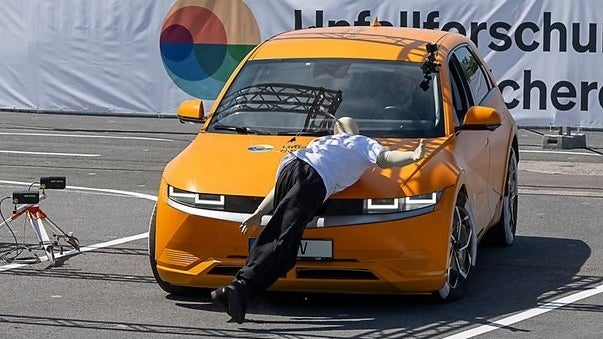
Accident researchers indicate that electric vehicles (EVs) are as safe as internal combustion engine cars regarding accident frequency. However, certain accident patterns are becoming noticeable, such as unintended acceleration when starting. This phenomenon might be linked to the 'One-Pedal Drive' feature. This function allows drivers to accelerate and brake using only the accelerator pedal, as lifting the foot initiates regenerative braking. While convenient for everyday driving, it can lead to unexpected deceleration or acceleration if the driver misjudges their foot movement, particularly in high-stress emergency situations. This can be problematic when a driver needs precise control over speed, such as during a sudden obstacle avoidance maneuver or when reacting to unexpected traffic conditions. The concern is that the automatic braking effect of One-Pedal Drive could be misinterpreted by the driver or lead to a reaction that exacerbates the situation instead of resolving it. Further investigation is needed to understand the full implications of this technology in critical driving scenarios.
The One-Pedal Drive feature in electric vehicles, while enhancing efficiency and driver convenience, introduces a novel interaction dynamic that warrants careful consideration in safety protocols. The system's reliance on the accelerator pedal for both propulsion and deceleration, mediated by regenerative braking, presents a potential point of failure if driver input is imprecise under duress. This design choice highlights a broader challenge in human-machine interface development for advanced automotive technologies: ensuring intuitive and predictable behavior across the full spectrum of driving conditions, especially in emergencies. Future iterations may need to incorporate enhanced driver feedback mechanisms or adaptive control algorithms that can distinguish between intentional braking and accidental lift-off, thereby mitigating risks associated with unintended acceleration or deceleration. The industry's focus on optimizing energy recovery must be balanced with robust safety engineering to address these emergent human-factor considerations.
AI-generated to prompt reflection — not editorial opinion, not advice, not a statement of fact. How this works.