One-Ton Elephant Seal 'Neil' Becomes Internet Sensation, Causes Disruption in Tasmania
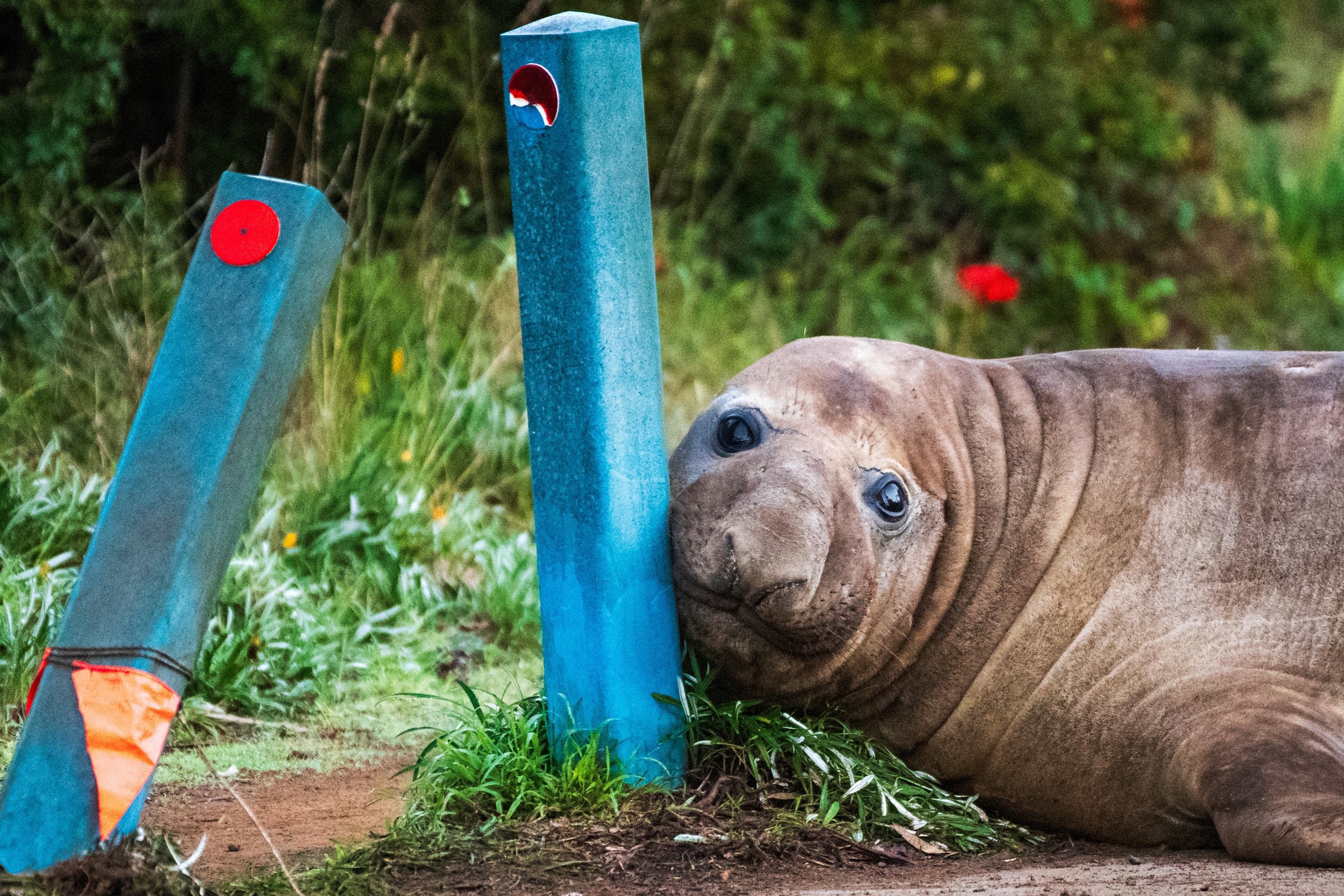
Neil, a 5-year-old, one-ton elephant seal, has become an internet celebrity in Tasmania, Australia, for his disruptive behavior that includes blocking streets and damaging property. The young male seal, weighing approximately 1,000 kg, has gained over a million social media followers for his antics, which involve interacting with parked cars, knocking over traffic posts, and damaging fences. Neil returned to his birth region on the Tasmanian coast in June, a natural cycle for feeding at sea before returning to land. However, his increased size and online fame have raised concerns among authorities. Visitors are reportedly ignoring safety guidelines to capture photos and videos of Neil, prompting warnings from the Department of Natural Resources and Environment Tasmania. Kris Carlyon, a representative, described the seal's popularity as a "double-edged sword," highlighting instances where people, including those with young children, approached too closely. Authorities are urging the public to maintain distance and avoid sharing Neil's exact location to prevent large gatherings. They fear an incident could necessitate a risky operation to remove the animal, citing the case of Freya the walrus, who was euthanized in Norway in 2023 due to public safety risks. Experts explain Neil's behavior as natural practice for young males learning dominance, using inanimate objects like cars for practice since he lacks encounters with other young males. His presence in Tasmania is unusual, as elephant seal populations are typically found on subantarctic islands. Neil could potentially triple his current weight and reach up to five meters in length as an adult, though many males do not survive to reproductive age. Despite the disruptions, some residents have embraced Neil as a local symbol, acknowledging his significant presence in their community.
The viral fame of Neil the elephant seal highlights the complex interplay between wildlife, public fascination, and conservation management in the digital age. While Neil's natural behaviors, such as practicing dominance displays, are amplified by his unusual environment and subsequent internet stardom, the situation underscores a broader challenge: managing public interaction with charismatic wildlife without compromising animal welfare or human safety. The "love Neil to death" sentiment reflects a potential systemic risk where well-intentioned public engagement can inadvertently lead to negative outcomes, mirroring past incidents with other viral animals. Future strategies may need to balance the benefits of public awareness with robust protocols for maintaining safe distances and managing access, particularly as AI-driven content creation continues to incentivize close-proximity wildlife encounters. This scenario prompts consideration of how to foster appreciation for wildlife through responsible digital engagement, rather than through direct, potentially harmful, interaction.
AI-generated to prompt reflection — not editorial opinion, not advice, not a statement of fact. How this works.