Online Rumors Fueled Deadly Migrant Surge Towards Spain's Ceuta
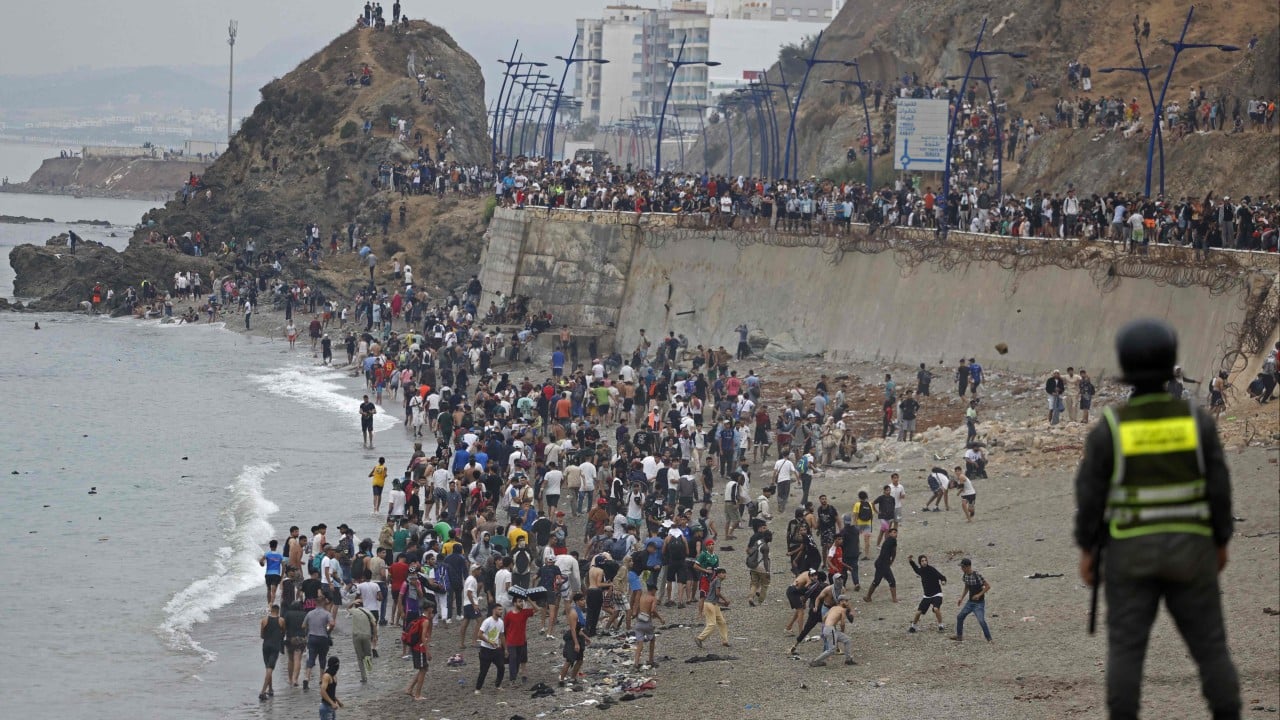
A surge of thousands of Moroccans towards Spain's North African territory of Ceuta was reportedly triggered by a wave of online rumors. Social media platforms like Instagram, Facebook, and TikTok played a significant role in disseminating these unverified claims. Initial Instagram posts suggested that Spain's border with Morocco was about to open. Subsequently, Facebook users shared information about coastguard patrol movements, while TikTok videos provided guidance on swimming routes. These posts, amplified by shares and comments, led many young people to believe that Europe was suddenly accessible. Consequently, large numbers began migrating towards the border with Ceuta. Packed buses were observed traveling to the adjacent Moroccan city of Fnideq, and regional trains also became crowded as people made their way to the border.
The rapid dissemination of unverified information across social media platforms highlights a critical vulnerability in border management and public information systems. The event demonstrates how digital communication channels can be leveraged to mobilize large groups, potentially overwhelming established security and humanitarian responses. Future strategies may need to incorporate proactive digital monitoring and rapid, accurate counter-messaging to mitigate the impact of misinformation campaigns that can lead to dangerous migratory events. Understanding the algorithmic amplification of such content is crucial for developing resilient systems capable of distinguishing between genuine communication and coordinated disinformation.
AI-generated to prompt reflection — not editorial opinion, not advice, not a statement of fact. How this works.
