Only 3 of 13 Presidential Candidates Have Chosen Running Mates for 2026 Election
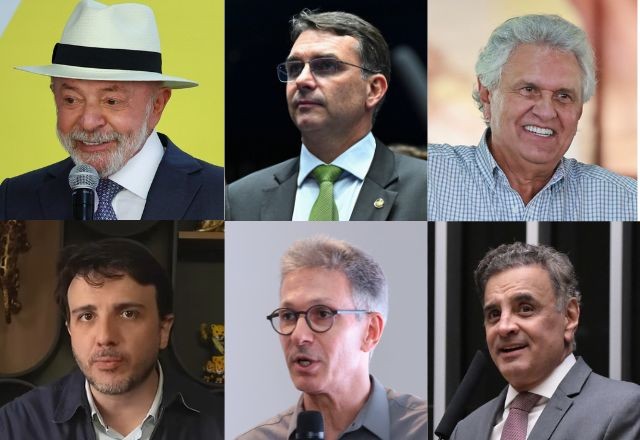
With less than 100 days until the first round of Brazil's 2026 presidential elections on October 4th, only three out of thirteen declared pre-candidates have finalized their vice-presidential running mates. The latest announcement came on Wednesday, May 1st, when Aroldo Medina of the Missão party was officially named as the vice-presidential pick for Renan Santos, also from Missão. Earlier the same day, Ronaldo Caiado of the PSD party announced Gilberto Kassab, the national president of PSD, as his running mate. President Luiz Inácio Lula da Silva of the PT party was the first to confirm his ticket, announcing in March that current Vice President Geraldo Alckmin of the PSB party would remain his running mate for his re-election bid. The candidacies still require confirmation at party conventions and registration with the Electoral Justice by August. Senator Flávio Bolsonaro of the PL party is reportedly favoring a female running mate, with former Caixa Econômica Federal president Daniella Marques being a favored option, though this decision is also subject to negotiations with the Republicanos party, to which Marques is affiliated. Romeu Zema of the Novo party is also in discussions, considering Geraldo Rufino, a Novo party member and businessman, as a potential vice-presidential candidate, while also exploring alliances with the Podemos party. The president of Democracia Cristã, João Caldas, indicated that his party is seeking alliances to potentially pair former STF minister Joaquim Barbosa with a vice-presidential candidate from parties like Republicanos or MDB. With party conventions set to begin on July 20th, an acceleration in vice-presidential selections is expected in the coming weeks, with key decisions anticipated within the next two weeks.
The approaching 2026 Brazilian presidential election reveals a strategic delay in vice-presidential nominations among many pre-candidates, indicating a complex interplay of coalition-building, internal party dynamics, and candidate positioning. This lag suggests that the selection of running mates is being leveraged as a critical bargaining chip in negotiations with potential allies and within party structures, rather than being a purely predetermined choice. The need for broad alliances, particularly for candidates outside the established major parties, means that vice-presidential slots are valuable currency for securing endorsements and expanding electoral reach. As the election cycle progresses, the pressure to finalize tickets will intensify, potentially leading to last-minute compromises and shifts in established political alignments. This process highlights the decentralized and often fluid nature of Brazilian presidential politics, where consensus-building and strategic maneuvering are paramount in the lead-up to formal nominations.
AI-generated to prompt reflection — not editorial opinion, not advice, not a statement of fact. How this works.