OpenAI Unveils ChatGPT Work with GPT-5.6 for Automated Business Tasks
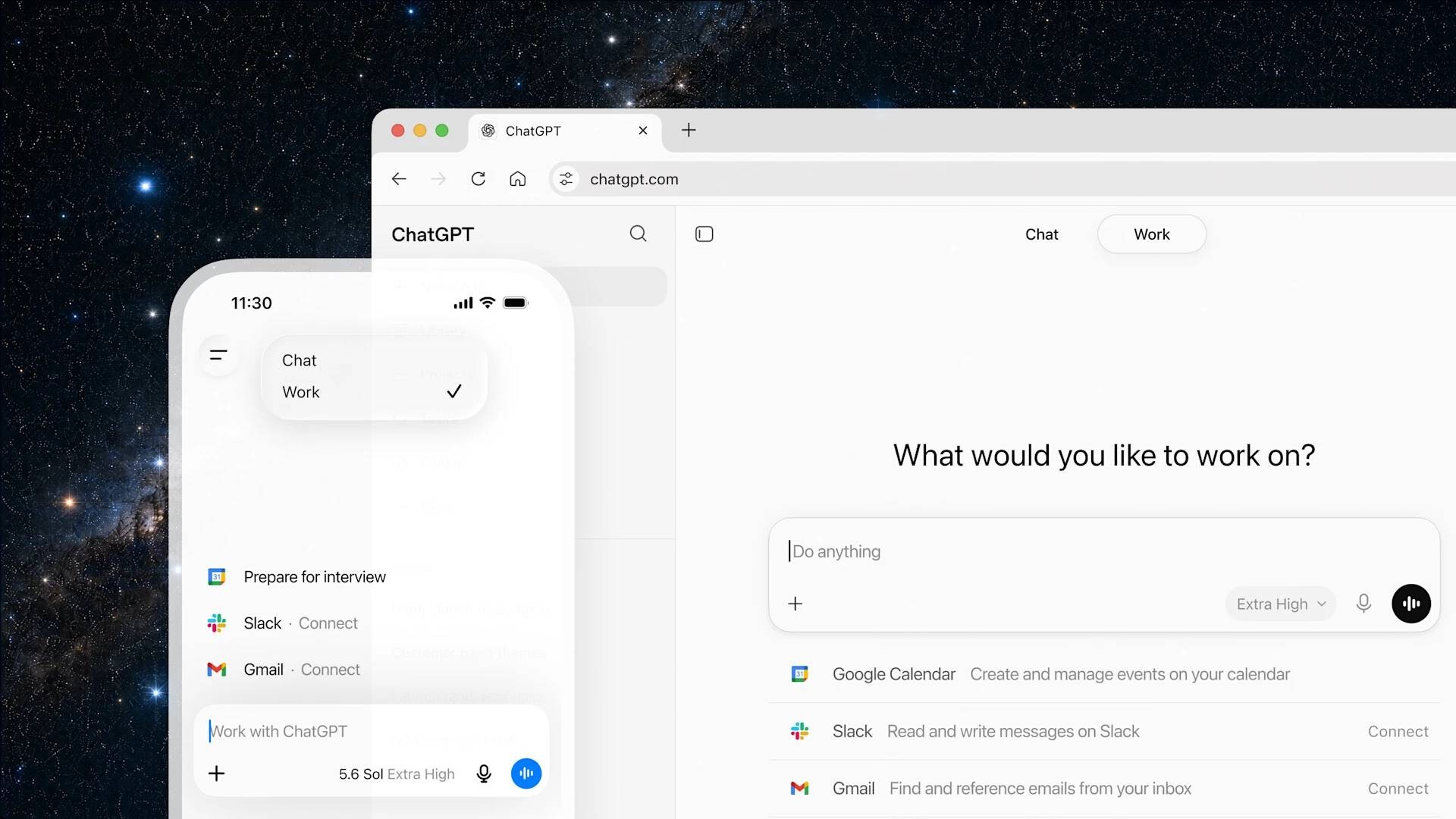
OpenAI has launched ChatGPT Work, an artificial intelligence agent designed to automate professional tasks such as creating spreadsheets and slide presentations. The AI can reportedly complete complex processes with a single command by breaking them down into smaller, manageable steps. ChatGPT Work integrates with external services including email, calendars, and project management tools, as well as applications like Excel, Teams, Slack, and Notion. This new agent is powered by the GPT-5.6 model, also released on Thursday, which comes in three versions: Sol for advanced tasks, Terra for balancing efficiency and cost, and Luna for economy. Initially, ChatGPT Work is available to subscribers of Pro, Enterprise, and Edu versions, with wider availability for Plus and Business users planned. The GPT-5.6 model is exclusive to paid OpenAI services. The release of GPT-5.6 was delayed from June at the request of the U.S. government, citing national security concerns and potential misuse of advanced AI. OpenAI stated that GPT-5.6 Sol's performance is comparable to Anthropic's Mythos Preview. ChatGPT Work can operate autonomously but allows users to intervene, ask questions, change directives, and review actions. It can also handle repetitive tasks like website monitoring and summarization, even when the user is offline, on a set schedule or triggered by specific events.
AI agents capable of automating complex business workflows represent a significant technological advancement, potentially reshaping productivity paradigms. The integration of these agents with existing enterprise software and communication platforms suggests a trend towards more deeply embedded AI within daily operations. OpenAI's tiered GPT-5.6 model structure reflects a strategic approach to market segmentation, catering to diverse user needs and cost sensitivities. The U.S. government's intervention highlights ongoing national security considerations surrounding the development and deployment of powerful AI, prompting a closer examination of governance frameworks. As these tools mature, businesses will face decisions regarding workforce adaptation, data privacy, and the ethical implications of delegating critical functions to AI, balancing efficiency gains against potential risks and the need for human oversight.
AI-generated to prompt reflection — not editorial opinion, not advice, not a statement of fact. How this works.