Operation Destroys Plane, Shuts Down Illegal Airstrip in Yanomami Territory
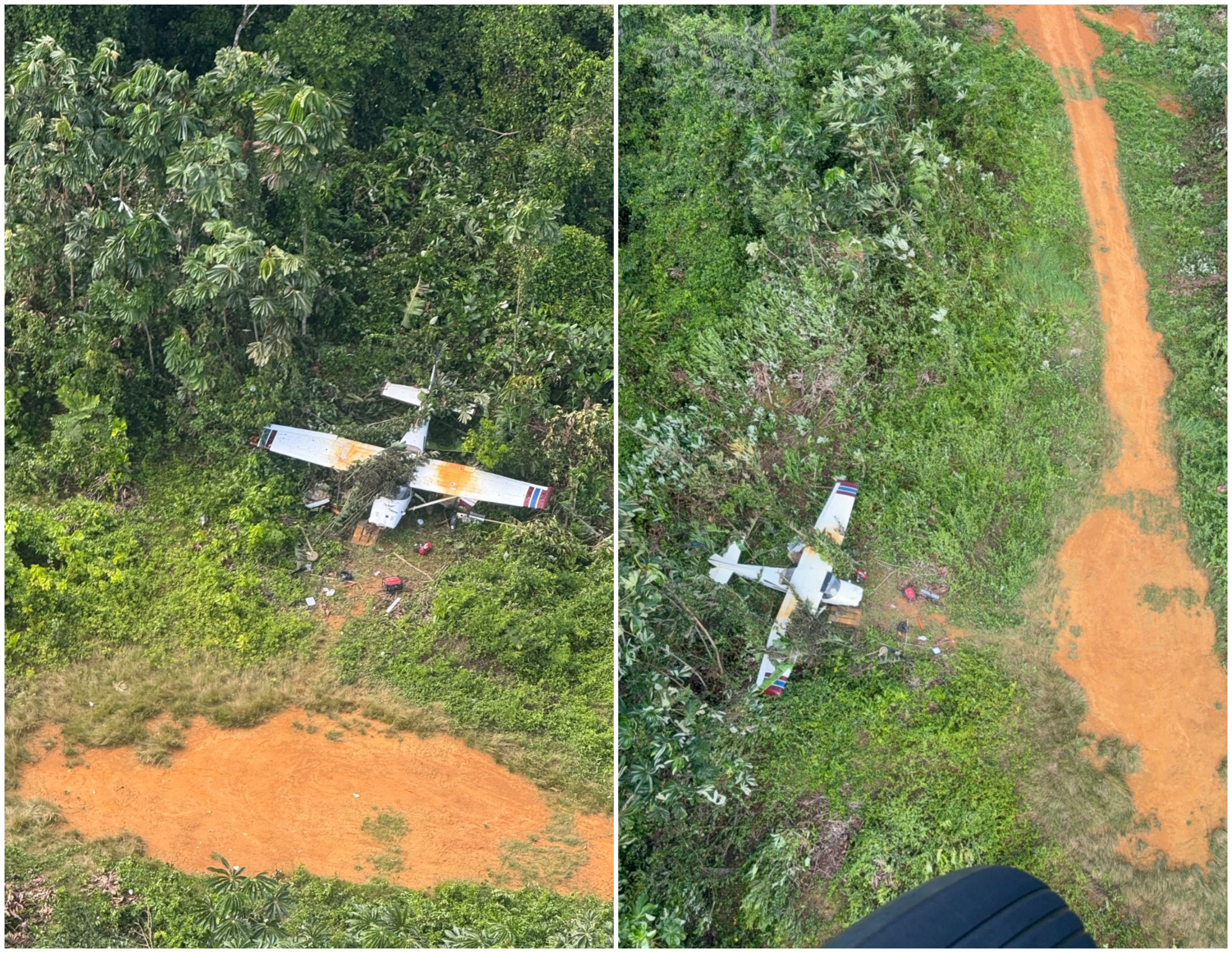
Brazilian military forces have destroyed a small aircraft and a clandestine airstrip used by illegal miners in the Yanomami Indigenous Territory, located in Roraima. The operation, dubbed Catrimani II and conducted on Thursday, February 9th, also resulted in the destruction of a raft utilized in illegal mining activities. The aircraft was discovered hidden within the forest in a region known as 'Pista do Hélio,' near the Catrimani River. The operation was executed by the Joint Operational Command Catrimani II, comprising personnel from the Brazilian Army and the Brazilian Air Force (FAB). Access to the remote and difficult-to-reach area was facilitated by intelligence gathering and integrated planning, with soldiers transported via a FAB H-60 Black Hawk helicopter. The mission involved agents from the 1st Jungle Infantry Brigade and the 6th Engineering Construction Battalion. Operation Catrimani II is a federal government task force aimed at combating illegal mining and dismantling the logistical support systems used by criminals within the Yanomami territory. The Yanomami Indigenous Territory, spanning approximately 9.6 million hectares across Roraima and Amazonas and bordering Venezuela, is home to the Yanomami and Ye'kwana peoples. These communities have long suffered from the devastating impacts of illegal mining, including deforestation, mercury contamination of rivers, environmental degradation, and severe health and security crises. Since 2023, the federal government has maintained a task force to address the humanitarian crisis, focusing on removing invaders, destroying illegal infrastructure, and increasing aid to the indigenous population.
This operation represents a direct intervention against the logistical infrastructure supporting illegal mining in a sensitive indigenous territory. By destroying the aircraft and airstrip, authorities aim to disrupt the operational capacity of illegal miners, thereby mitigating immediate environmental damage and security threats to the Yanomami and Ye'kwana peoples. The long-term effectiveness of such actions hinges on sustained enforcement and addressing the underlying economic drivers that incentivize illegal mining. Future strategies may need to incorporate broader socio-economic development initiatives for surrounding communities and enhanced cross-border cooperation, given the transnational nature of resource extraction, to create a more durable solution beyond intermittent enforcement actions.
AI-generated to prompt reflection — not editorial opinion, not advice, not a statement of fact. How this works.