Opposition alliance accuses ruling party of fascism, vows to continue protests
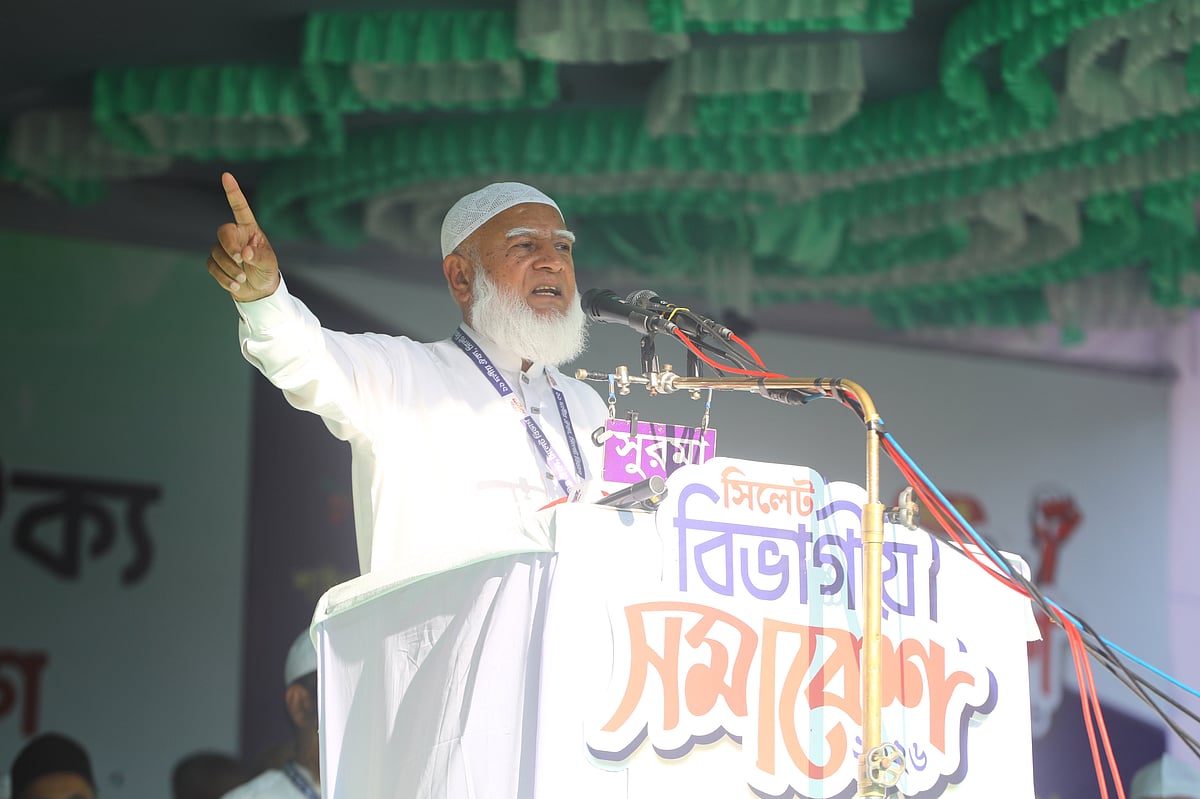
Jamaat-e-Islami chief Shafiqur Rahman has stated that the BNP is beginning to follow the path of the "fascist Awami League." He asserted that while the BNP was once oppressed, they are now adopting similar tactics to the current government. Rahman accused the ruling party of widespread, shameless politicization across all sectors of society, effectively nationalizing corruption. He made these remarks at a divisional rally organized by an 11-party alliance in Sylhet, where he was the chief guest. The rally's stated purpose was to demand the implementation of a "referendum's verdict" and the prosecution of those involved in the "July massacre."
Rahman warned the BNP, stating that just as they ousted the Awami League, the public would remove the BNP if they established fascism. He emphasized that 70% of the population voted "yes" for change and reform in the referendum, and they would not allow this verdict to be insulted. The movement, he declared, would not cease until the goal of liberation is achieved, with further calls for gatherings in Dhaka. He also voiced dissatisfaction with Sylhet's development, calling for the full internationalization of Sylhet Osmani Airport, the expansion of the Dhaka-Sylhet highway to six lanes, and the establishment of an engineering university and a full-fledged medical university in the region.
During the rally, other opposition leaders also voiced strong criticisms. Colonel (Retd.) Oli Ahmad of the LDP questioned the government's inaction against corruption and rising prices, alleging that party members and corrupt businessmen are being protected. Nahid Islam, convener of the National Citizens Party (NCP), warned that the government would not complete its five-year term if the referendum's verdict is ignored. He also urged Tarique Rahman to decide whether he seeks a five-year elected term or faces consequences for disregarding public will, similar to other leaders globally. Islam further accused the BNP of politicizing institutions like the Election Commission and called for its reform or the resignation of its commissioners. He also extended solidarity to student protesters in India who successfully forced the resignation of their education minister.
The opposition's rhetoric, framing the ruling party as "fascist" and accusing the BNP of adopting similar tactics, highlights a deep polarization within the political landscape. This framing, while emotionally charged, serves to mobilize supporters by invoking historical grievances and fears of authoritarianism. The demands for implementing a "referendum's verdict" and prosecuting alleged perpetrators suggest a desire for systemic change and accountability. However, the opposition's own accusations of the BNP politicizing institutions raise questions about their commitment to democratic processes. Future political stability may depend on the ability of all actors to engage in substantive policy debates and adhere to established legal and electoral frameworks, rather than relying on confrontational rhetoric and broad accusations of systemic corruption. The emphasis on "liberation" and "fighting" indicates a long-term struggle, potentially leading to prolonged instability if dialogue and compromise are not prioritized.
AI-generated to prompt reflection — not editorial opinion, not advice, not a statement of fact. How this works.