Opposition Chief Whip: Sheikh Hasina Will Return to Bangladesh Only for Death Sentence Execution
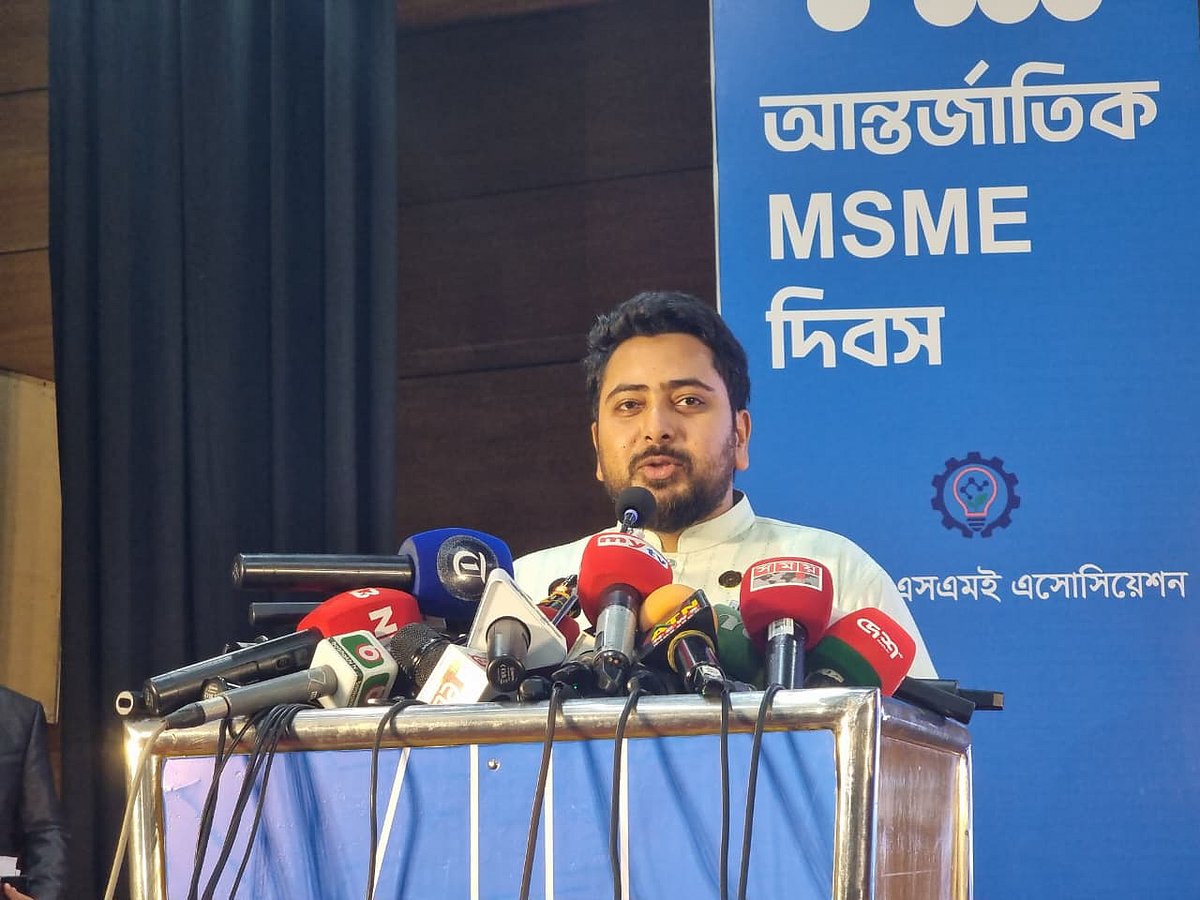
Nahid Islam, convener of the National Citizen Party (NCP) and Chief Whip of the opposition in the National Parliament, stated that former Prime Minister Sheikh Hasina, ousted by a popular uprising, will return to Bangladesh solely for the execution of her death sentence. Islam asserted that a verdict has already been passed in Bangladesh and that the current government should facilitate the alleged "genocidaire's" return through proper diplomatic and legal channels to enforce the sentence. He made these remarks on Friday at an event organized by the National SME Association to celebrate International MSME Day 2026 at the Institution of Diploma Engineers in Kakrail, Dhaka. Islam referenced a recent interview where Hasina indicated plans to return to the country in December, following what he described as 16 years of "devastation." He emphasized that the decision on Hasina's return, including the terms of surrender and the timing, rests with the Bangladesh government, which must negotiate with Delhi. He also suggested that executing the death sentence would contribute to national stability and urged the government to act swiftly. Islam further commented on the political situation, stating that those involved in the July popular uprising are prepared for any eventuality to protect the nation's sovereignty and economy. He also criticized the Awami League, calling it a Delhi-controlled entity rather than a political party, implying Hasina's decisions are dictated by India. Additionally, Islam expressed dissatisfaction with the 10-year prison sentence given to JSD (Inu) President Hasanul Haq Inu for crimes against humanity, deeming it questionable and noting the government's lack of reaction.
This commentary from an opposition figure frames the potential return of a former prime minister as an inevitability tied to judicial retribution. The analysis focuses on the political incentives for the current government to pursue such a course, suggesting it could be presented as a move towards national stability and accountability. However, it also highlights the complex geopolitical dynamics, particularly the influence of external powers like India, which may complicate or dictate the legal and political processes. The framing of a political opponent as a "genocidaire" and the call for a death sentence execution, while reflecting internal political discourse, risks escalating tensions. From a systems perspective, the emphasis on retribution over reconciliation or restorative justice presents a potential challenge for long-term societal healing and democratic consolidation, particularly in a region with a history of political instability and contested legal frameworks. The critique of a political party as being externally controlled raises questions about national sovereignty and the autonomy of domestic political actors.
AI-generated to prompt reflection — not editorial opinion, not advice, not a statement of fact. How this works.