Opposition Lawmaker Holds Sign Calling Lee Jae-myung 'Leader of Rebellion' in Gwangju
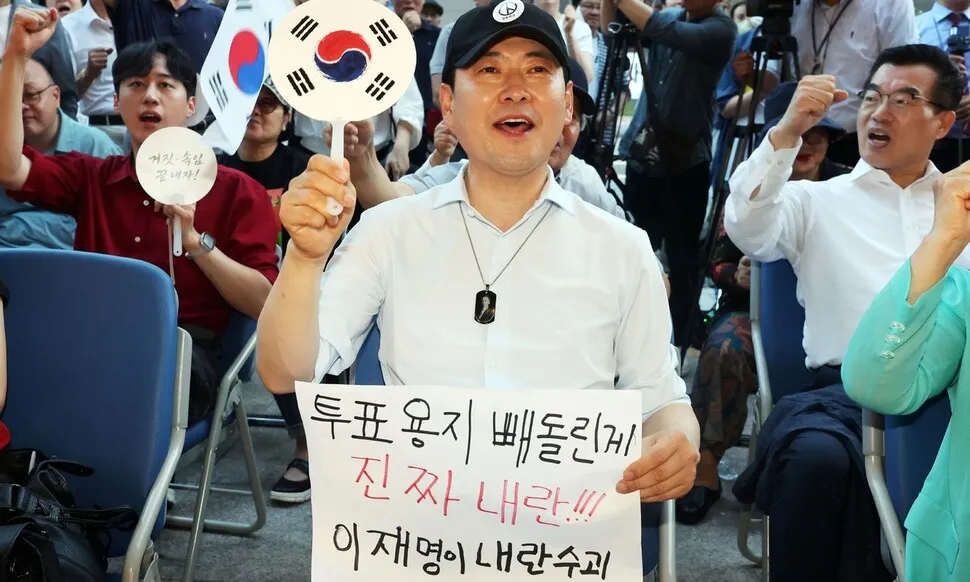
Jang Dong-hyuk, a member of the National Assembly, has again displayed a sign accusing Lee Jae-myung, the leader of the opposition Democratic Party, of being the "leader of a rebellion." This time, Jang held the sign in Gwangju, a city historically significant for its democratic movement. The protest action took place during a public appearance by Lee Jae-myung. Jang's repeated use of such messaging highlights a significant political rift and intense personal animosity between the two politicians. The accusation of "rebellion" is a severe charge, particularly given the context of Gwangju's history. This incident underscores the highly polarized nature of South Korean politics, where strong rhetoric is often employed by opposing factions.
This political demonstration reflects the deep partisan divisions within South Korea. The use of highly charged language like "leader of rebellion" by a lawmaker against a prominent opposition figure, especially in a city like Gwangju, signals an escalation of political rhetoric. Such tactics, while potentially galvanizing a party's base, risk further polarizing the electorate and undermining constructive political discourse. Future political strategies may need to balance assertive opposition with mechanisms for dialogue to address national challenges effectively. The long-term implications for democratic norms and public trust warrant careful consideration as political actors navigate these intense rivalries.
AI-generated to prompt reflection — not editorial opinion, not advice, not a statement of fact. How this works.