Orbán Government's Billion-Dollar Industrialization Push Fails to Revitalize Economy, Says GKI
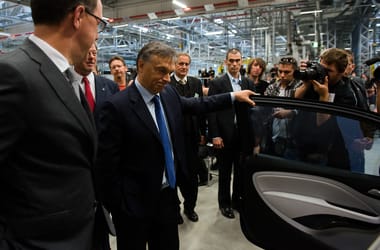
Hungary's Orbán government launched an industrialization program ten years ago with the aim of revitalizing the country's economy. However, according to an analysis by the GKI economic research institute, the situation has only worsened since the program's inception. The government reportedly invested billions of dollars in this initiative, seeking to boost domestic manufacturing and industrial capacity. Despite these significant financial outlays, the desired economic turnaround has not materialized. GKI's assessment suggests that the policies implemented have been ineffective in achieving their stated goals. The program's failure indicates potential issues with its strategy, execution, or the broader economic environment. The analysis highlights a decade-long effort that has not yielded positive results, raising questions about the effectiveness of the government's economic strategy.
The Hungarian government's decade-long industrialization initiative, backed by substantial financial investment, has reportedly failed to achieve its intended economic revitalization, according to GKI. This outcome suggests a potential misalignment between policy objectives and their implementation, or perhaps external economic headwinds that overwhelmed the program's design. Examining the incentive structures and market dynamics that may have hindered domestic industrial growth, despite significant state intervention, is crucial. Future economic strategies might benefit from a deeper understanding of sustainable industrial development models and adaptive policy frameworks that can better navigate complex global economic shifts, particularly in the context of emerging technological paradigms.
AI-generated to prompt reflection — not editorial opinion, not advice, not a statement of fact. How this works.