Organizational Climate vs. Psychosocial Risk: Understanding the Crucial Differences
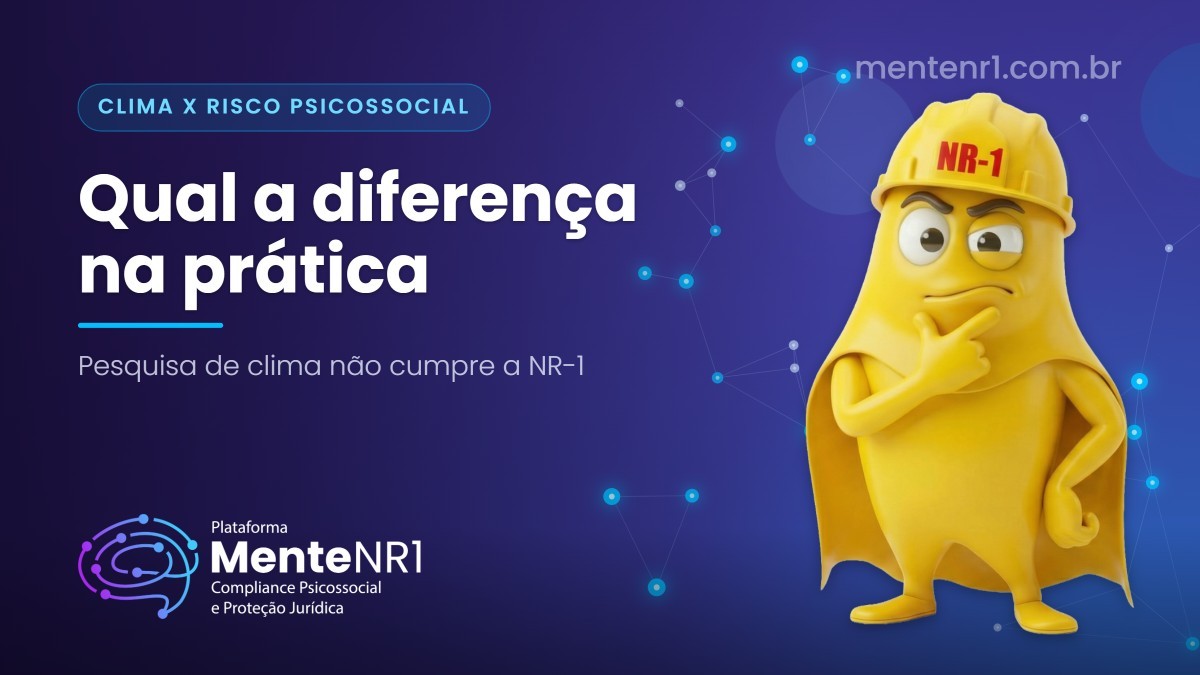
Many organizations mistakenly equate organizational climate surveys with psychosocial risk assessments, a common error that can lead to regulatory penalties. While seemingly similar, these two evaluations serve distinct purposes, rely on different methodologies, and have unique requirements. A psychosocial risk assessment, mandated by Brazil's NR-1 regulation, specifically aims to identify threats to employee health. In contrast, a climate survey primarily measures employee satisfaction and offers insights into the work environment but does not fulfill the NR-1 requirement on its own.
These assessments are not interchangeable; they can coexist but must be recognized for their separate functions. Failing to distinguish between them can result in non-compliance with NR-1, even if a company conducts a comprehensive climate survey. The NR-1 regulation necessitates a formal psychosocial risk evaluation, and a climate survey alone is insufficient to meet this legal obligation.
Tools like MenteNR1 offer specialized psychosocial risk assessments that comply with NR-1, providing documented evidence for legal compliance and risk management. However, it is crucial to understand that such tools support, but do not replace, the employer's ultimate legal and technical responsibility. Effective implementation of identified measures is key to avoiding fines and legal actions, and users should consult terms of use for a clear understanding of responsibilities and limitations.
The distinction between organizational climate surveys and psychosocial risk assessments highlights a critical compliance challenge for businesses operating under specific labor regulations like NR-1. While both tools offer insights into the workplace, conflating them can lead to significant legal and financial repercussions. This situation underscores the importance of regulatory clarity and the need for organizations to invest in specialized assessments that directly address legal mandates, rather than relying on general employee satisfaction metrics. The market is evolving to offer solutions that bridge this gap, but the ultimate responsibility for compliance and risk mitigation remains with the employer, necessitating a proactive and informed approach to workplace health and safety governance.
AI-generated to prompt reflection — not editorial opinion, not advice, not a statement of fact. How this works.