Orphaned Kangaroo Joey Rescued After Mother's Fatal Road Accident in Australia
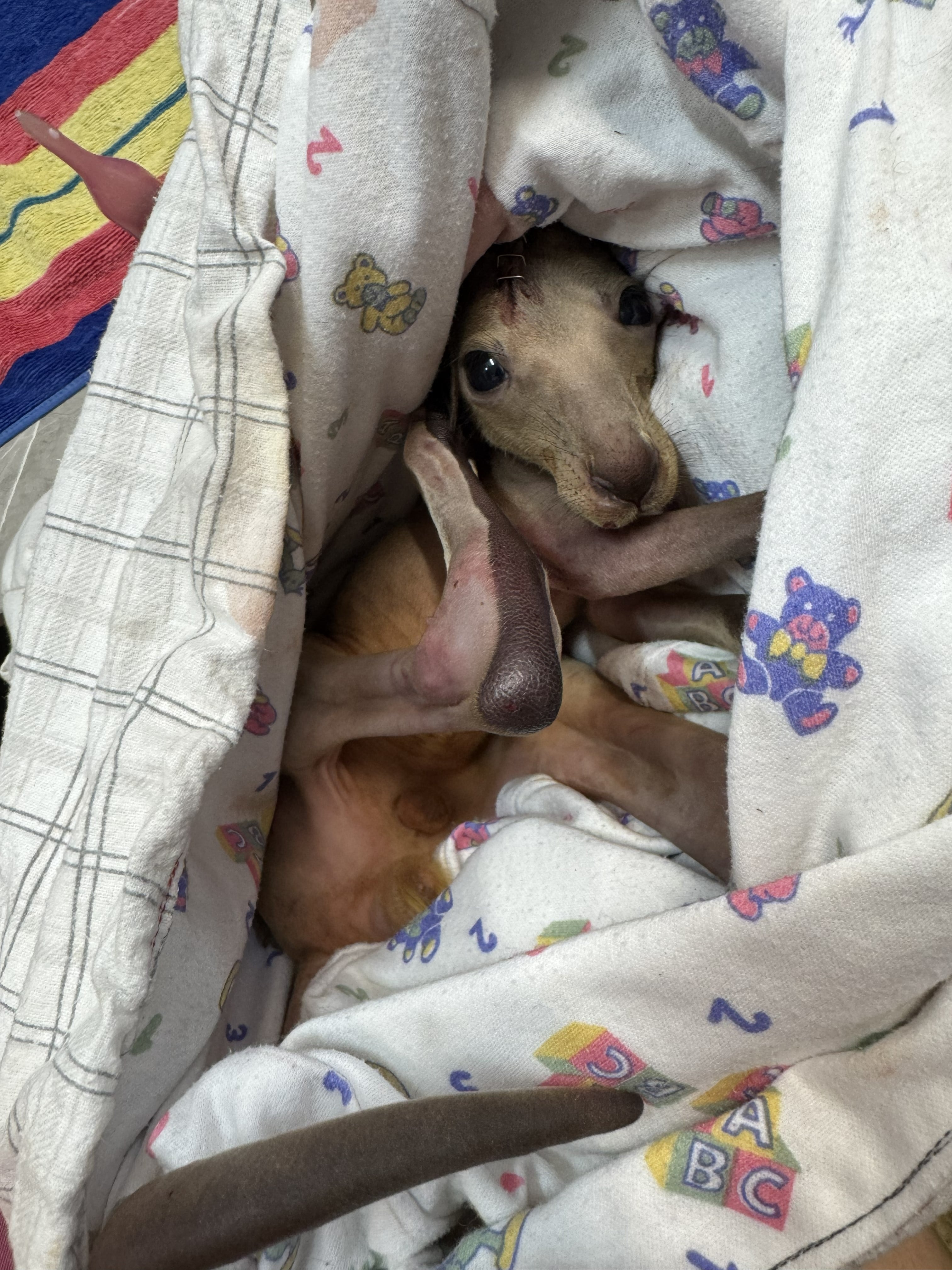
A young kangaroo joey has been successfully rescued and rehabilitated after its mother was killed in a road accident on the South Coast of New South Wales, Australia. The joey was discovered alive and scared, with some injuries, inside its mother's pouch by a passerby who stopped to check on the deceased marsupial. Veterinarian Federico Negro, originally from Argentina, described the joey as being found "scared and with some injuries." The rescue team immediately transported the joey to a veterinary clinic, where it underwent emergency treatment. This included stabilizing its temperature, treating its wounds with surgical staples, and administering fluid therapy. The joey's survival marked the first miracle in its recovery process. The incident highlights a deeply ingrained custom in Australia where drivers, when safe to do so, check the pouches of deceased kangaroos for surviving joeys, a practice Negro greatly admires. This "pouch check" is often signified by a cross marked on the animal, indicating a thorough check was performed. After initial stabilization, the joey entered a rehabilitation phase managed by volunteers from organizations like WIRES, who provided care to simulate its mother's environment and nourishment. The clinic adheres to a policy of not naming wild animals to discourage them from becoming pets and to maximize their chances of returning to independent life in the wild. Following two and a half months of dedicated care, including specialized feeding formulas and thermal monitoring, the young kangaroo was released back into its natural habitat. Negro expressed that witnessing the joey leap away into freedom with its mob was the ultimate professional success. This experience has led Negro to reflect on collective responsibility for wildlife conservation, particularly in light of the devastating 2019-2020 Australian bushfires. He believes this model of shared responsibility, where individual actions and community involvement are crucial, could be beneficial in his native Argentina, which also boasts significant biodiversity.
This narrative underscores the critical role of human intervention in mitigating the ecological impact of infrastructure, such as roadways, on wildlife populations. The described "pouch check" custom exemplifies a community-driven approach to conservation, demonstrating how ingrained societal practices can foster proactive wildlife welfare. The veterinarian's emphasis on rehabilitating the joey for eventual release, rather than domestication, aligns with principles of preserving wild species' autonomy and ecological function. This case offers a model for fostering a collective sense of stewardship towards biodiversity, suggesting that a combination of individual awareness, organized volunteer efforts, and professional veterinary care can significantly enhance wildlife survival rates. The story implicitly raises questions about road design, wildlife corridors, and public education campaigns as potential systemic interventions to reduce wildlife-road mortality in the future.
AI-generated to prompt reflection — not editorial opinion, not advice, not a statement of fact. How this works.