Orphaned monkey infant adopted by adult pair, successfully reintegrated into wild
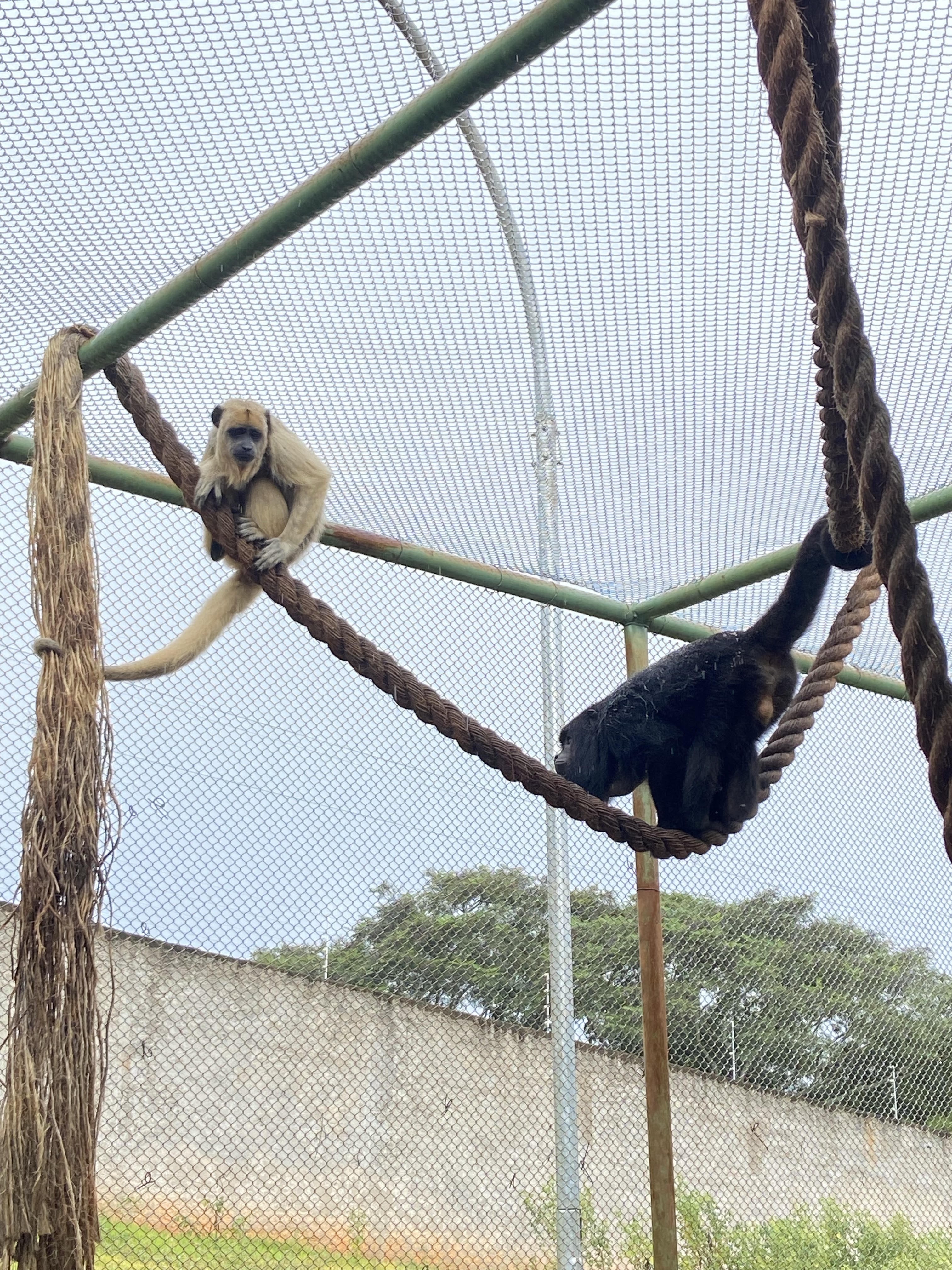
A black howler monkey (Alouatta caraya) infant, orphaned after being rescued, has been adopted by an adult pair of the same species. This remarkable event occurred during a study at the Center for Wildlife Triage and Rehabilitation (Cetras) in Patos de Minas, Brazil. Researchers Izabela de Lima Costa and Elisa Queiroz Garcia, in partnership with Cetras, documented this adoption, noting its potential to improve rehabilitation and release success rates for orphaned young in the wild. The study observed the adult pair accepting the infant and exhibiting parental behaviors typically seen in natural settings. Prior to introducing the infant, the researchers monitored the adult pair's behavior for 24 days using motion-activated trap cameras to ensure minimal human interference. The infant was then gradually integrated with the adults, eventually remaining with them permanently. Initial concerns included the male viewing the infant as a competitor and the female lacking maternal instincts, but initial disputes over space evolved into close proximity, physical contact, and caregiving behaviors. The researchers emphasize that isolated development can hinder crucial survival skills in young monkeys, reducing their chances of successful release. This study suggests that social interaction with conspecifics aids in learning these vital behaviors, making reintroduction into the wild safer. Ultimately, the adult pair and the adopted infant were released together into their natural habitat, forming a social unit, a critical outcome for the research and for orphaned wildlife rehabilitation strategies.
This case highlights the complex social dynamics and adaptability within primate species, particularly in managed care settings. The successful integration and subsequent release of the orphaned infant demonstrate the potential for non-traditional family structures to facilitate crucial developmental behaviors. From a conservation perspective, such findings underscore the importance of social learning in wildlife rehabilitation programs, suggesting that mimicking natural social group structures can enhance the long-term survival prospects of released animals. This approach may offer a more holistic strategy than individual rehabilitation, addressing not only physical health but also the socio-behavioral needs critical for re-entry into the wild. Future research could explore the long-term success rates of such integrated releases compared to solitary ones, further refining best practices for orphaned wildlife.
AI-generated to prompt reflection — not editorial opinion, not advice, not a statement of fact. How this works.